
Engineering Solid Tire Compound Design: Tread, Middle, and Base Compounds
Engineering Solid Tire Compound Design: Tread, Middle, and Base Compounds
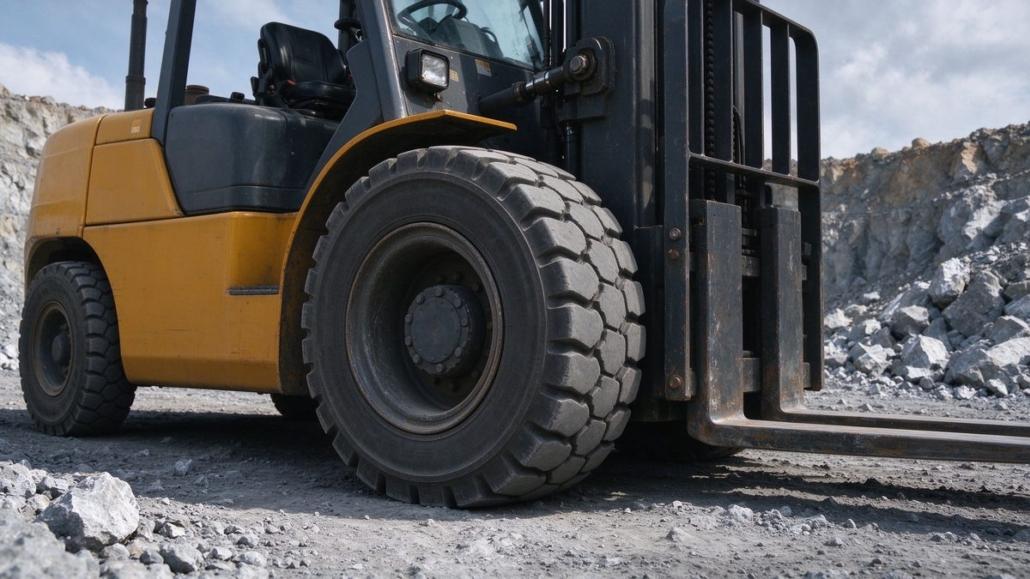
Engineering solid tires are used in mines, construction sites, and other harsh environments where punctures, chunking, and blowouts are common. This article presents a three-compound formulation (tread / middle / base) using NR/SBR/BR blends with N326/N550/VN3 silica, meeting GB/T 10824-2008 for 12.00-20 solid tires.
Keywords: solid tire; engineering tire; tread compound; NR/SBR/BR; N326; silica; Si-69; anti-reversion agent; chunk resistance; cut resistance
Why Solid Tires?
In mining and construction environments, pneumatic tires suffer puncture damage, chunking, and bead blows — often leading to catastrophic failure. Engineering solid tires offer excellent puncture resistance and large abrasion volume. Because they are non-pneumatic, a severe puncture cannot cause a blowout, protecting vehicle operators.
Engineering vehicles operate in small-radius loops on rough terrain under heavy load. Beyond puncture damage, the tire generates significant compressive fatigue heat. Adding 20–30% compensated carbon black (relative to total CB) improves tear resistance and cut-growth resistance. When using silica, the bifunctional silane coupling agent Si-69 reacts with silica surface hydroxyl groups, converting silica from hydrophilic to hydrophobic and improving rubber compatibility.
Raw Materials and Formulation
Polymers: NR STR20, BR9000, SBR1502. Fillers: N326, N660 carbon black, VN3 silica. Chemicals: phenolic reinforcing resin, anti-tear resin SL-6903, silane Si-69, anti-reversion agent PK-900.
Three-Compound Formulation (phr)
| Material | Tread | Middle | Base |
|---|---|---|---|
| NR | 80 | 65 | 70 |
| SBR1502 | 10 | — | 30 |
| BR9000 | 10 | 35 | — |
| N326 | 37 | 48 | — |
| N660 | — | — | 60 |
| Silica (VN3) | 25 | 15 | 15 |
| Zinc oxide | 5 | 7 | 10 |
| Stearic acid | 2 | 2 | 2 |
| RD antioxidant | 2 | 2 | 2 |
| 4020 | 2 | 1.5 | 1.5 |
| Si-69 coupling agent | — | 1.5 | 1.5 |
| Anti-tear resin | 2.5 | — | — |
| Sulfur | 1.8 | 1.6 | 1.6 |
| Accelerator | 1.6 | 1.6 | 1.6 |
| PK-900 anti-reversion | 0.5 | — | 0.5 |
Mixing Process
Tread Compound — Low-Temperature Continuous Line (GK305)
Polymer + fine ingredients (anti-tear resin, ZnO, stearic acid, antioxidants, PK-900) → ram up 20s at 55 rpm → add silica, carbon black, Si-69 → ram down → dump at 135°C → slow to 25 rpm → ram down → dump at 150°C → sheet into rings → add pre-dispersed scorch retarder (2 min) → add pre-dispersed sulfur (2 min) → add accelerator (3 min) → sheet and cool.
Middle and Base Compounds — Two-Stage on F270
First stage (40 rpm): polymer + ZnO/stearic/antioxidants → ram 40s → add silica, CB, Si-69 → ram → 120°C ram up 10s → ram → dump at 145°C, rest 8h.
Second stage (20 rpm): masterbatch + sulfur/accelerator → ram 90s → ram up 10s → ram → dump at 105°C.
Key Results — Laboratory Recipe (small-scale)
| Property | Tread (60 min cure) | Middle (60 min) | Base (60 min) |
|---|---|---|---|
| M100% (MPa) | 3.4 | 4.1 | 9.8 |
| M300% (MPa) | 11.8 | 15.6 | — |
| Tensile strength (MPa) | 24.8 | 21.9 | 14.6 |
| Elongation at break (%) | 532 | 501 | 183 |
| Tear strength (kN/m) | 101.2 | 50.2 | 41.3 |
| Shore A hardness | 70 | 65 | 88 |
| Rebound (%) | 50 | 55.8 | 32 |
| Akron abrasion (cm³) | 0.226 | — | — |
| Heat buildup — center (°C) | 49.7 | 43.2 | — |
| Heat buildup — bottom (°C) | 10.6 | 12.0 | — |
Production-Scale Results (large batch)
Large-batch data matched small-batch results closely. Because low-temperature mixing was used, tensile strength was slightly better and dispersion grade improved (grade 5–6). Low-temperature mixing significantly reduces silica agglomeration in high-silica formulations.
Finished Tire Performance (12.00-20/8.0)
| Property | Tread — Measured | Tread — GB/T 10824 | Base — Measured | Base — Standard |
|---|---|---|---|---|
| Tensile strength (MPa) | 24.1 | ≥18 | 14.1 | ≥13 |
| Elongation at break (%) | 512 | ≥450 | 179 | — |
| Shore A hardness | 69 | 67±5 | 89 | 85±5 |
| Rebound (%) | 49.6 | — | 32.5 | — |
| Akron abrasion (cm³) | 0.232 | ≤0.6 | — | — |
All properties exceed GB/T 10824-2008 requirements. Tensile strength and abrasion resistance far exceed the standard, extending service life in harsh mining/construction environments.
Formulation Rationale
- N326 instead of N220 in the tread: higher tensile, elongation, and tear strength; lower heat buildup; better endurance and longer service life.
- Si-69 coupling agent bridges silica surface to polymer, creating more filler-polymer bonds, reinforcing modulus and tensile strength, and improving abrasion.
- Higher ZnO in middle compound (7 phr vs 5 in tread): reduces the temperature difference between surface and center during fatigue, extending tire life.
- PK-900 anti-reversion agent in tread and base: prevents reversion during long cures (60–100 min) at 145°C.
- Three-compound design (tread/middle/base): the middle compound provides low heat buildup and good buffering, lowering overall tire operating temperature vs. conventional two-compound solid tires.
Conclusion
The series includes 12.00-20, 11.00-20, and 10.00-20 small-to-medium engineering solid tires. They offer excellent abrasion resistance and superior chunk/cut resistance. The added middle compound layer (low heat buildup, good buffering) reduces overall operating temperature compared to standard solid tires, extending service life.


Leave a Reply
Want to join the discussion?Feel free to contribute!