
Tire Building Machine Shutdown & Restart Procedure: TBR Workshop SOP
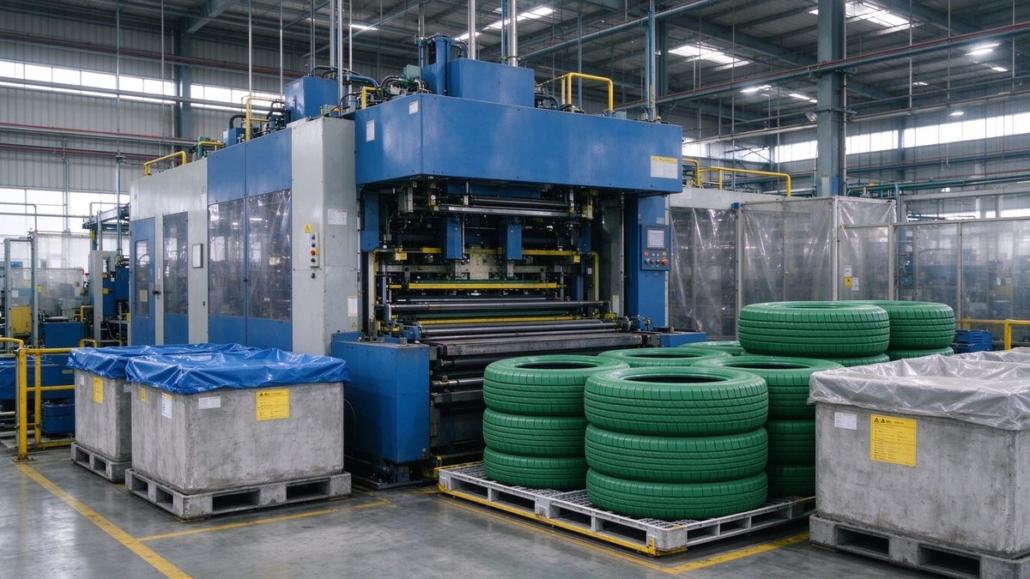
Tire Building Machine Shutdown & Restart Procedure: TBR Workshop SOP
Every tire factory faces planned and unplanned stops — holidays, equipment breakdowns, or mold changes. How the building workshop handles green tires, semi-finished components, and solvents during a shutdown directly determines whether restart production launches cleanly or emerges with a wave of adhesion failures and scrap. This is the standard procedure used in an all-steel TBR tire workshop.
Keywords: tire building; tire factory shutdown; green tire storage; semi-finished component; tire production restart; TBR tire; tire manufacturing SOP
Purpose and Scope
This procedure governs orderly shutdown and restart of the tire building (forming) process, covering semi-finished components, green tires, and raw materials. The production shift leader is the first point of contact; the quality process-inspection foreman handles quality decisions.
Before Shutdown: Line Clearance
At the end of production before a stop, the semi-finished goods workshop must collect all leftover components on the line. On restart, every tire remaining on conveyor rolls, tire stops, or transfer belts must be sent to QC for inspection before further processing.
Shutdown ≤ 5 Days
Cement and Gasoline
- Minimize on-hand stock of all rubber cements and gasoline.
- Cover all containers, label them, and store properly.
- Move all flammable materials to the fire-proof room or return them to the designated storage area.
Building Area
- Minimize green tire inventory. Remaining green tires must be placed in green tire trays to prevent deformation.
- All belt plies, carcass plies, sidewalls, and shoulder pads loaded on building machines must be rolled back and stored in designated process-compliant areas.
Curing Area
All green tires must be stored in green tire trays.
Shutdown > 5 Days
- All shaped semi-finished components and rubber sheets must be returned for reprocessing.
- All cut reinforcement materials (cord plies, bead wire rings, etc.) must be scheduled into production and fully consumed before the shutdown begins.
Restart Procedure
Semi-Finished Components
If the assembled bead assembly shows blooming on the rubber core:
- Separate the rubber core from the bead wire ring.
- Return the rubber core for blending per standard rules.
- Coat the bead wire ring with cement and put it back into service.
Building Machine
Check the tackiness of reinforcement semi-finished components before use:
- Normal tack: use directly.
- Poor tack, no blooming: wipe with gasoline.
- Bloomed surface: wipe with gasoline first, then recoat with cement.
- Mixing rule: adjacent components on the same tire must alternate between treated and untreated material, ensuring adequate inter-component adhesion.
Documentation and Escalation
- Every component requiring disposition gets a disposition card from the semi-finished workshop. The producing workshop inventories and records all items, and passes the list to Quality and Engineering.
- Before reuse, try to confirm the original production status. The building workshop records every dispositioned component used — component code, production date, green tire number — on the back of the machine verification log.
- If defect rate on dispositioned tires exceeds 20%, stop all dispositioning immediately.
Key Takeaways
- Short stop (≤5 days): cover solvents, tray the green tires, roll back machine-loaded components.
- Long stop (>5 days): return all shaped components; burn off cut reinforcement stock before shutdown.
- Restart: inspect tack, treat bloomed surfaces (gasoline + cement), alternate treated/untreated parts on the same tire.
- Hold the line at 20% defects: any higher scrap rate on dispositioned material and the process stops until engineering reviews.


Leave a Reply
Want to join the discussion?Feel free to contribute!