
Natural Rubber Compound Formulation Design: Vulcanization, Fillers & Protection
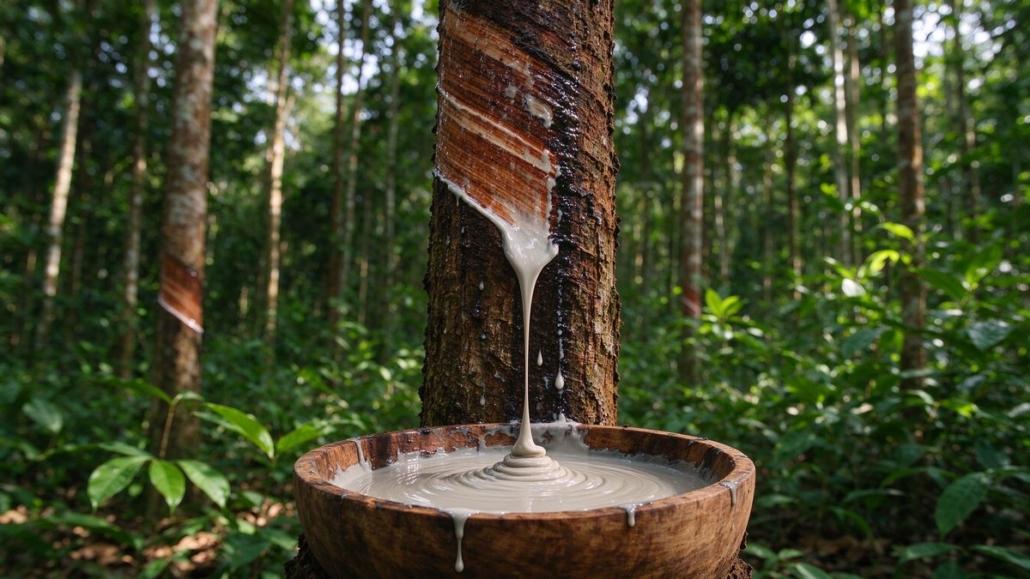
Natural Rubber Compound Formulation Design: A Practical Guide
Natural rubber (NR) is an unsaturated, crystallizable diene rubber with excellent elasticity, high mechanical strength, and superior processing characteristics. It is the oldest and most widely used rubber type. This guide covers the four core formulation systems: vulcanization, reinforcement/filling, protection, and plasticization.
Keywords: natural rubber; NR; compound formulation; vulcanization system; sulfur cure; carbon black; antioxidant; plasticizer; rubber recipe design
1. Vulcanization System
Curing agents suitable for natural rubber include sulfur, selenium, tellurium; sulfur donors; organic peroxides; ester-type; and quinone-type curing systems. The choice depends on the required product properties.
Sulfur vulcanization systems vary by the ratio of accelerator to sulfur, producing three characteristic systems:
Conventional Sulfur Cure (High Sulfur / Low Accelerator)
Uses high sulfur and low accelerator. Crosslinks are predominantly polysulfidic bonds. The uncured compound has good general physical-mechanical properties: high strength, good elasticity, high abrasion resistance, and low cost. However, heat resistance and aging resistance are poor, and reversion during cure is significant. Because NR has high unsaturation, sulfur loading can be higher than in synthetic rubber — typically 2–3 phr (commonly 1.75–2.75 phr) for soft rubber products. Accelerator loading is below 1 phr.
Common accelerators: M, DM, CZ, NOBS, D, TT. They can be used alone or in combinations such as DM, D/TS, D/DM, M/H, M/TT, M/TS, CZ/TT, DM/D/H, DM/M/TT, DM/TT, CZ/DM, NOBS/DM.
Semi-Efficient Cure (semi-EV)
Intermediate between conventional and efficient cure. Uses medium sulfur loading (1–1.7 phr) with accelerator. Crosslinks contain both polysulfidic and mono/disulfidic bonds. The vulcanizate combines heat resistance, fatigue resistance, and reversion resistance — widely used. Typical recipes: S/NS (1.5/1.5), S/NS/DTDM (1.5/0.6/0.6).
Efficient Cure (EV)
Low sulfur / high accelerator ratio, producing mainly mono- and disulfidic crosslinks with excellent heat aging and reversion resistance, but lower tensile strength and dynamic fatigue resistance.
Effect of Sulfur Loading on NR Vulcanizate Properties
| Sulfur (phr) | 1.0 | 1.5 | 2.0 | 2.5 | 3.0 | 3.5 | 4.0 |
|---|---|---|---|---|---|---|---|
| M300% (MPa) | 6.4 | 7.3 | 8.0 | 9.1 | 10.0 | 11.5 | 12.8 |
| Tensile strength (MPa) | 26.0 | 28.3 | 29.6 | 31.5 | 31.1 | 31.1 | 31.6 |
| Elongation at break (%) | 670 | 672 | 660 | 660 | 670 | 670 | 660 |
| Permanent set (%) | 23 | 29 | 34 | 34 | 42 | 42 | 46 |
| Shore A hardness | 57 | 60 | 64 | 64 | 68 | 68 | 69 |
Accelerator: DM 0.5 phr + M 0.5 phr.
Other Cure Systems
- Ester-type (urethane) cure: Addition products of diisocyanates (TDI, MDI) and p-nitrosophenol. Provides good reversion resistance, heat resistance, and aging resistance. Improves adhesion to cords, fabrics, and steel.
- Maleimide cure: High-temperature cure system with excellent reversion resistance, thermal stability, low compression set, and good glass-fiber adhesion. Most effective: N,N’-m-phenylene dimaleimide and 4,4′-dithiodiphenyl maleimide.
- Organic peroxide cure: DCP (dicumyl peroxide) at 2–4 phr forms C-C crosslinks. Provides excellent thermal stability, heat aging, low creep, low compression set, and good dynamic properties. Fast cure speed, high crosslink efficiency.
Sulfur cures typically use zinc oxide 2–5 phr and stearic acid 1–3 phr as activators.
2. Reinforcement and Filling System
Porous powder quartz (natural amorphous silica) improves physical properties with high fineness, high activity, and low specific gravity. It can partially replace carbon black and silica to reduce cost.
Carbon Black Selection
| Requirement | Recommended Carbon Black |
|---|---|
| High abrasion resistance | N110 (SAF), N220 (ISAF), N330 (HAF) |
| High tear resistance | Channel black best |
| Lower strength, high elasticity, good processing | N550 (FEF), N660 (GPF), N770 (SRF) |
When selecting carbon black, consider particle size, structure, surface activity, and pH. pH affects cure speed — adjust the cure system accordingly. For furnace blacks, use delayed-action accelerators in moderate dosage.
Light-Colored Compounds
For light or bright-colored products, use precipitated silica, highly dispersible silica, or ultra-fine porous quartz. When using precipitated silica, add organo-activators such as diethylene glycol (DEG), glycerin, ethanolamine, or polyvinyl alcohol at 5–10% of silica loading to adjust cure speed.
For maximum tensile strength, filler loading of 40–45 phr is optimal; excessive loading reduces strength. For low-strength, low-cost products, add clay or CaCO3 to reduce rubber content.
3. Protection System
Because NR is unsaturated, it readily reacts with oxygen and ozone, causing aging. Heat, light, flexing, and metal ions (manganese, copper) accelerate degradation. Antioxidants must be selected based on actual service conditions:
- General antioxidants: D, A, DNP, 4010, 4010NA, AW, MB, SP, SP-C, RD
- Can be used alone or in combinations
- For light-colored products, choose non-staining antioxidants
4. Plasticizing / Softening System
Physical Plasticizers
Used for processing benefits: tackiness, softness, easier mixing/calendering/extrusion, and hardness adjustment. Common types: pine tar and solid coumarone-indene resin at 4–5 phr; petroleum-based softeners at 5–15 phr.
Chemical Plasticizers (Peptizers)
Smoked sheet and crepe natural rubber have high Mooney viscosity, making mastication difficult. Traditional addition of accelerators M and DM is not effective. Chemical peptizers improve mastication efficiency and shorten cycle time. Common peptizers for NR: SJ-103 (works on both open mills and internal mixers) and 12-I (internal mixer only), at 0.1–0.3 phr.
Summary
Natural rubber formulation design balances four systems:
- Vulcanization: Choose conventional / semi-EV / EV based on heat aging vs. strength trade-off; sulfur loading directly modulates M300, hardness, and permanent set.
- Reinforcement: Match carbon black grade to abrasion/tear/elasticity needs; use silica for light colors; 40–45 phr for maximum strength.
- Protection: Select antioxidants based on aging environment; use non-staining grades for light colors.
- Plasticization: Physical softeners for processing; chemical peptizers for high-Mooney NR mastication.


Leave a Reply
Want to join the discussion?Feel free to contribute!