
Rubber Mixing in an Internal Mixer: Step-by-Step Operation Guide
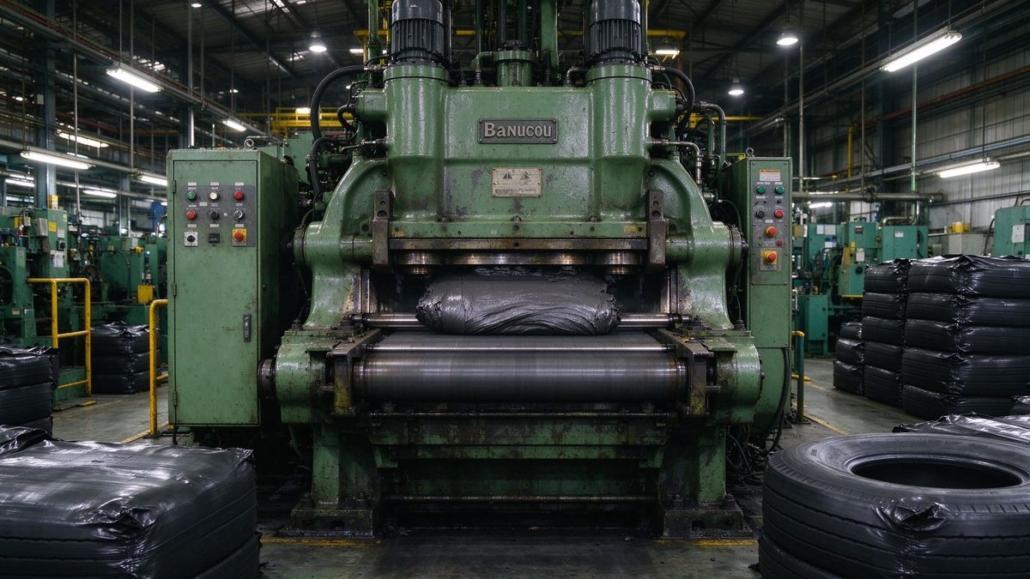
Rubber Mixing in an Internal Mixer: Step-by-Step Operation Guide
This article is based on the Shibata Fender Team (SFT) White Paper Series Part II — Mixing. It walks through the complete two-stage rubber compounding process: mastication, masterbatch production, and finalization, with the equipment and operational principles behind each step.
Keywords: rubber mixing; internal mixer; banbury; mastication; masterbatch; finalization; two-stage mixing; rubber compounding; fender manufacturing
Executive Summary
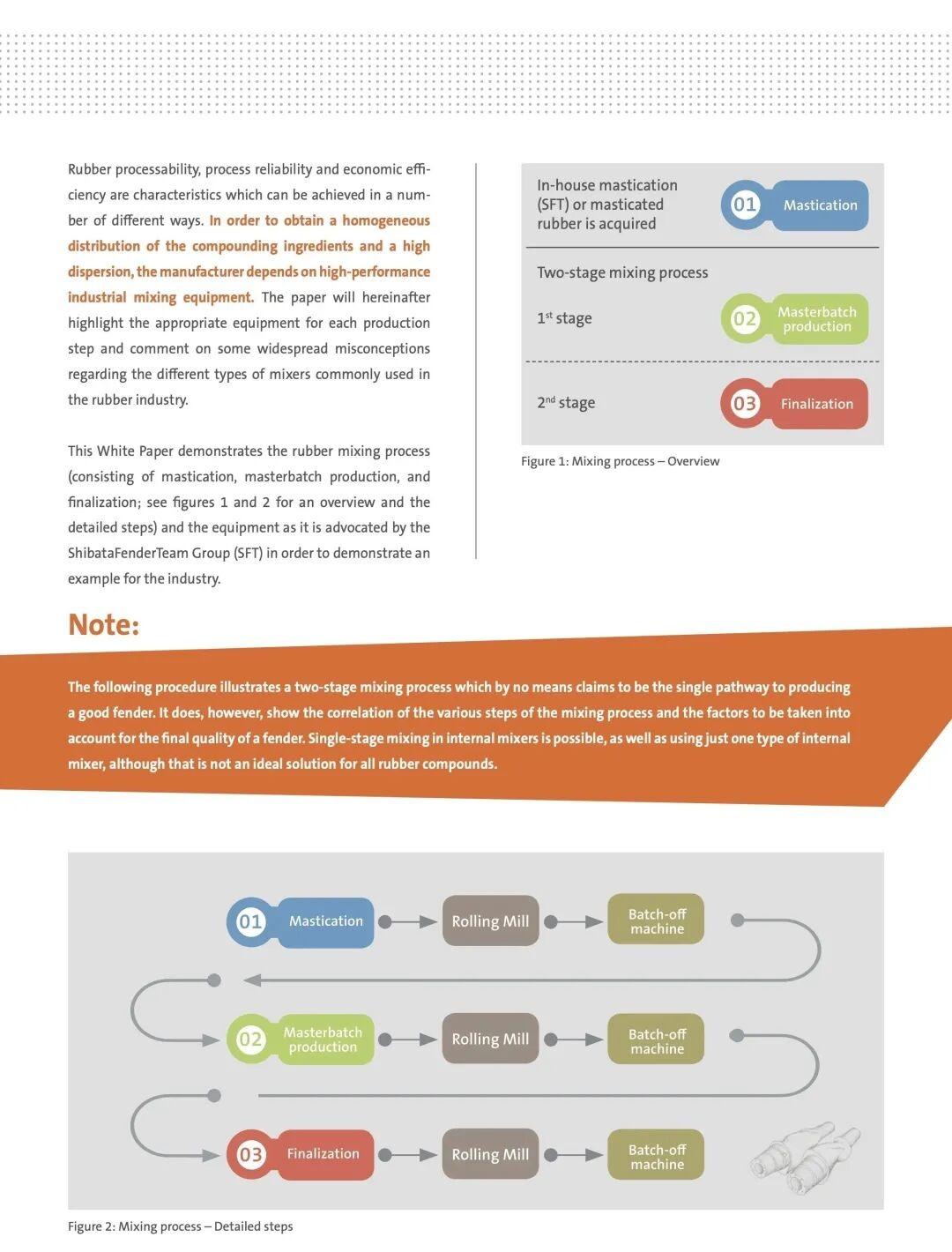
Fender manufacturing, like all rubber product manufacturing, relies heavily on practical knowledge and experience. The complex interaction between raw material composition, mixing equipment, and process parameters makes uniform high-quality output difficult to achieve without deep expertise.
Current international standards (PIANC 2002, ASTM D2000, EAU 2004, R20 2.0-11 (2012), or BS6349 (2014)) only define the final physical properties of a fender — they do not specify the chemicals used or the mixing equipment. The manufacturer’s performance and process know-how remain the defining factors.
This white paper outlines the individual steps of rubber mixing to show how a high-quality fender (or tire, or any rubber product) is built up through controlled processing.

The SFT White Paper Series
The four-part series covers the entire process from rubber compounding to final product testing:
- #1 Compounding — raw materials and their correlation to final properties
- #2 Mixing — the mixing process and equipment (this article)
- #3 Curing — manufacturing and vulcanization
- #4 Testing — final product testing and quality verification
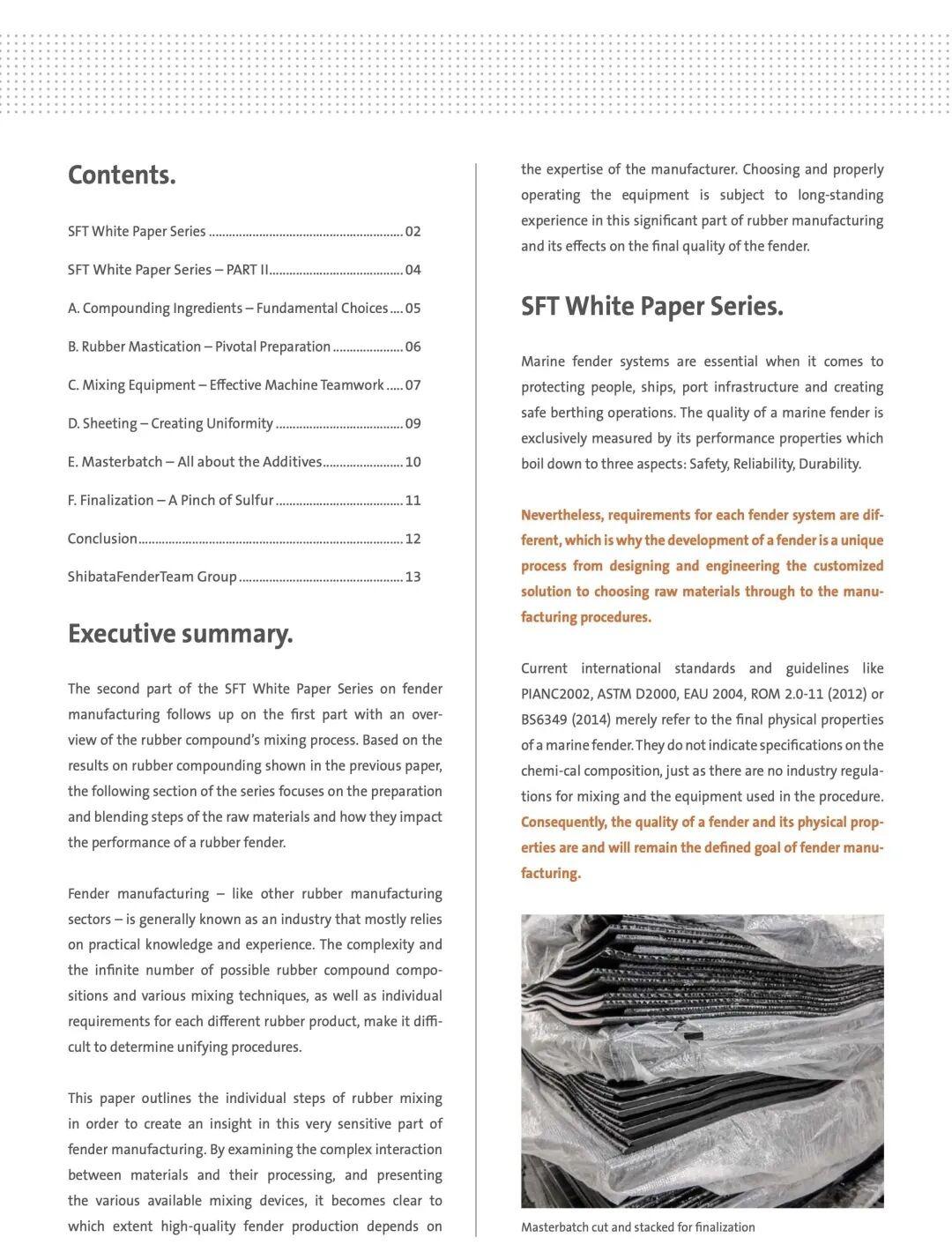
With its White Paper Series, SFT advocates transparency in fender production to ensure quality standards driven by a commitment to high-performance products.
The Two-Stage Mixing Process
Since mixing is essential to rubber product quality, this part focuses on the individual phases: mastication → masterbatch production → finalization.
Rubber processability, reliability, and economic efficiency require high-performance industrial mixing equipment. To achieve homogeneous distribution of compounding ingredients and high dispersion, the manufacturer depends on well-matched equipment choices for each production step.
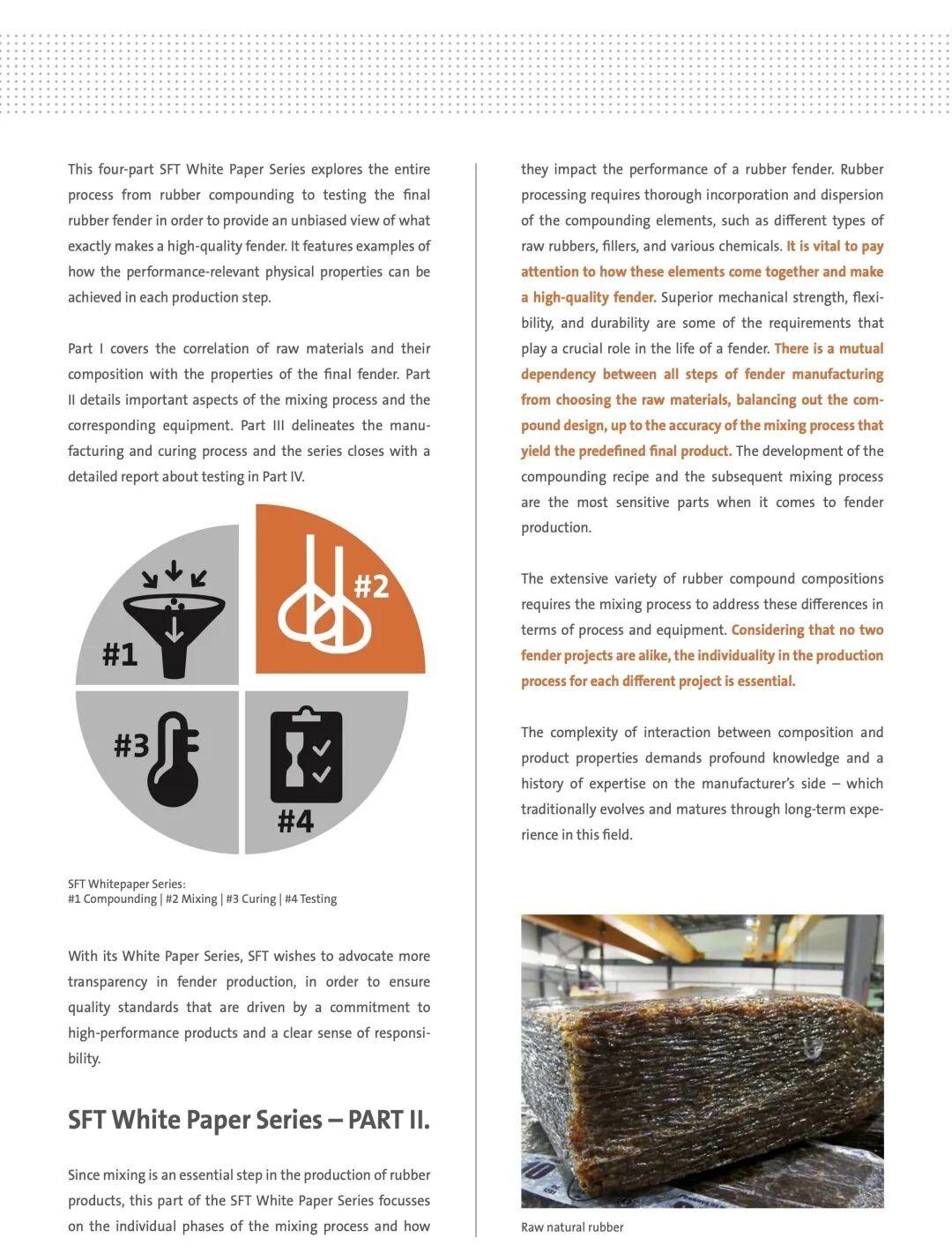
Note: The following procedure illustrates a two-stage mixing process. Single-stage mixing in an internal mixer is also possible, but not ideal for all compounds. Two-stage mixing separates the high-energy dispersion work (masterbatch) from the low-temperature vulcanization-incorporation work (finalization), preventing premature cure.
A. Compounding Ingredients — Fundamental Choices
A well-considered chemical composition is the cornerstone of a high-quality rubber product. The selection of raw rubber is particularly important because natural rubber (NR) as a natural product varies in viscosity due to molecular weight and uneven molecular distribution.
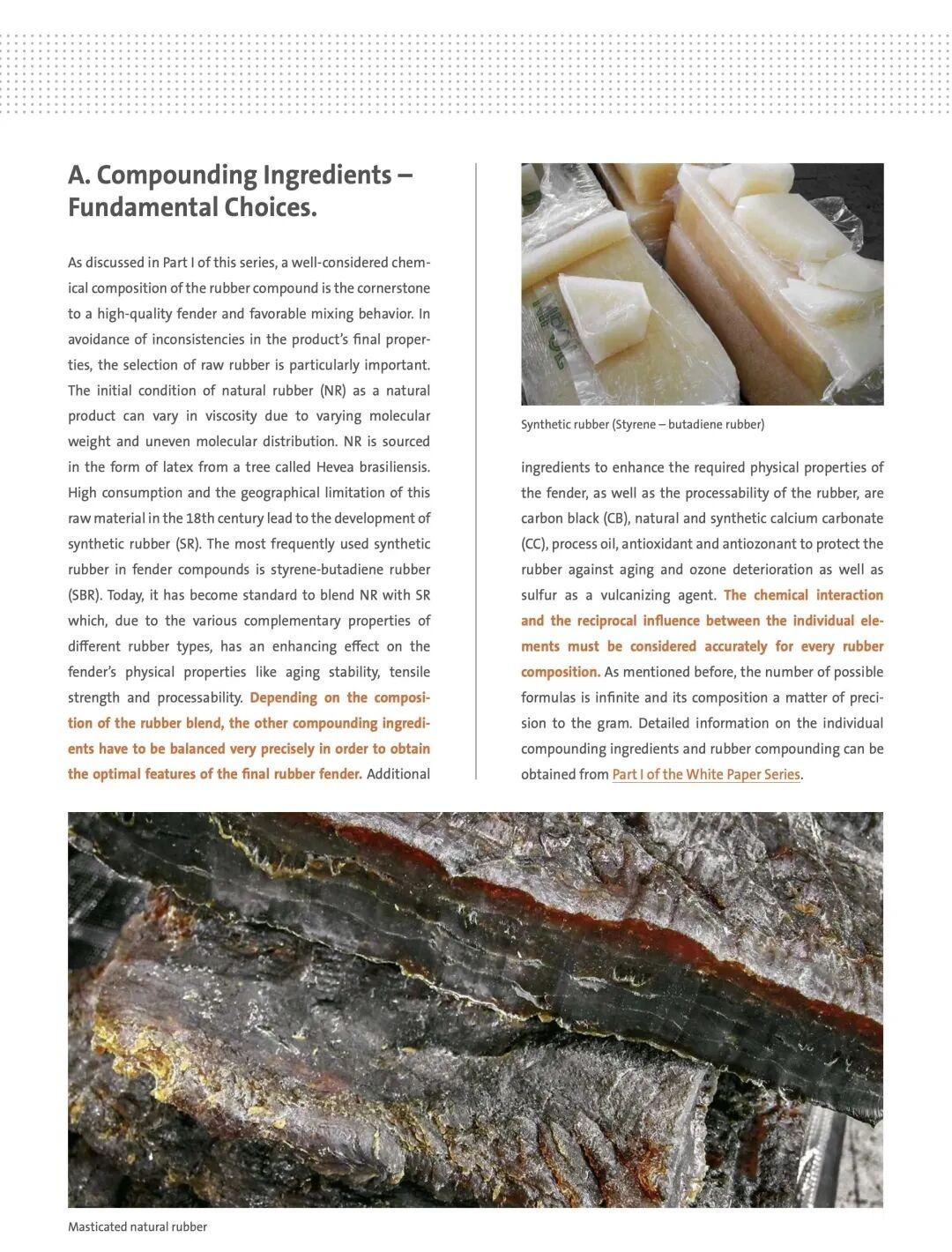
Natural Rubber (NR) is sourced from Hevea brasiliensis. High consumption and geographical limitations led to the development of synthetic rubber (SR). The most common synthetic rubber in fender compounds is styrene-butadiene rubber (SBR). Today it is standard to blend NR with SR — the complementary properties of different rubber types enhance aging stability, tensile strength, and processability.
Other ingredients — carbon black (CB), natural and synthetic calcium carbonate (CC), process oil, antioxidant, antiozonant, and sulfur as vulcanizing agent — must be balanced precisely depending on the rubber blend composition. The chemical interaction between individual elements must be accurately controlled. Formulation precision is measured to the gram.
B. Rubber Mastication — Pivotal Preparation
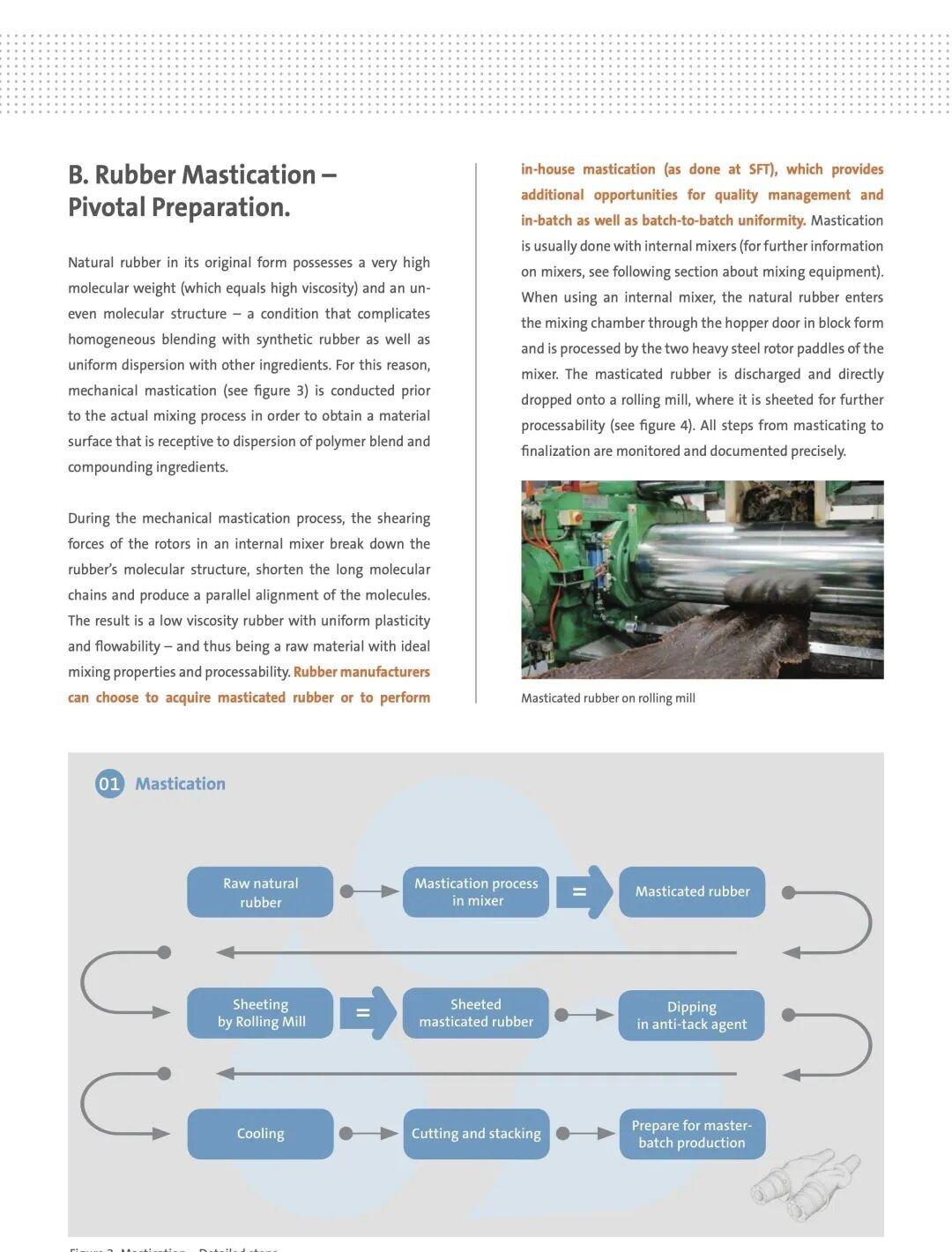
Mastication is the mechanical breakdown of high-molecular-weight natural rubber into a more processable, flowable state. This is done either in-house or purchased pre-masticated. The goal is to reduce Mooney viscosity so that subsequent mixing steps can incorporate fillers and chemicals uniformly.
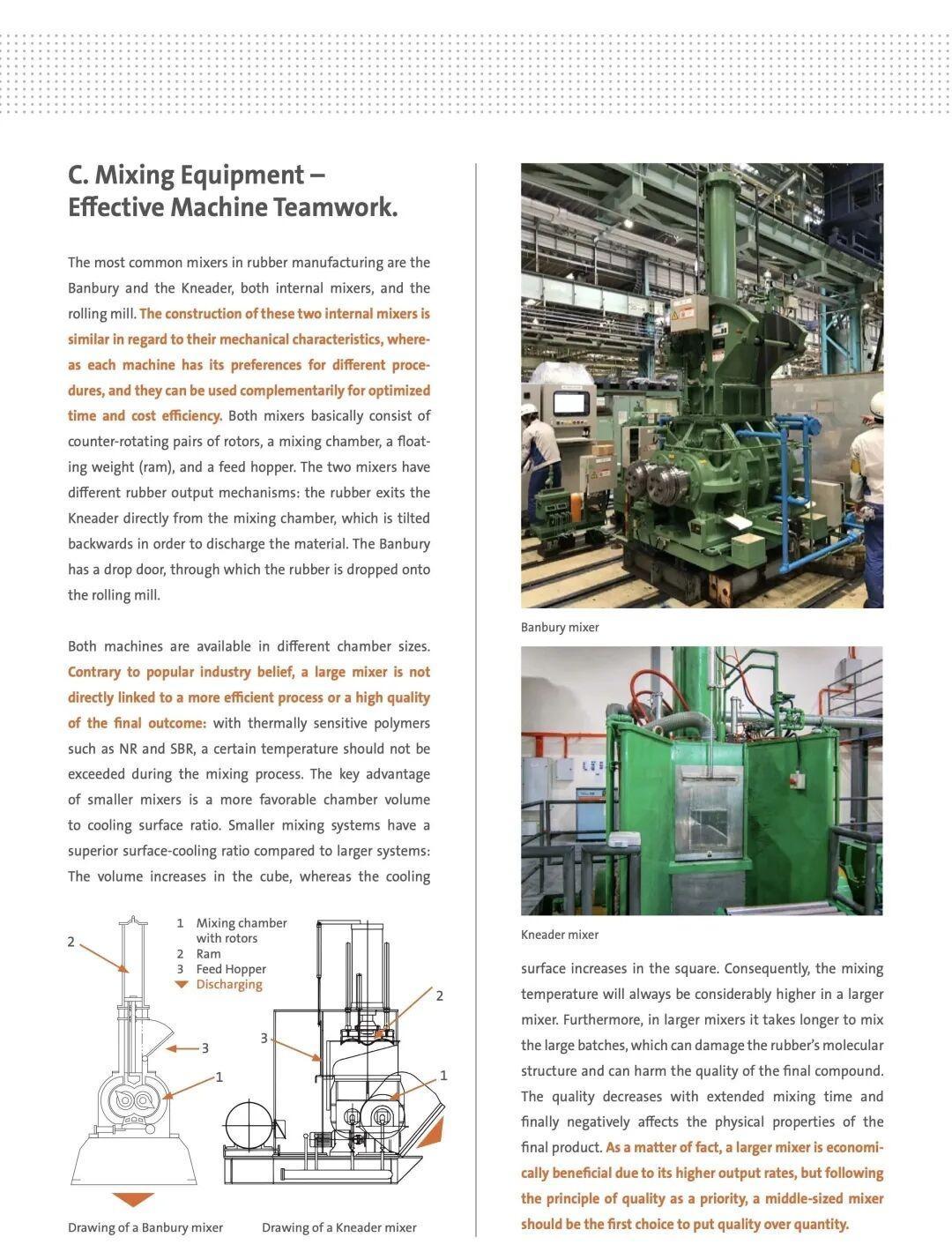
C. Mixing Equipment — Effective Machine Teamwork
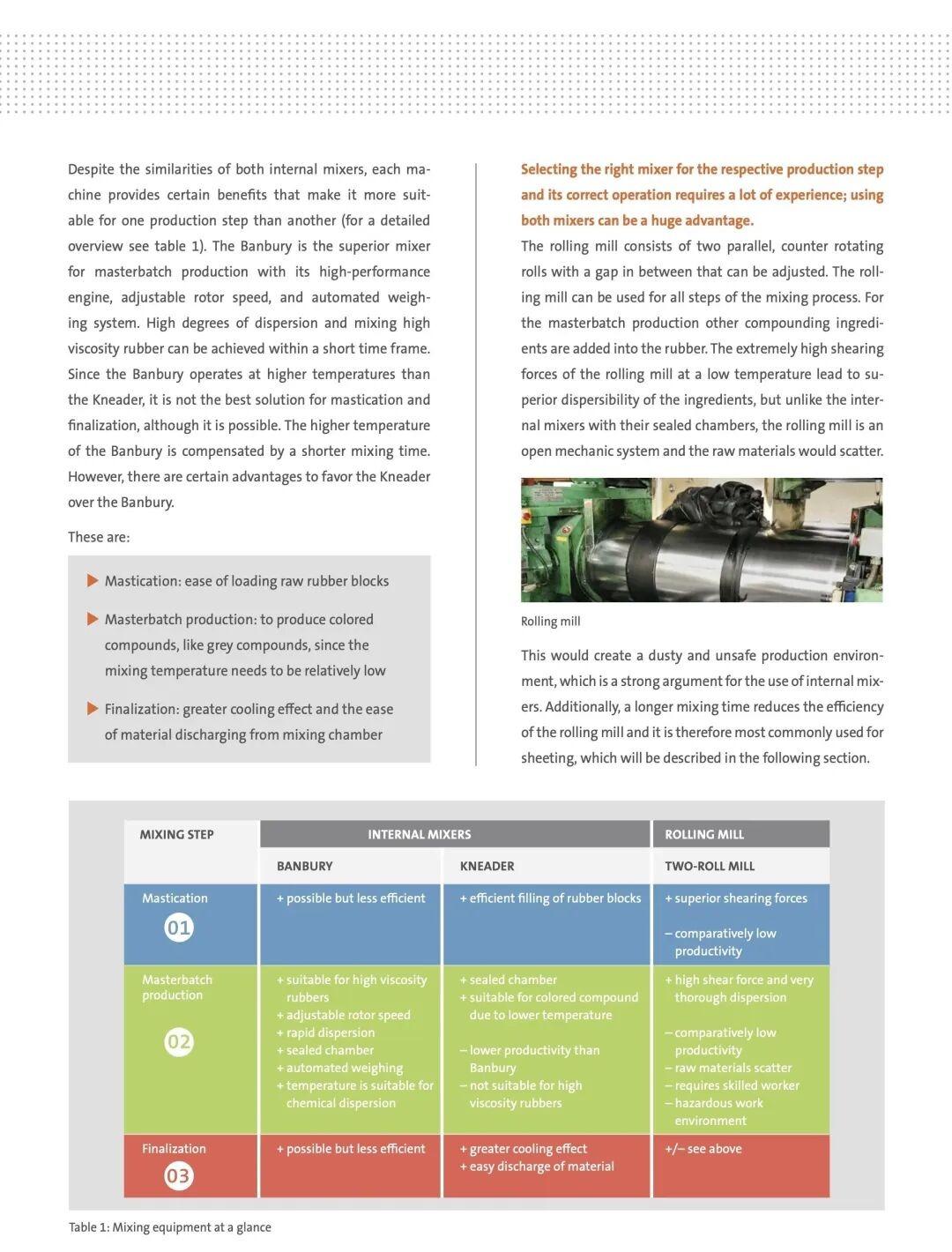
The internal mixer (Banbury-type) is the workhorse. High-shear rotors generate the dispersion needed to break up filler agglomerates and distribute them throughout the rubber matrix. Cooling of the chamber, ram pressure, rotor speed, and dump temperature are all recipe-controlled.
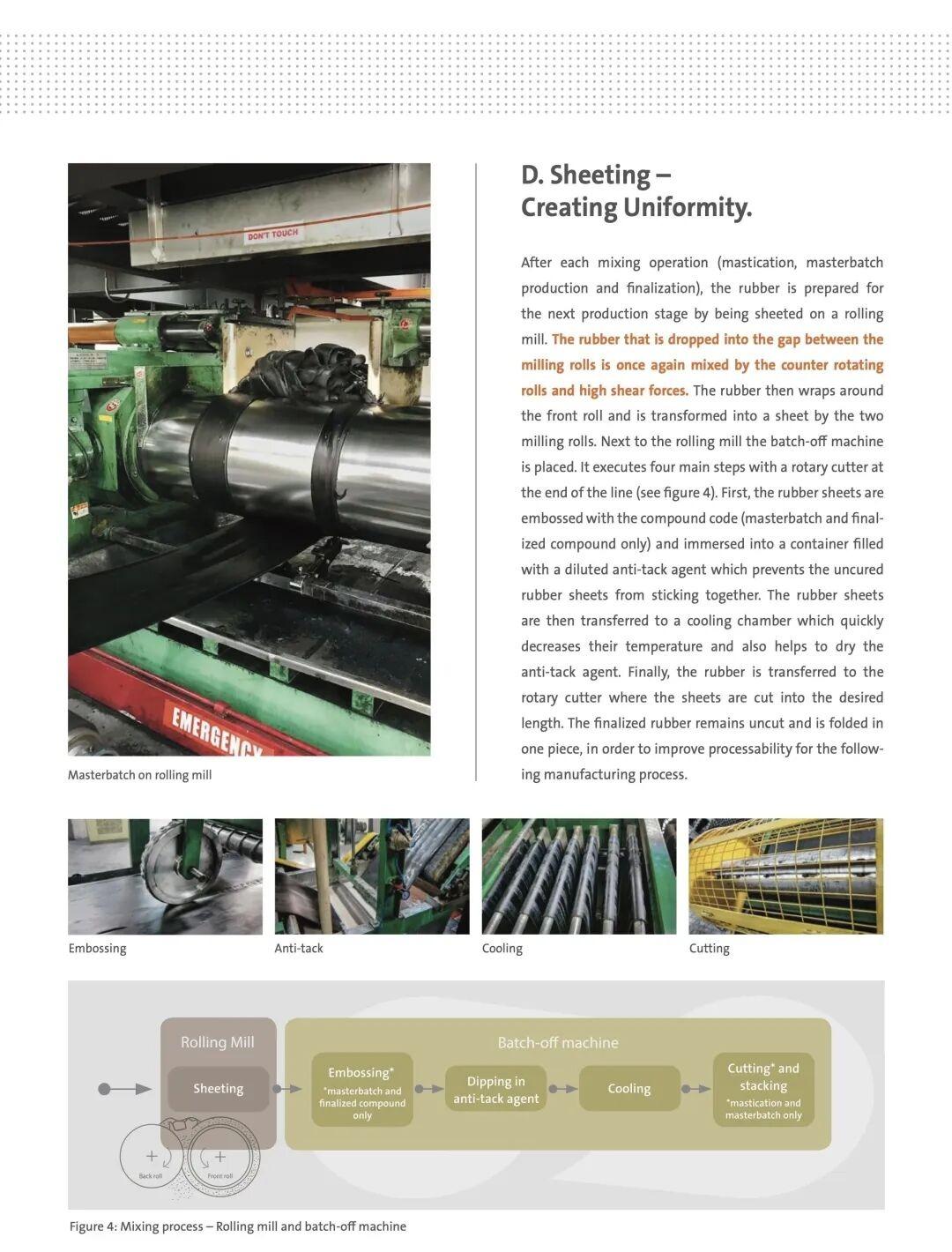
D. Sheeting — Creating Uniformity
After each mixing stage, the batch is dropped onto a rolling mill (open mill), sheeted out, and cooled on a batch-off conveyor. This equalizes temperature, forms a handleable slab, and allows inspection. The two-stage process means the masterbatch is sheeted, cooled, and then re-loaded for the finalization stage where sulfur and accelerators are added at lower temperature.
E. Masterbatch — All About the Additives (1st Stage)
The first (high-temperature) mixing stage incorporates all ingredients except curatives: base polymers, carbon black/filler, oil, antioxidants, activators (zinc oxide, stearic acid). High temperature (typically 140–160°C) drives the filler-rubber interaction and dispersion. The masterbatch is then dropped, sheeted, and cooled.
0
F. Finalization — A Pinch of Sulfur (2nd Stage)
The second (low-temperature) stage re-mills the cooled masterbatch and adds sulfur and accelerators at temperatures below ~110°C to prevent scorch. After finalization, the compound is sheeted, cooled, and ready for curing.
1
2
3
4
Key Takeaways
- Two-stage mixing is the industry standard for quality compounds: masterbatch handles dispersion at high temperature; finalization adds curatives at low temperature.
- Mastication reduces NR viscosity for consistent processing.
- Formulation precision matters to the gram — filler-rubber interactions define the final properties.
- Equipment and process experience — not just raw material choice — determines final product quality. Standards define the output, not the process.
- Every step (mastication → masterbatch → sheeting → finalization → sheeting) feeds into the next; skipping or shortening any step degrades dispersion and consistency.


Leave a Reply
Want to join the discussion?Feel free to contribute!