
Common Passenger Tire Failure Types: Causes & Prevention Guide
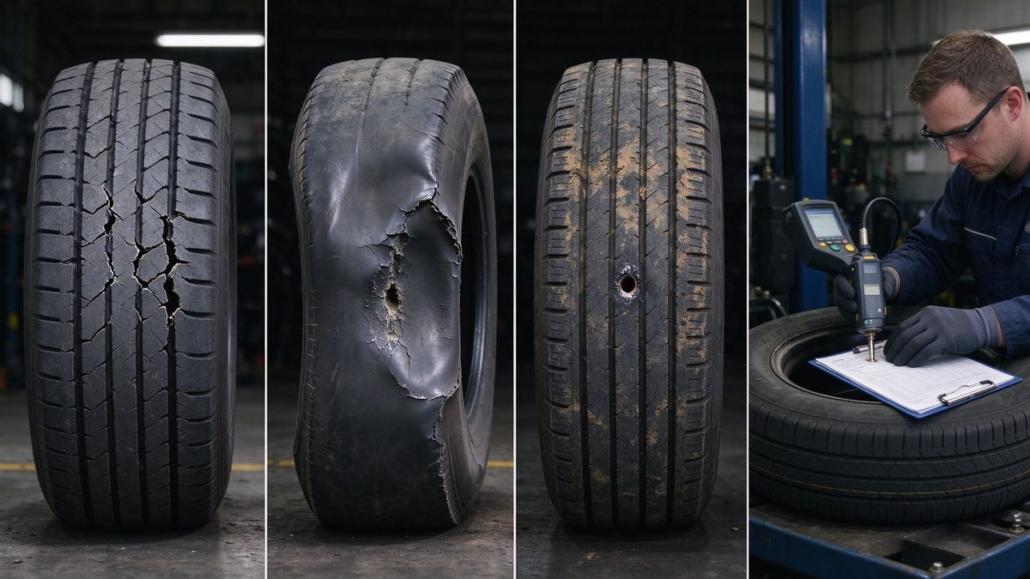
Common Passenger Tire Failure Types, Causes & Prevention
Tires are among the most critical components on a vehicle — they support the entire weight, transmit traction and braking forces, absorb road shocks, and ensure safety, stability, comfort, and fuel economy. Tire condition directly determines driving safety. This guide covers the most common failure types seen in passenger car (semi-steel radial) tires, their root causes, and recommended prevention measures.
Tire Selection: The “Eight Matches” Rule
When replacing original tires, the same axle must have tires that match on all eight points: size, structure, tread wear, ply rating, tread pattern, brand, inflation pressure, and load capacity. Mixing different tires on the same axle causes uneven loading, inconsistent wear, and poor handling — especially dangerous during emergency braking.
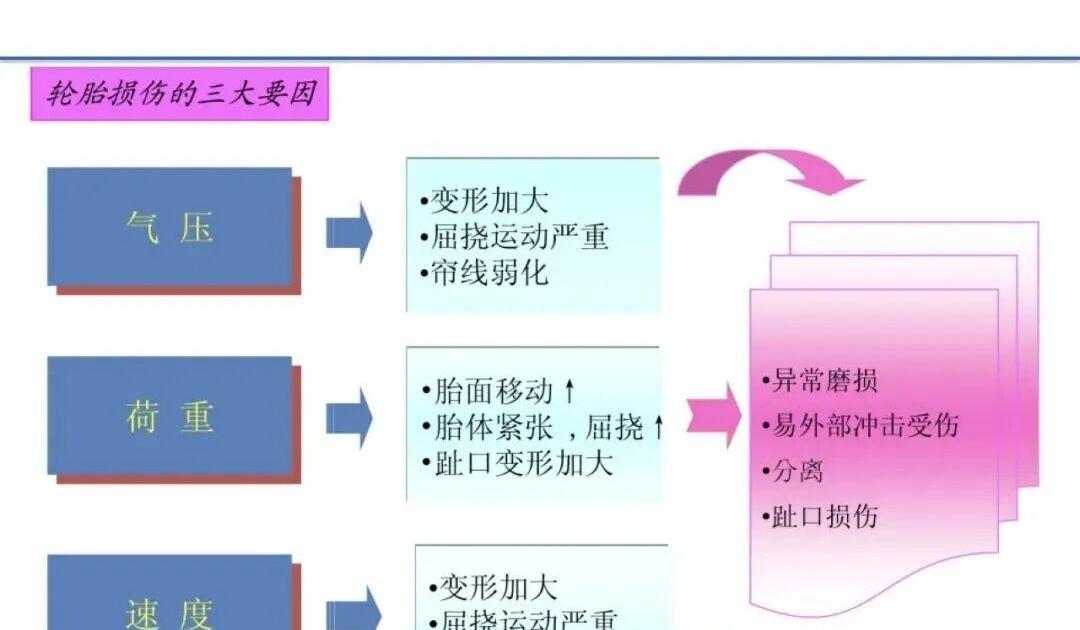
Three Major Causes of Tire Damage
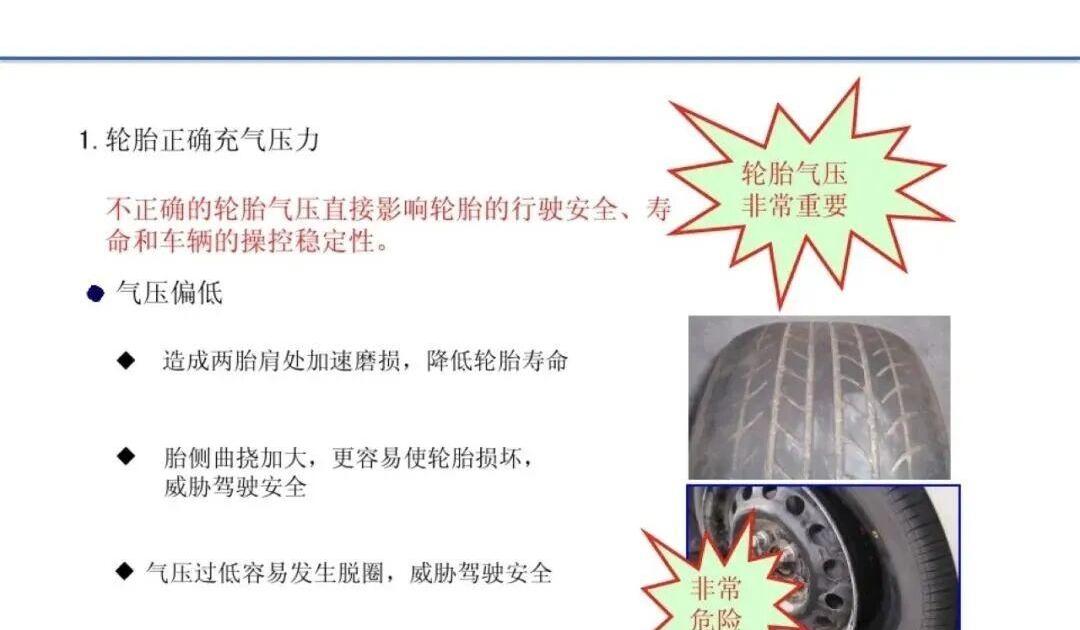
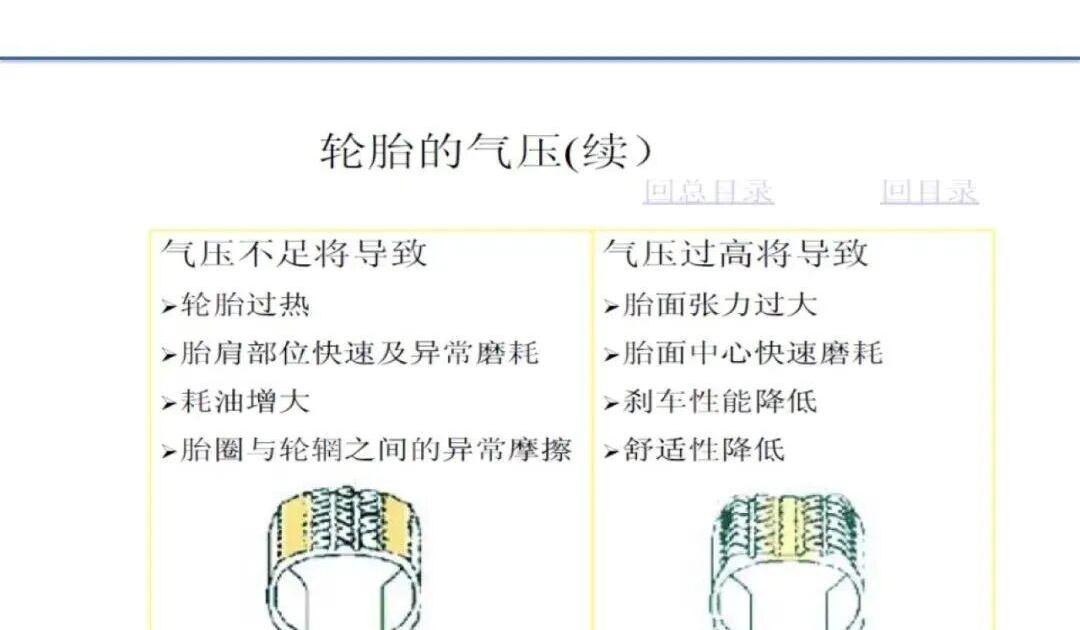
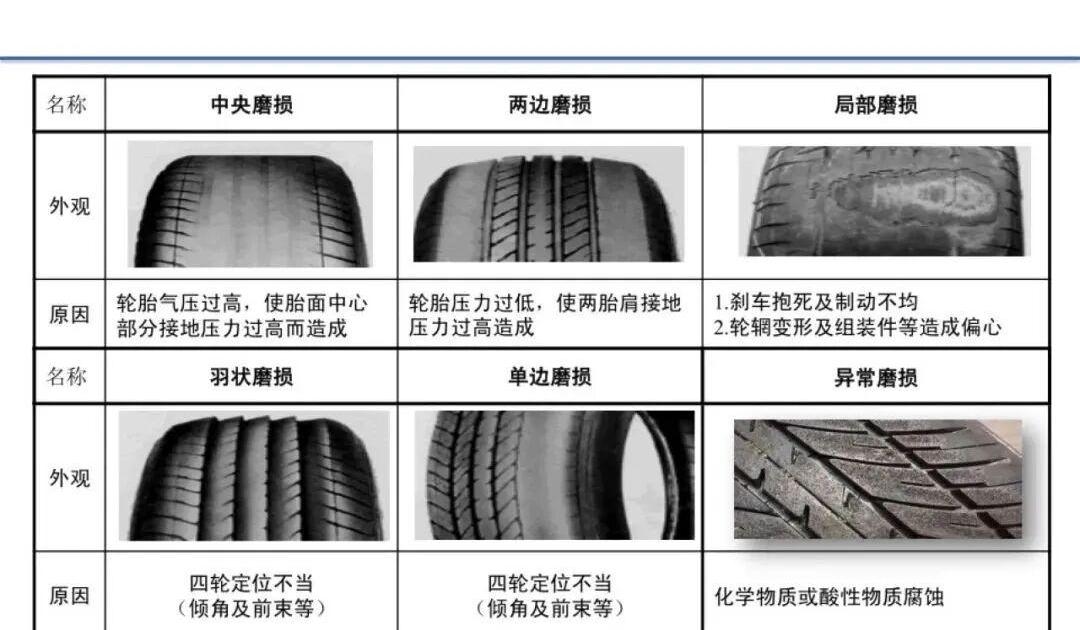
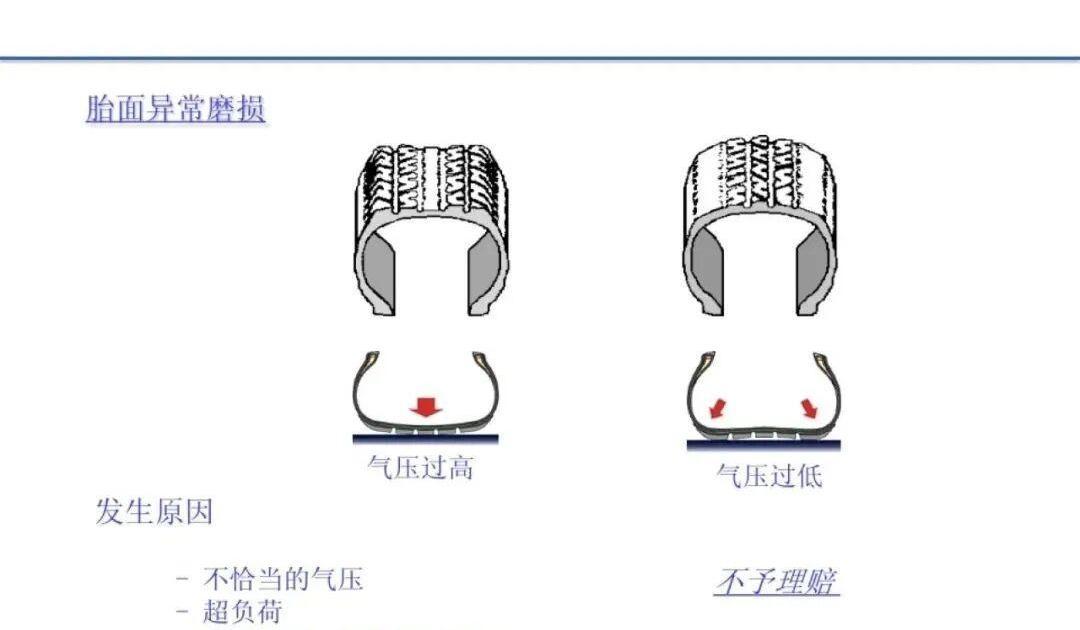
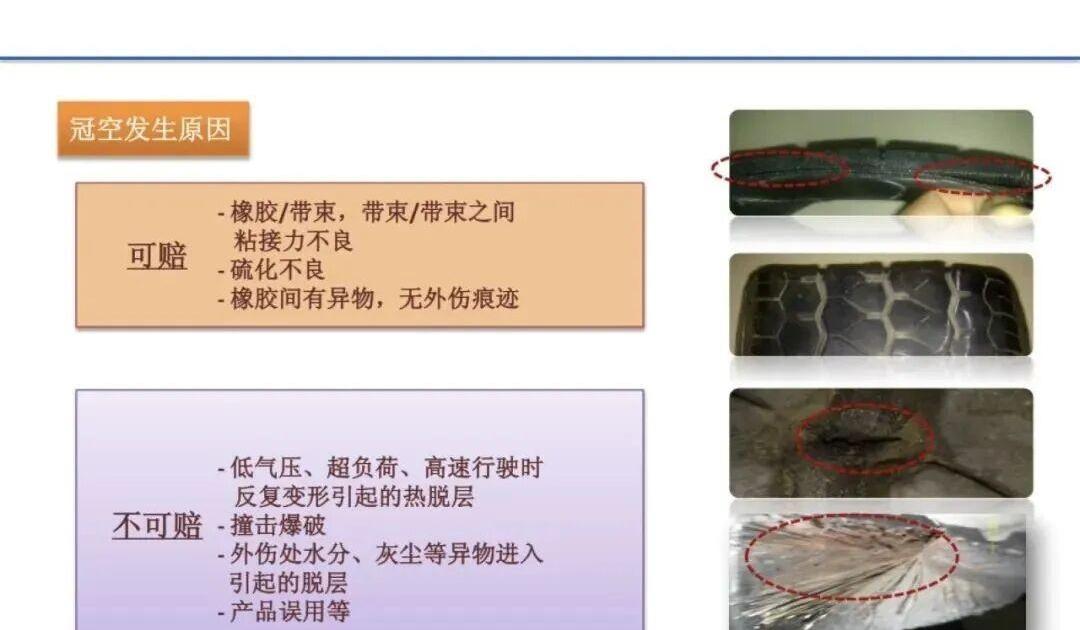
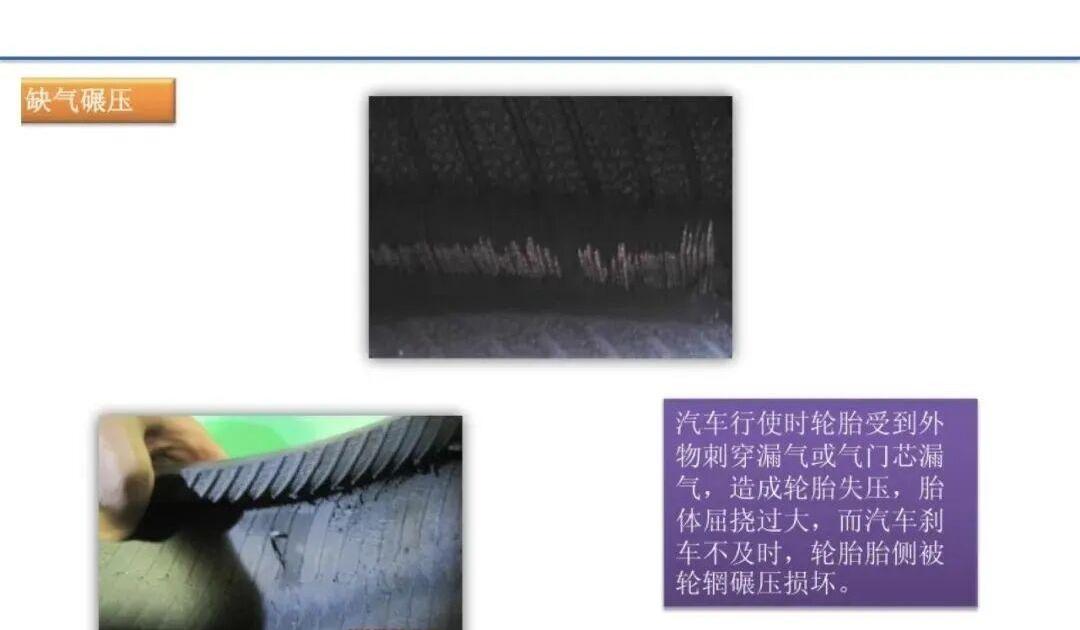
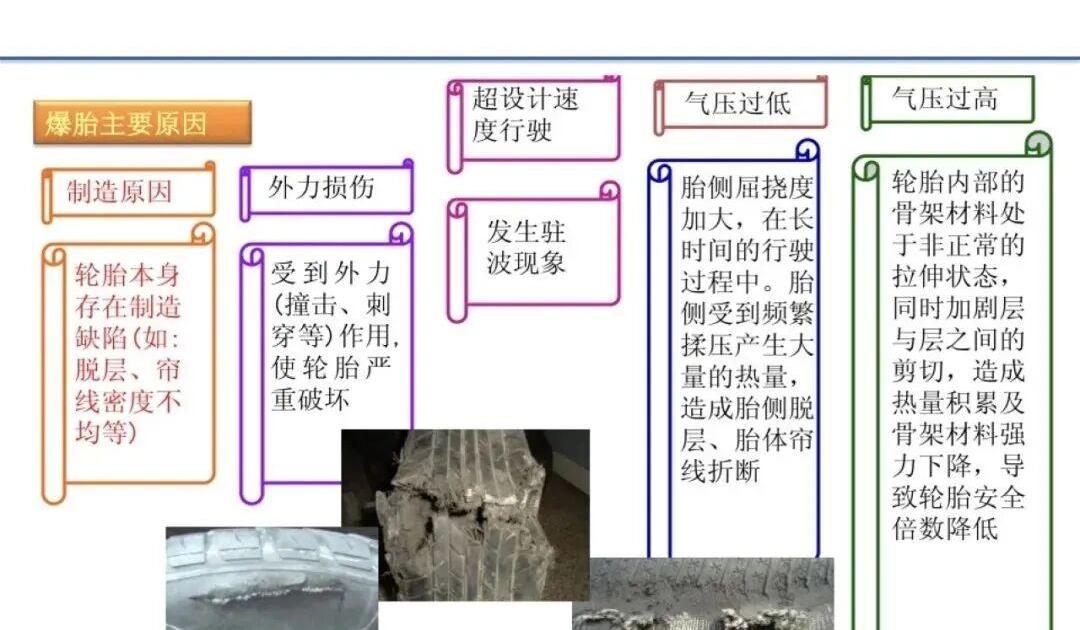
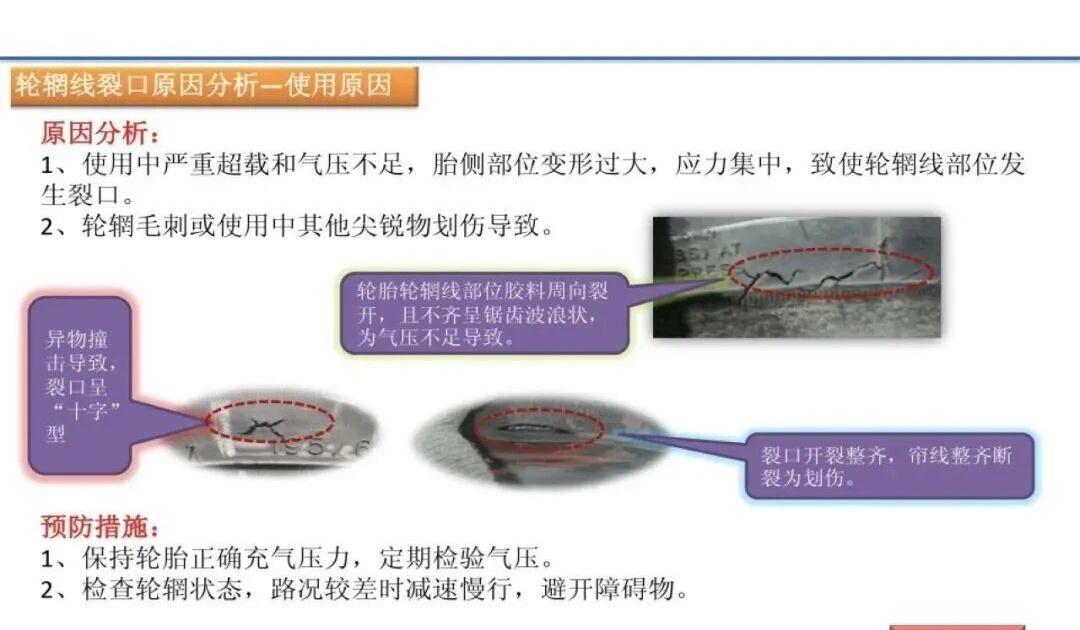
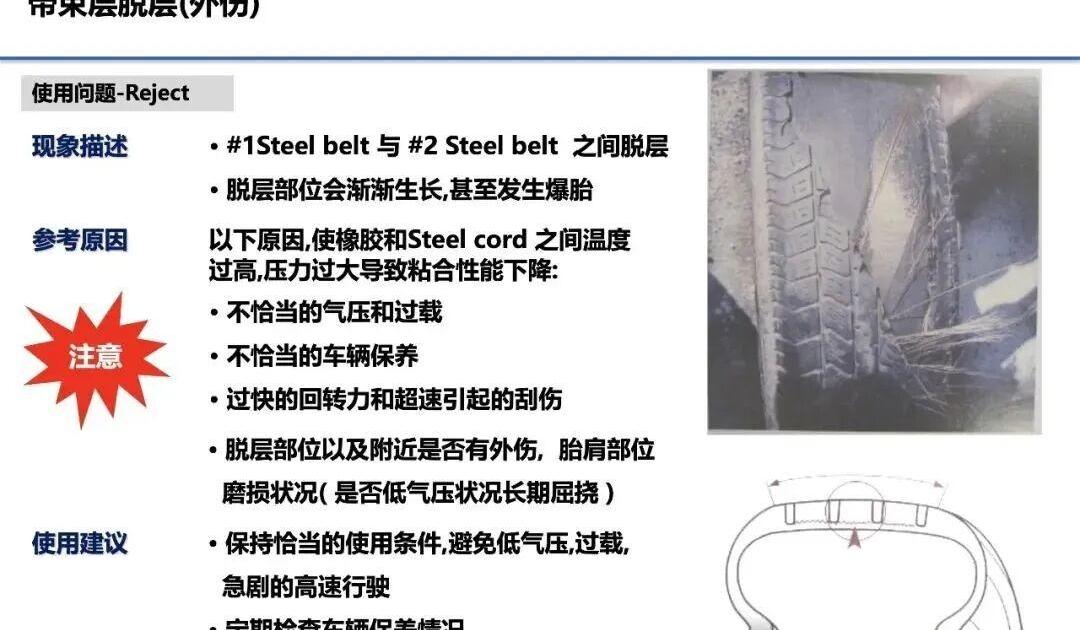
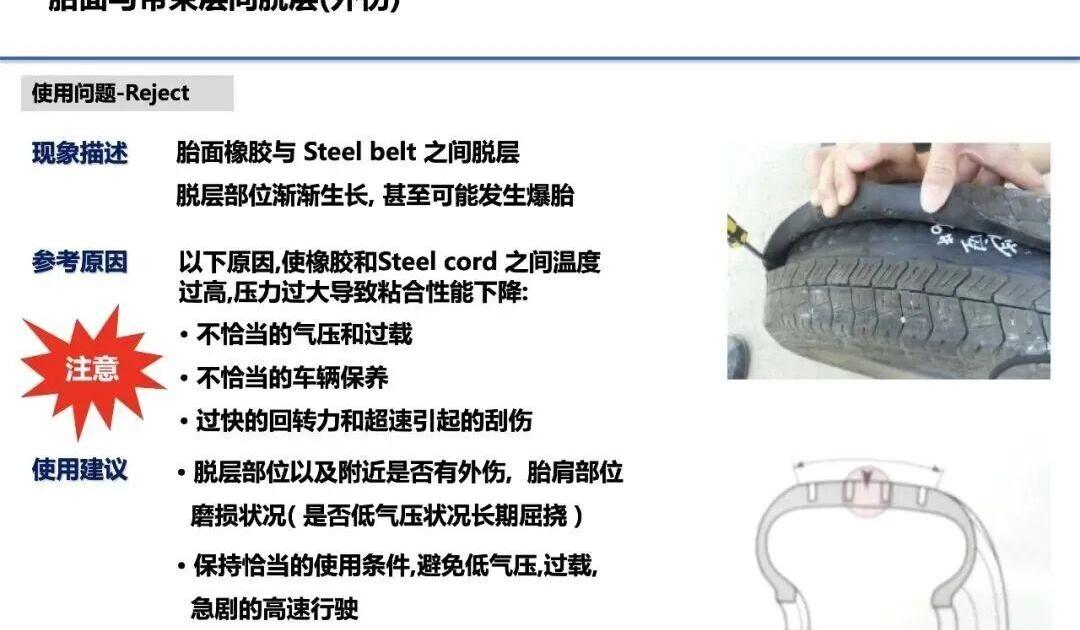
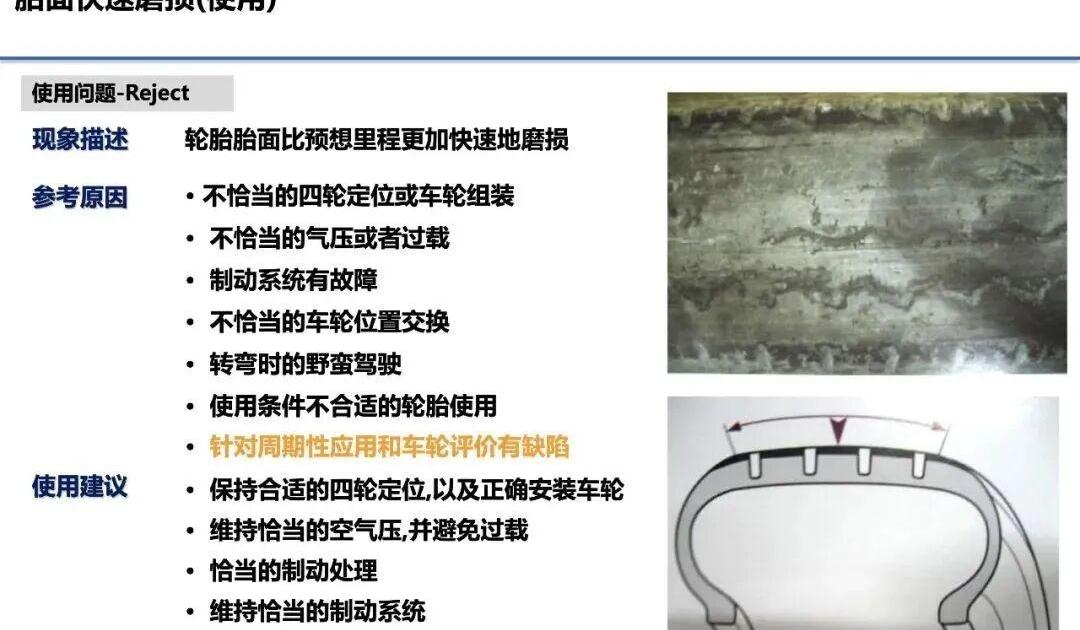
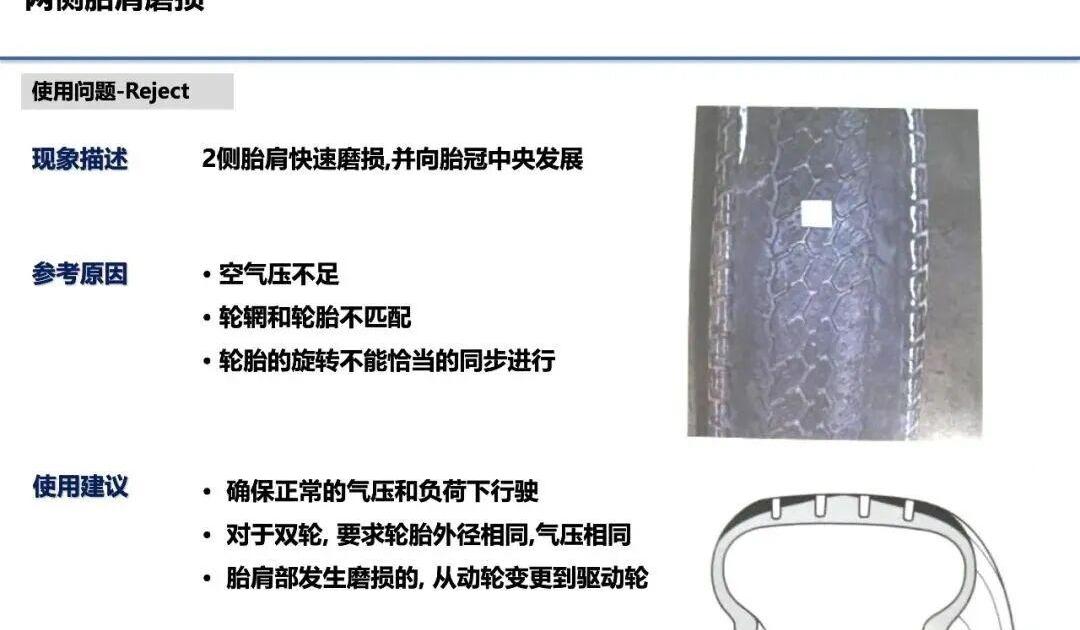
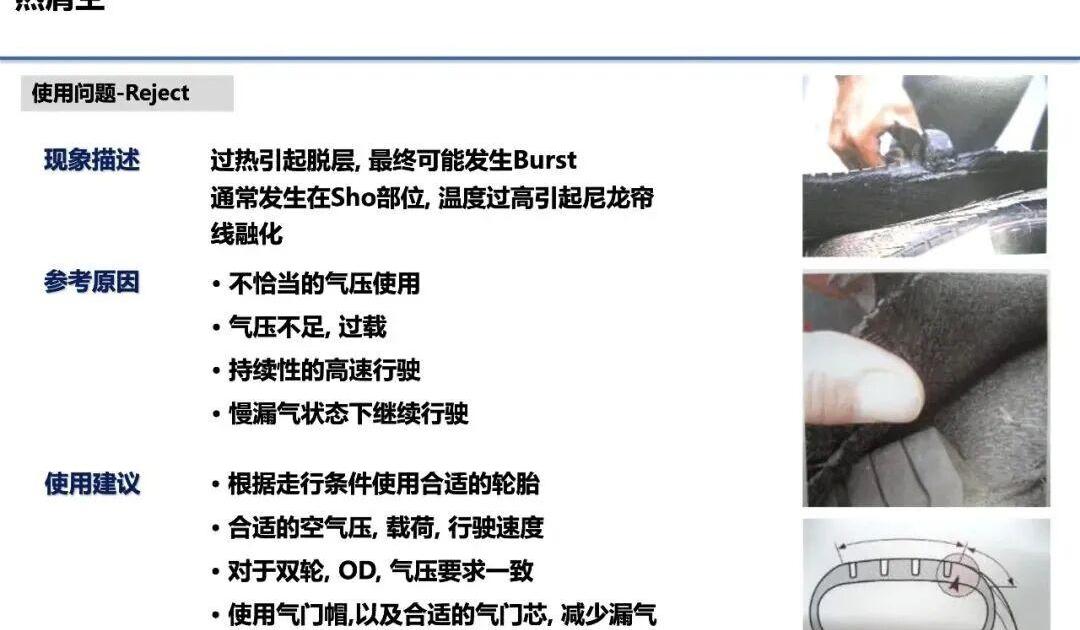
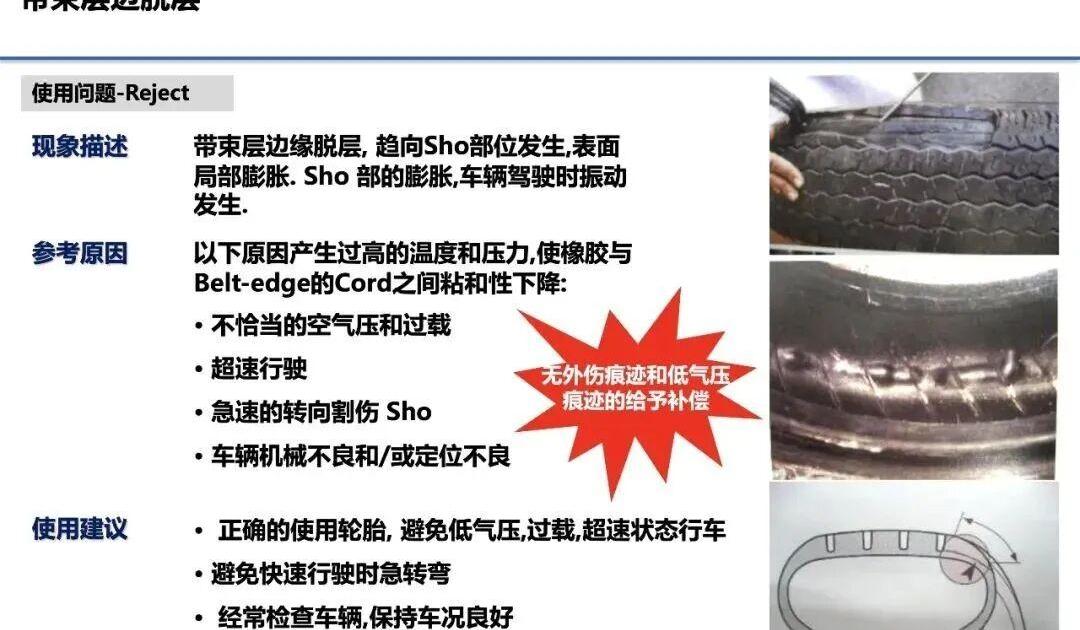
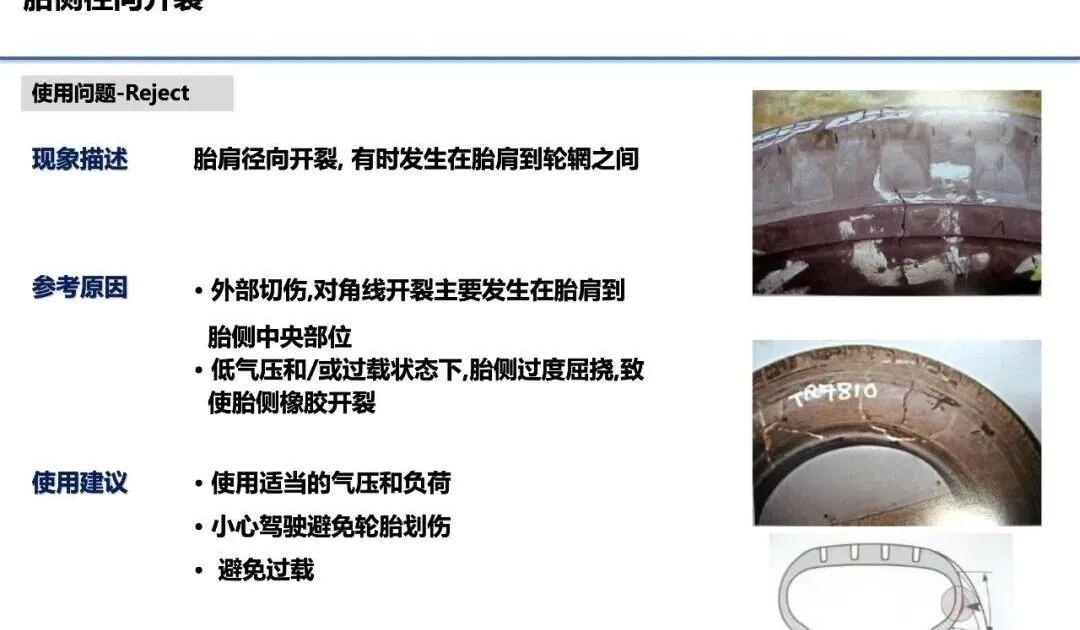
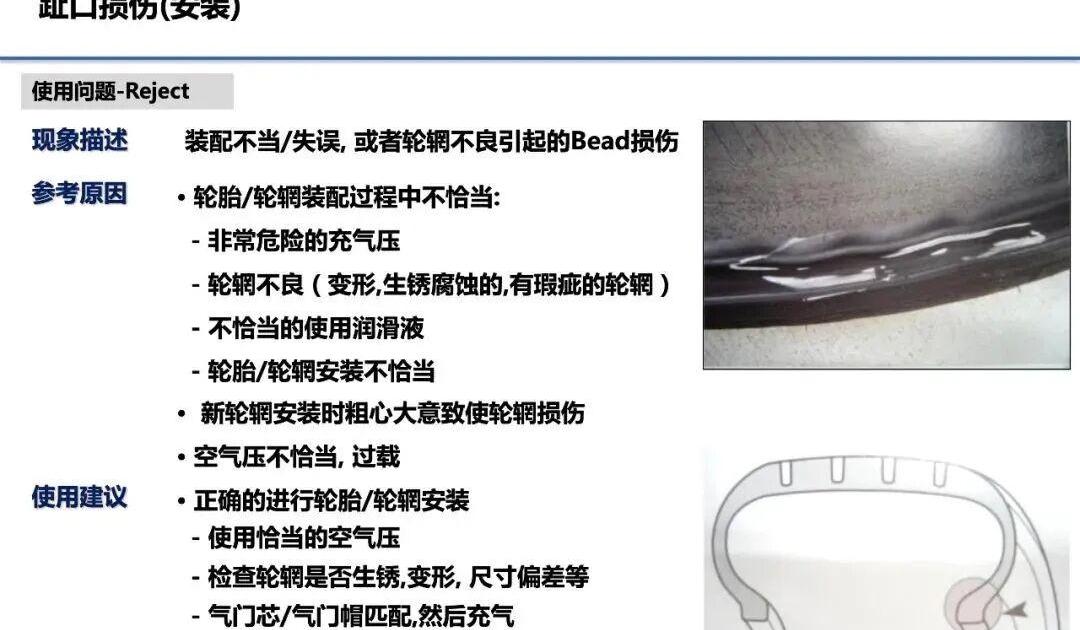
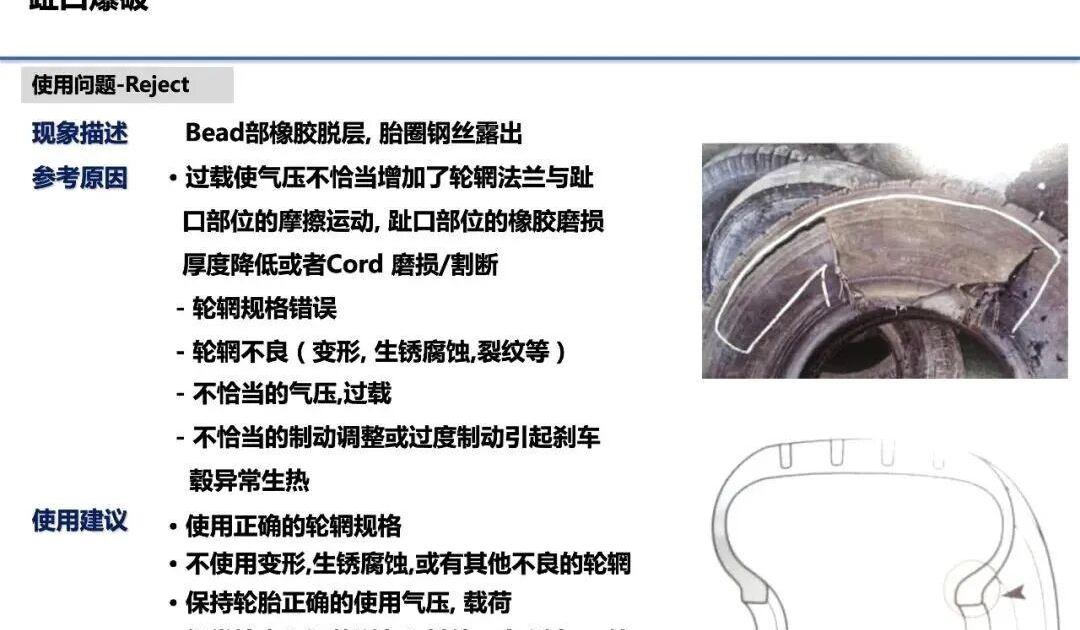
- Inflation pressure: Under-inflation causes excessive deformation, severe flexing, and cord weakening → abnormal shoulder wear, separation, and bead damage.
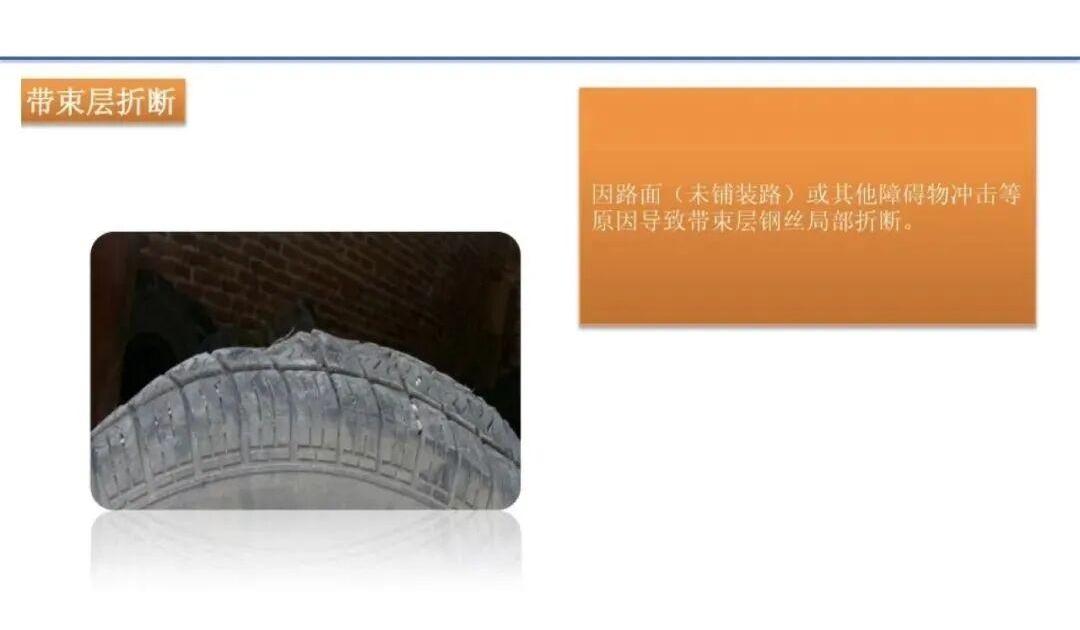
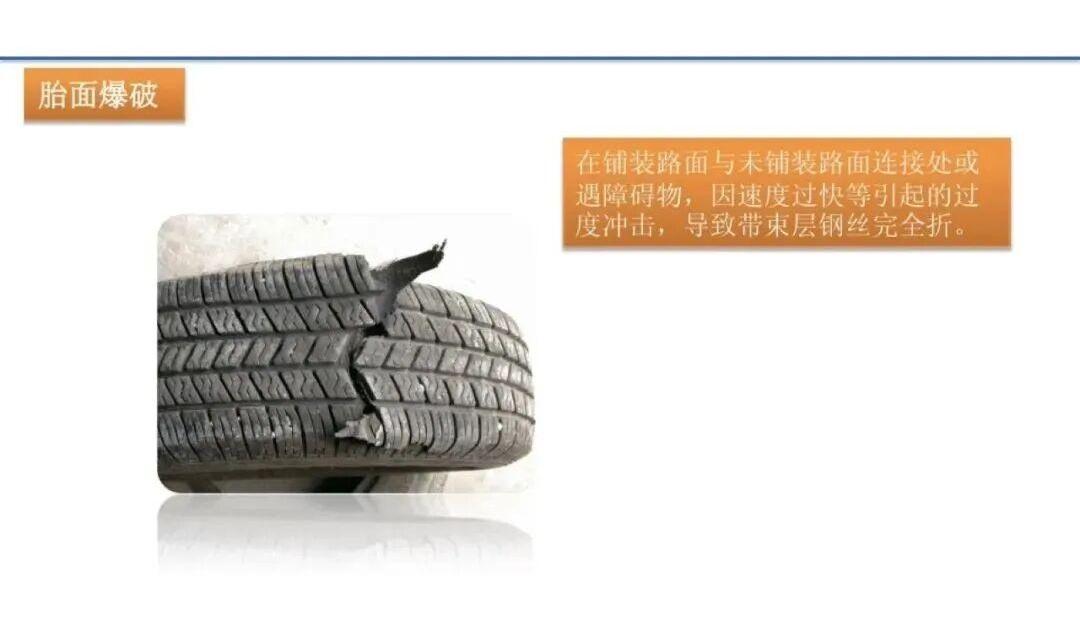
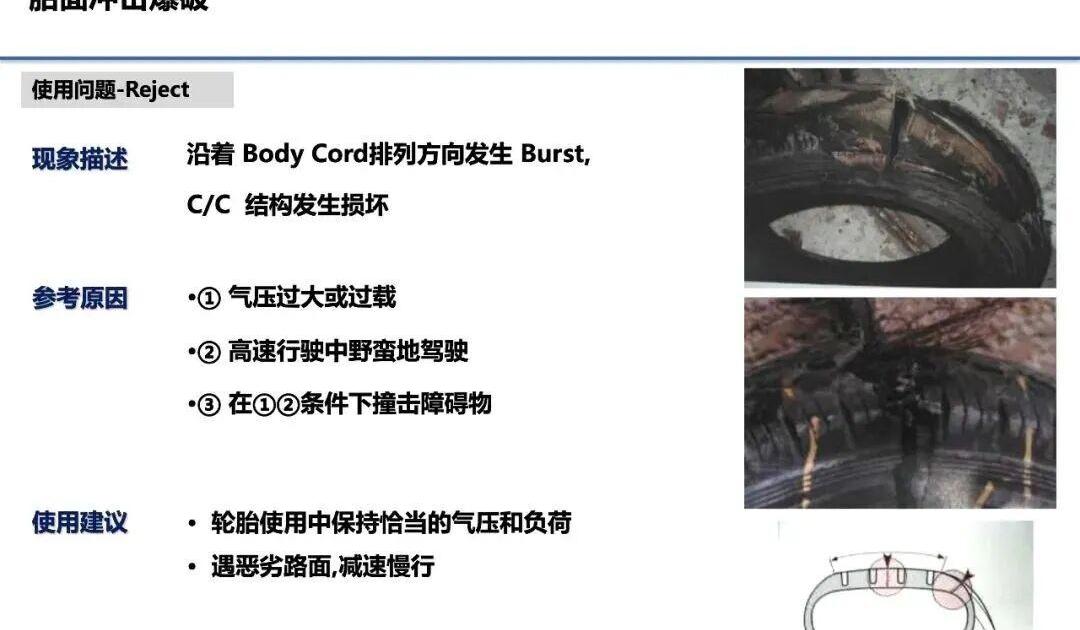
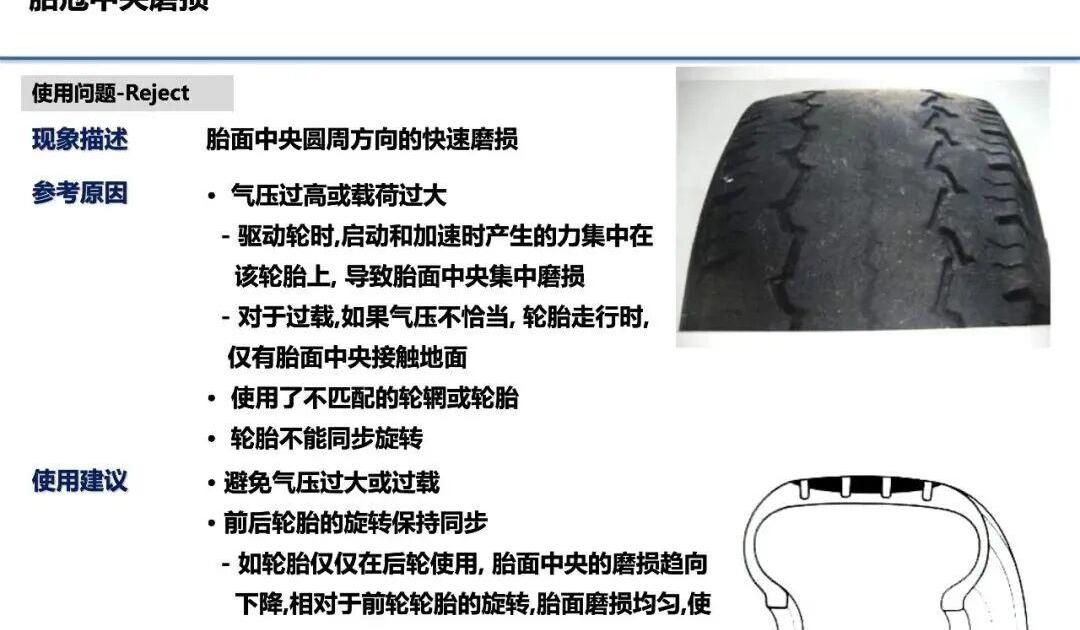
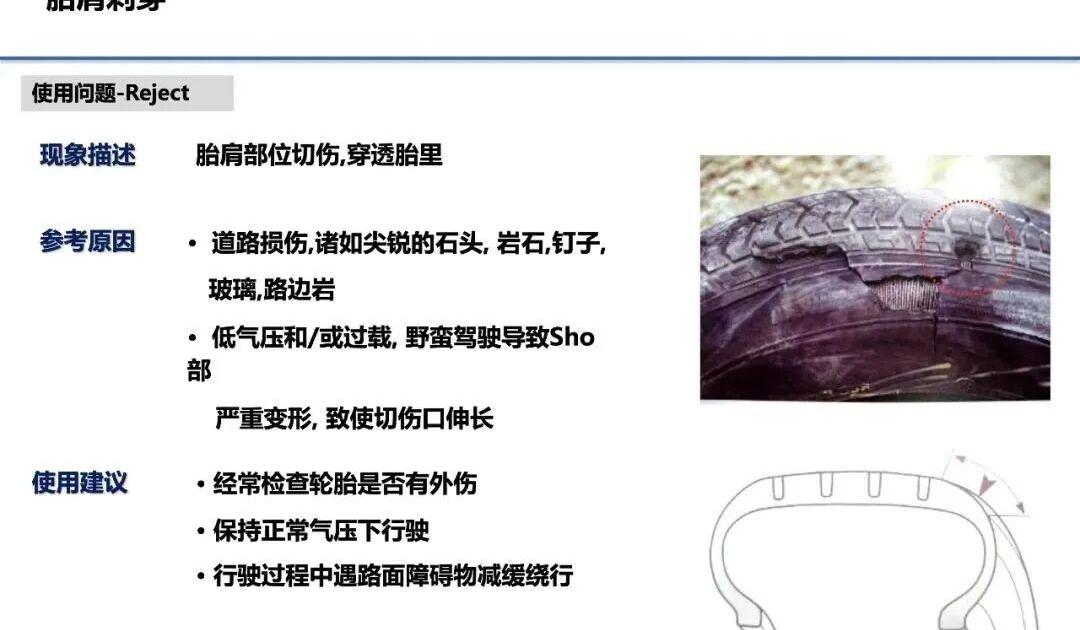
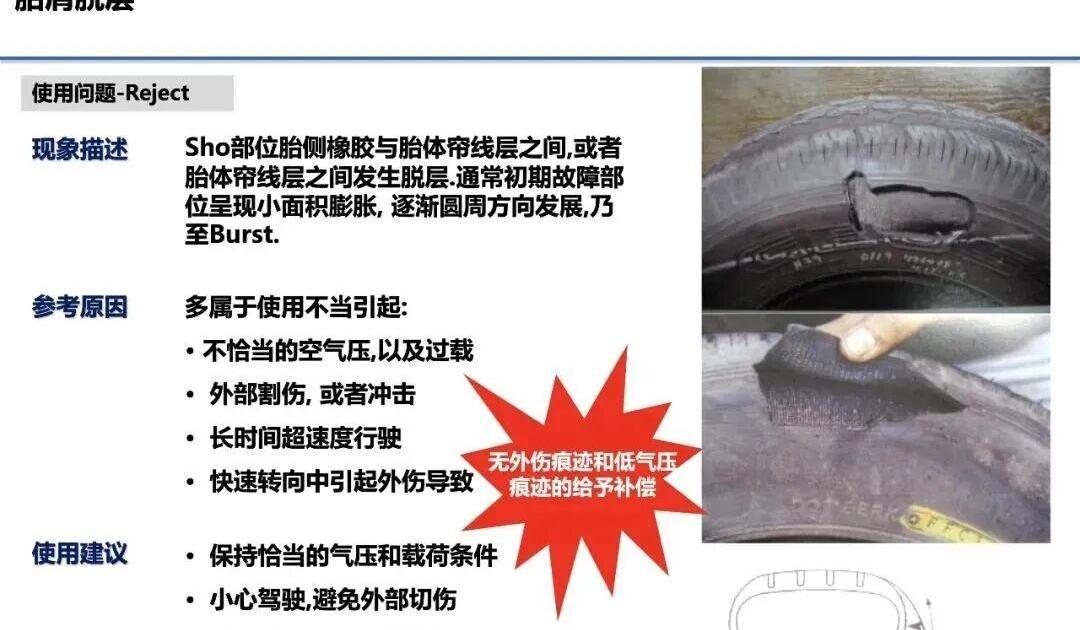
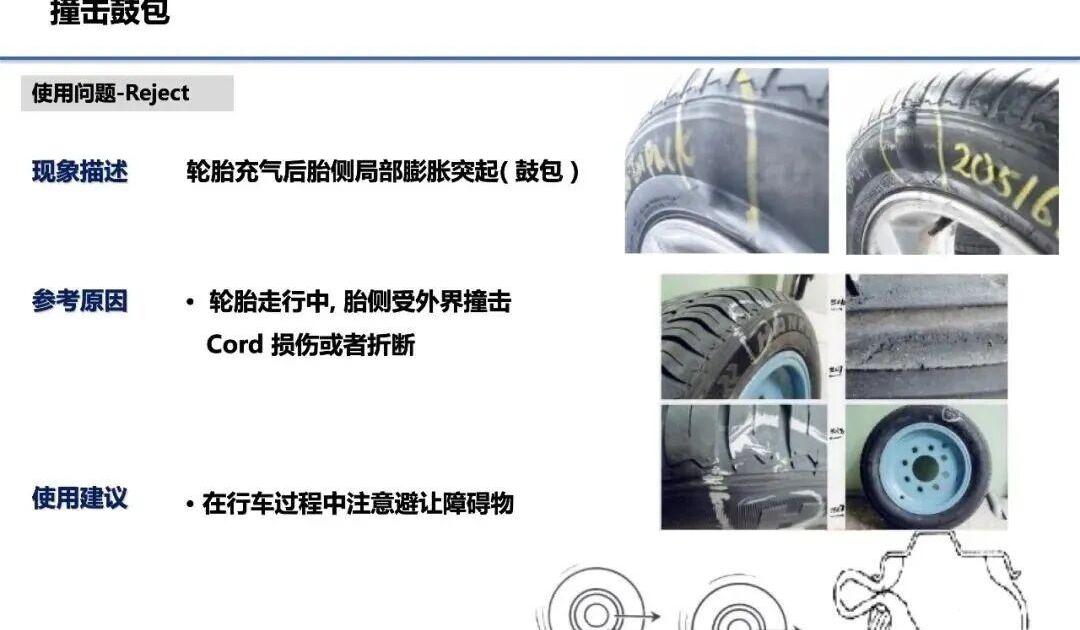
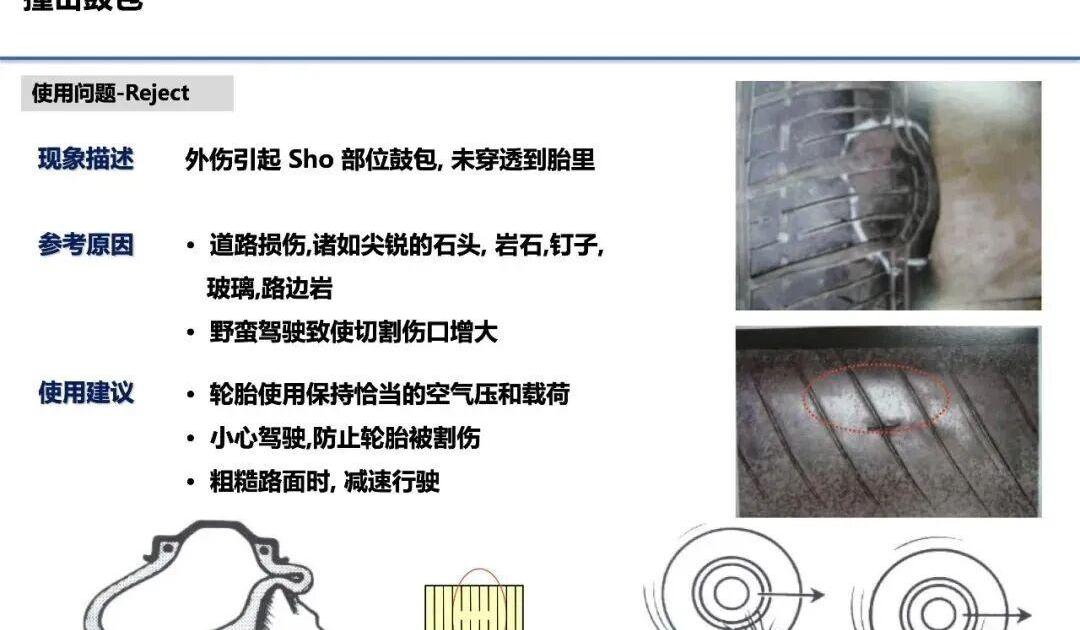
- Load: Overloading shifts tread contact, stresses the carcass, and deforms the bead → impact damage and separation.
- Speed: High speed amplifies deformation and flexing heat buildup → cord weakening and structural failure.
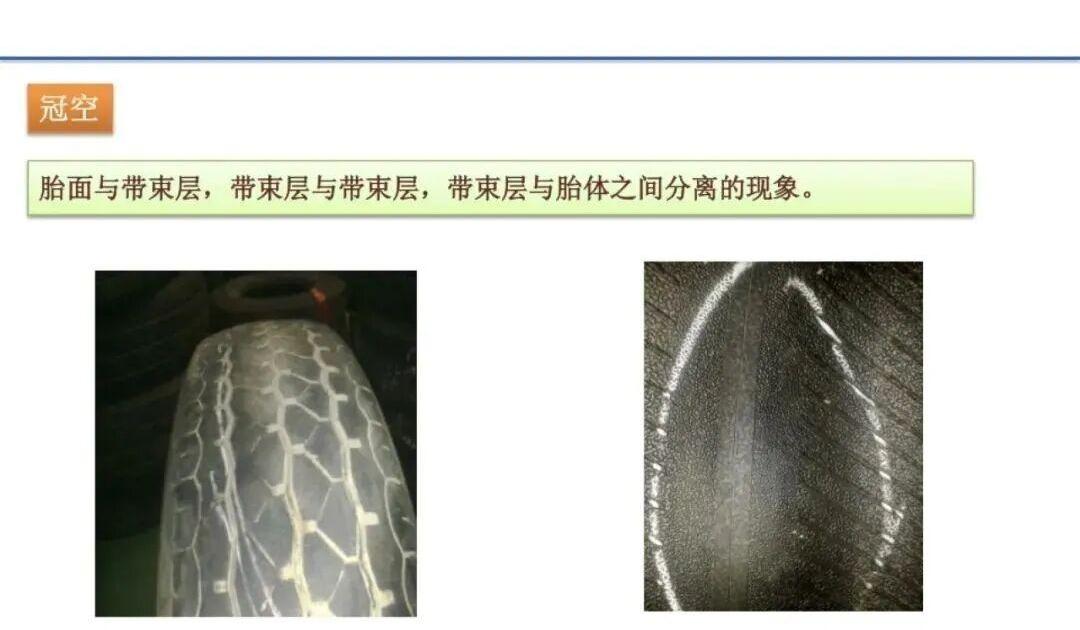
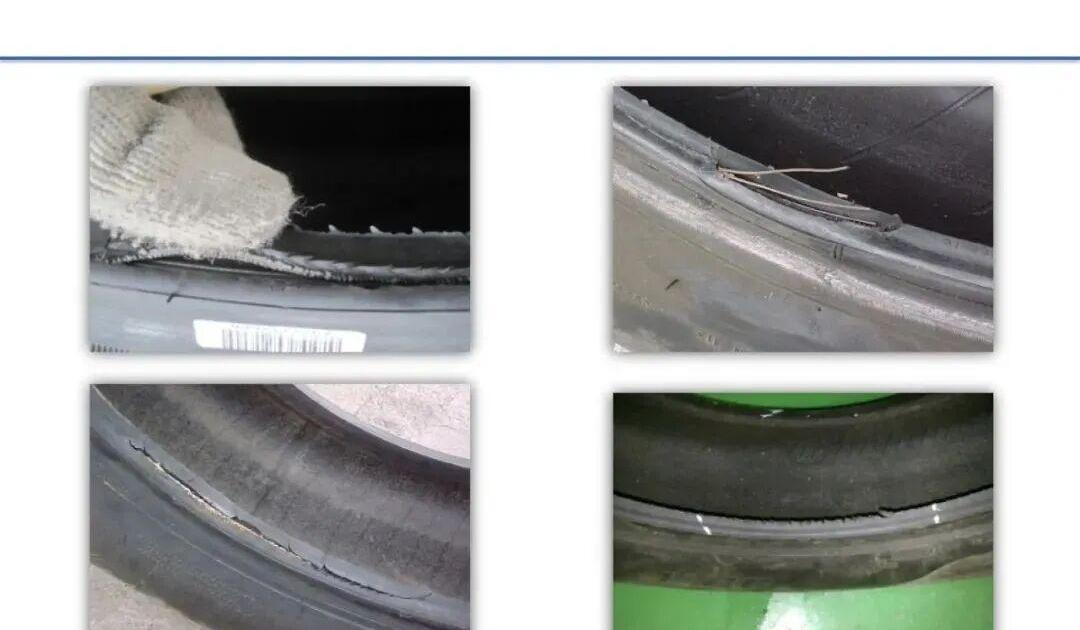
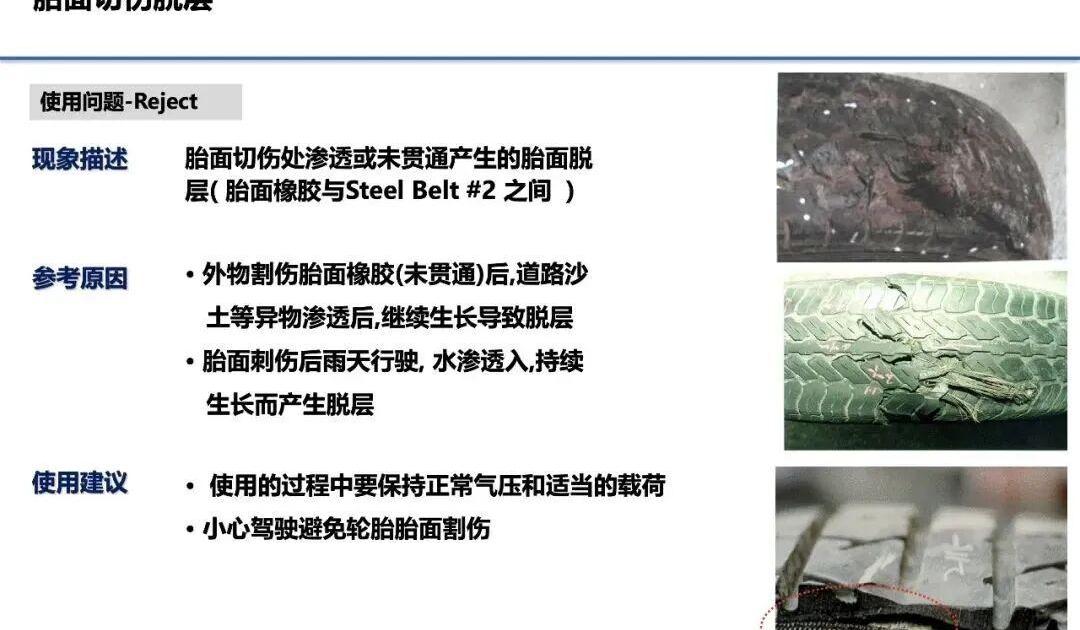
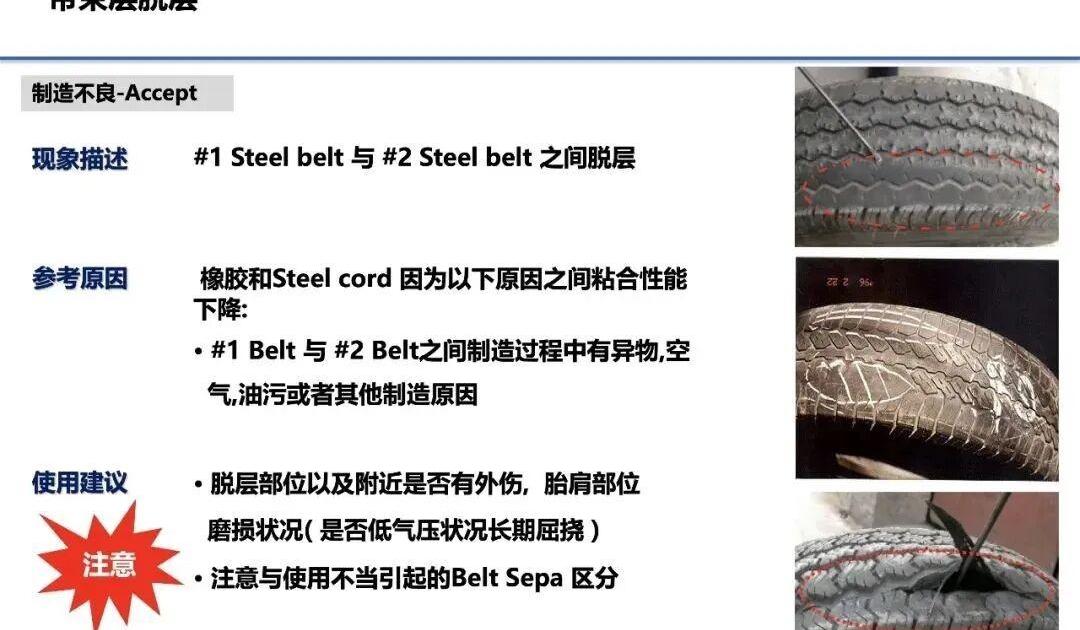
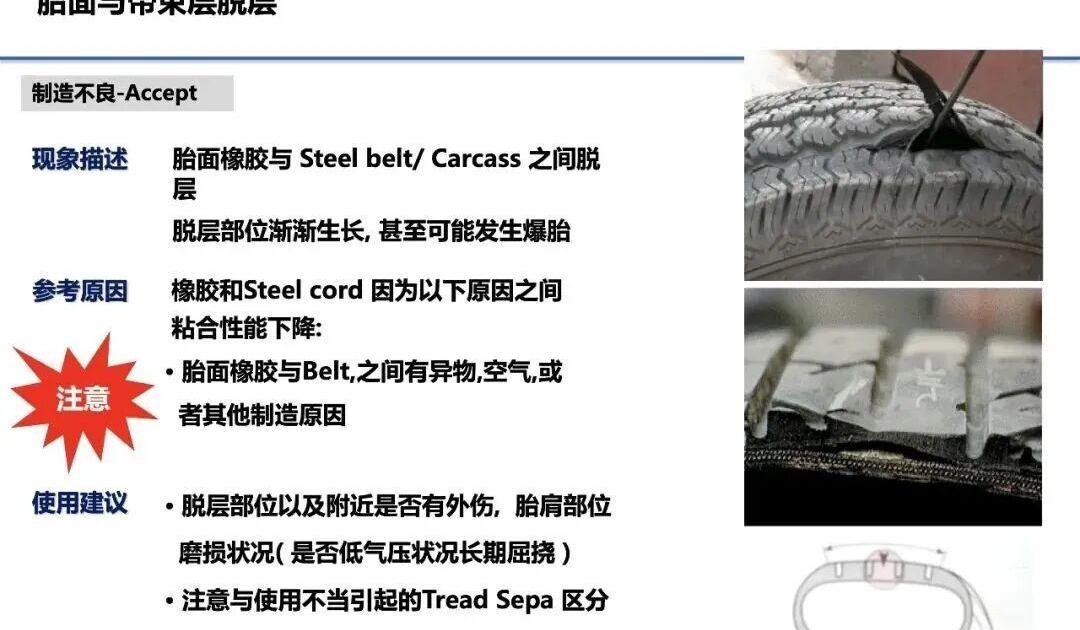
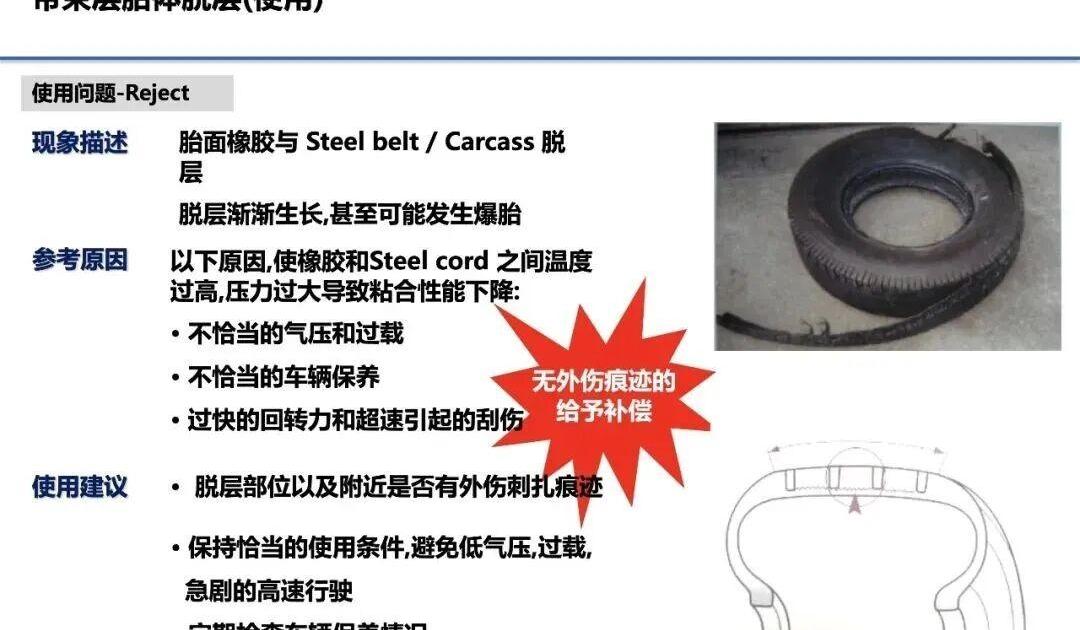
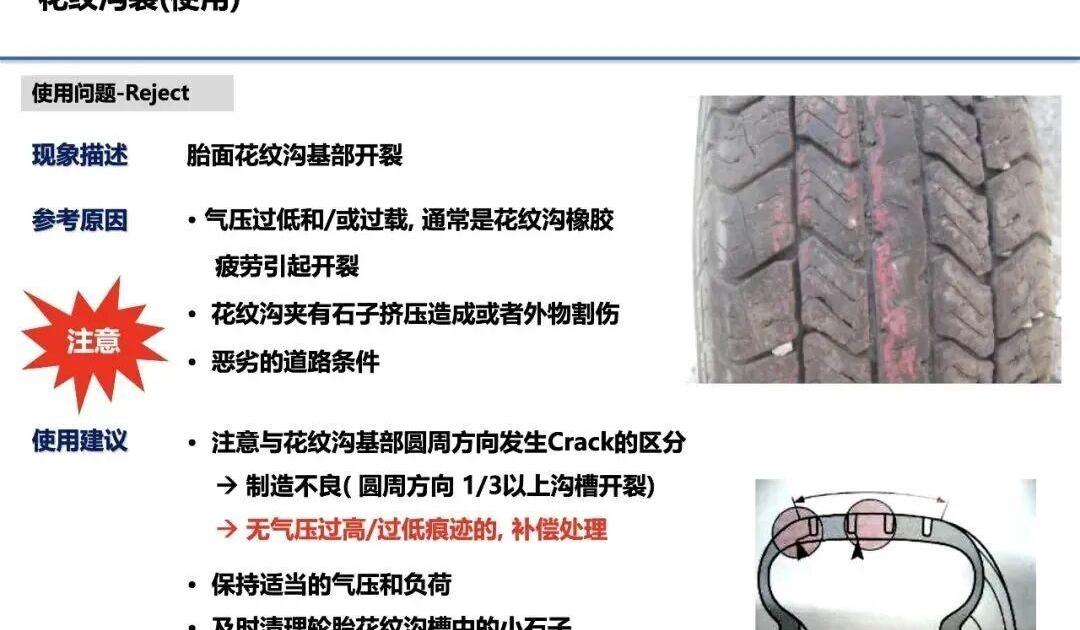
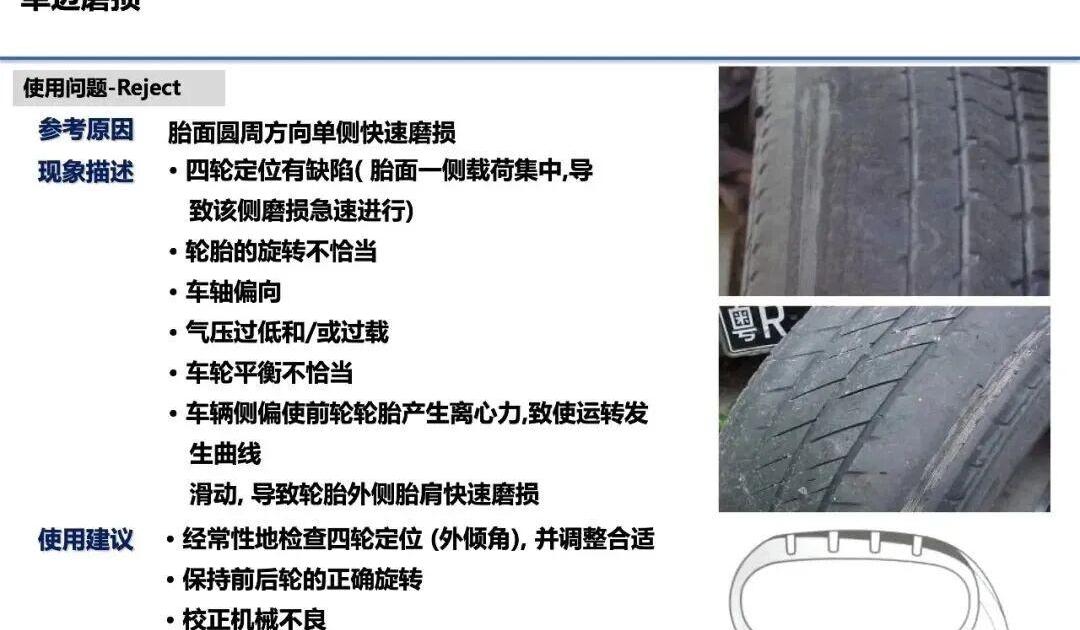
These three factors lead to four common failure outcomes: abnormal wear, impact damage, separation, and bead damage.
Inflation Pressure Matters
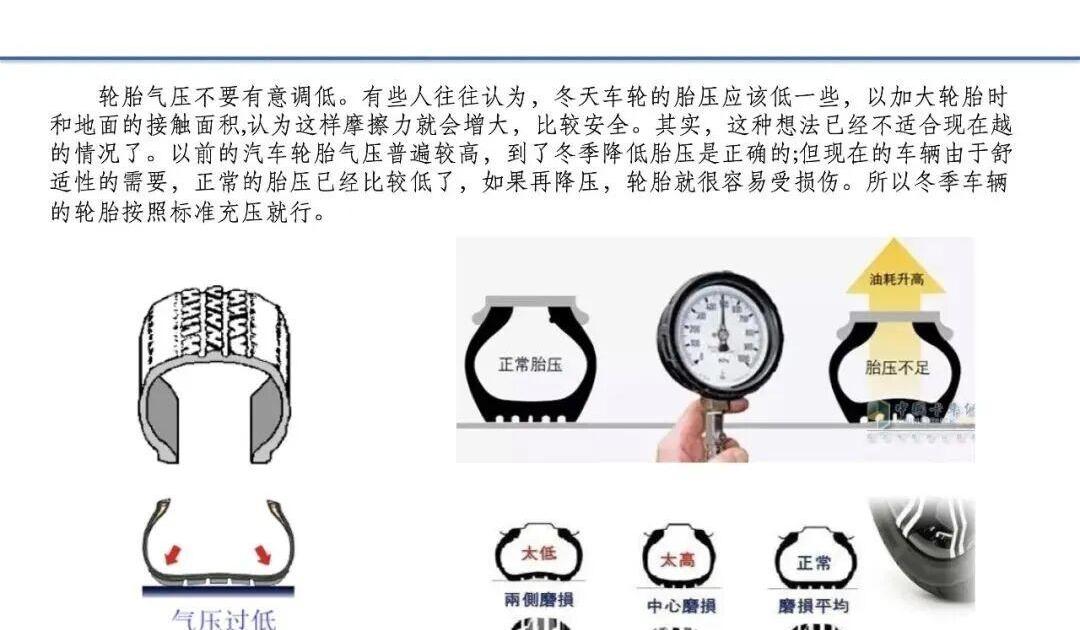
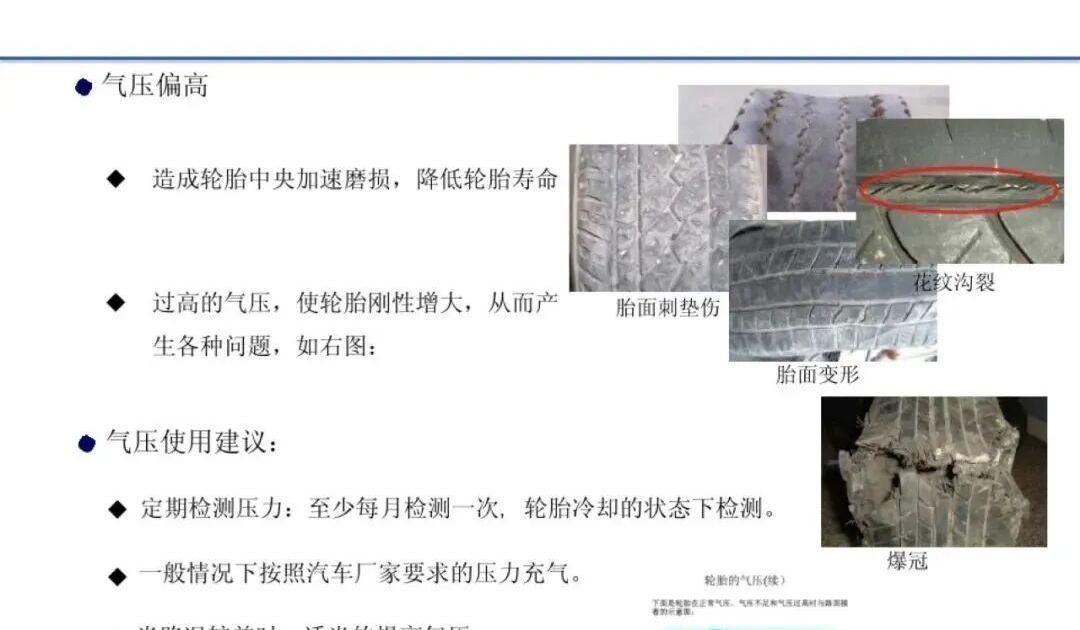
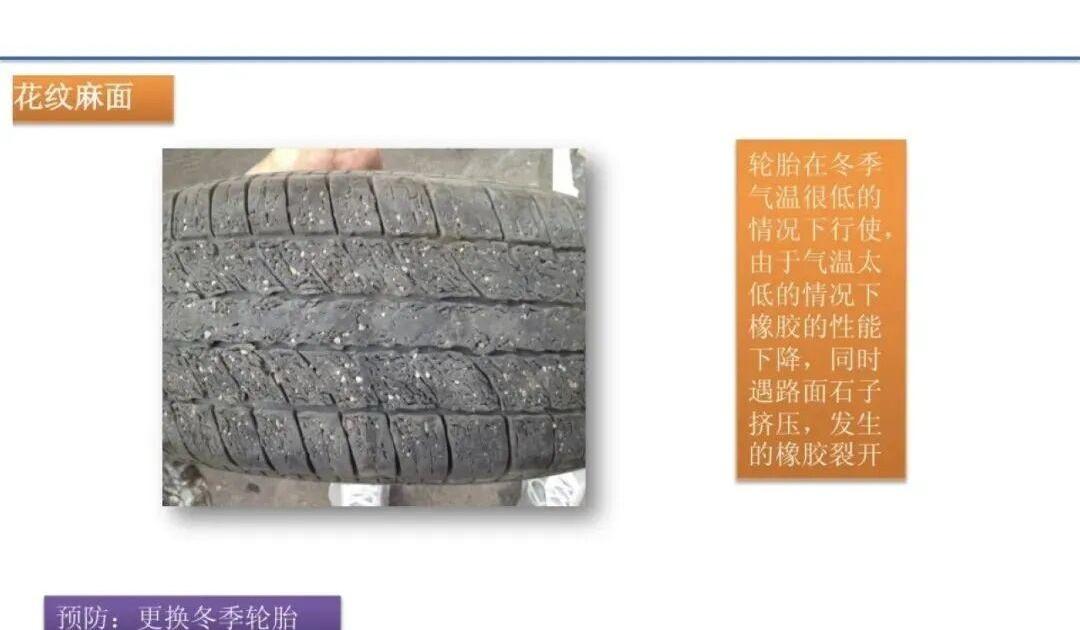
Never intentionally run lower tire pressure in winter. Modern vehicles already run relatively low recommended pressures for comfort; further reducing pressure makes tires prone to damage. Under-inflation causes shoulder wear and higher fuel consumption; over-inflation causes center wear. Always inflate to the vehicle manufacturer’s recommended pressure.
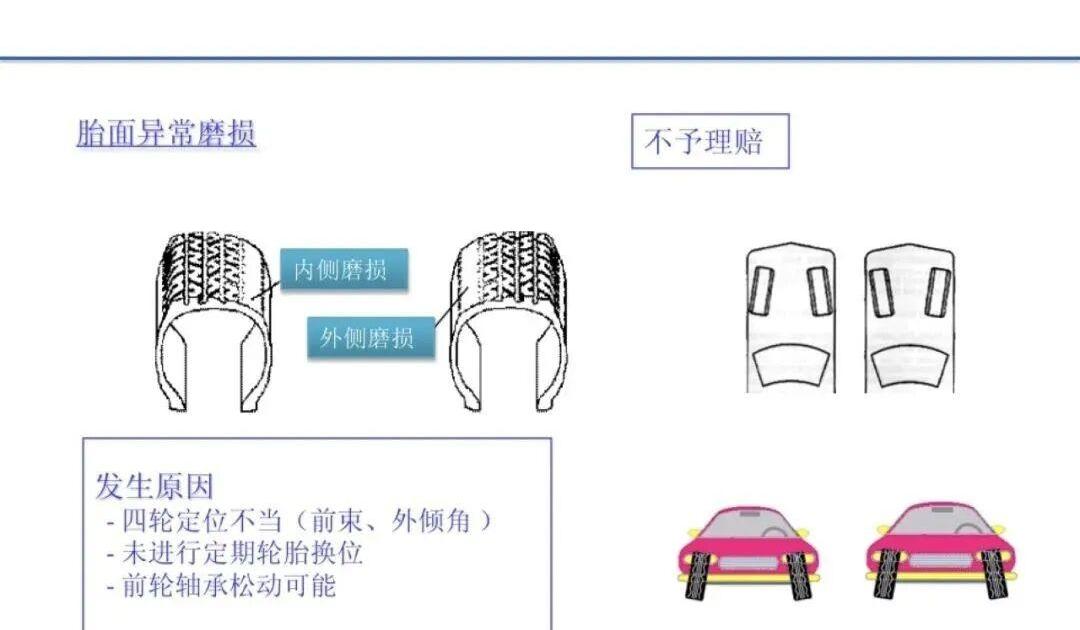
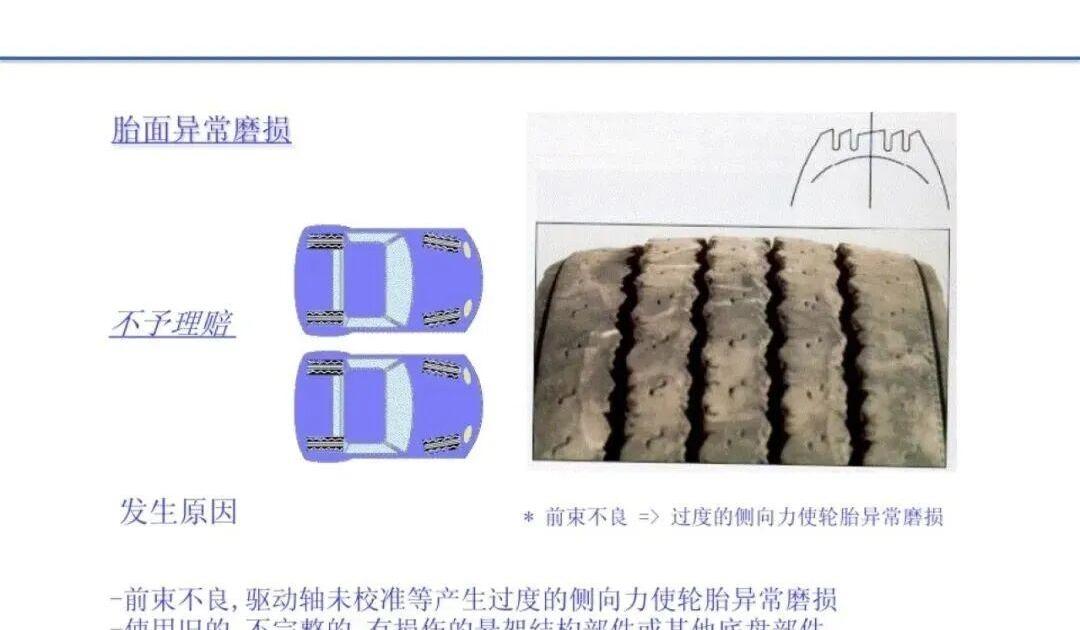
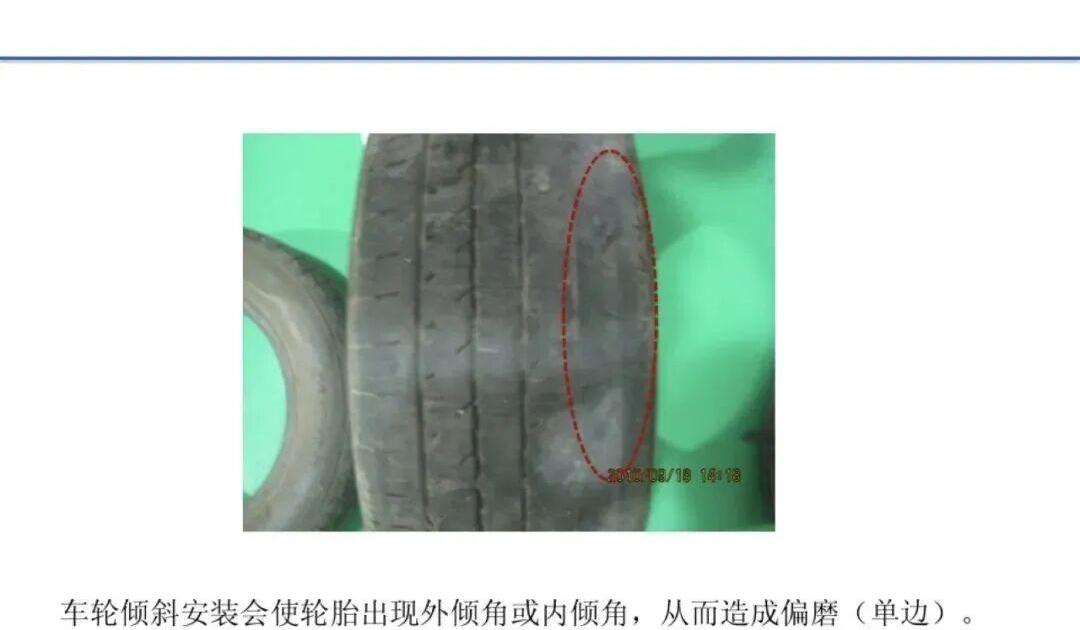
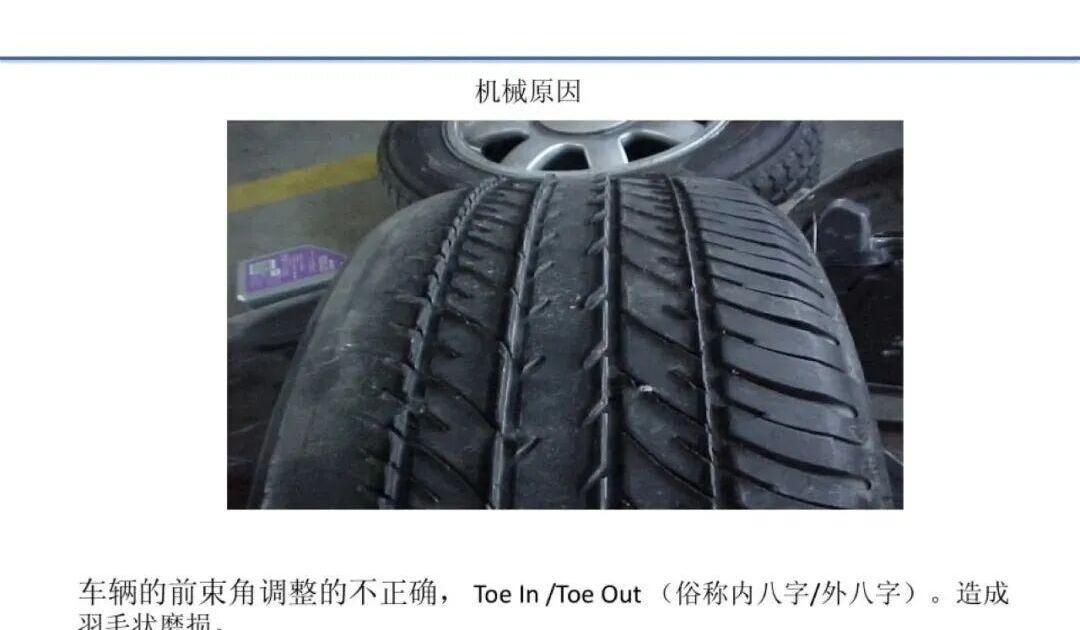
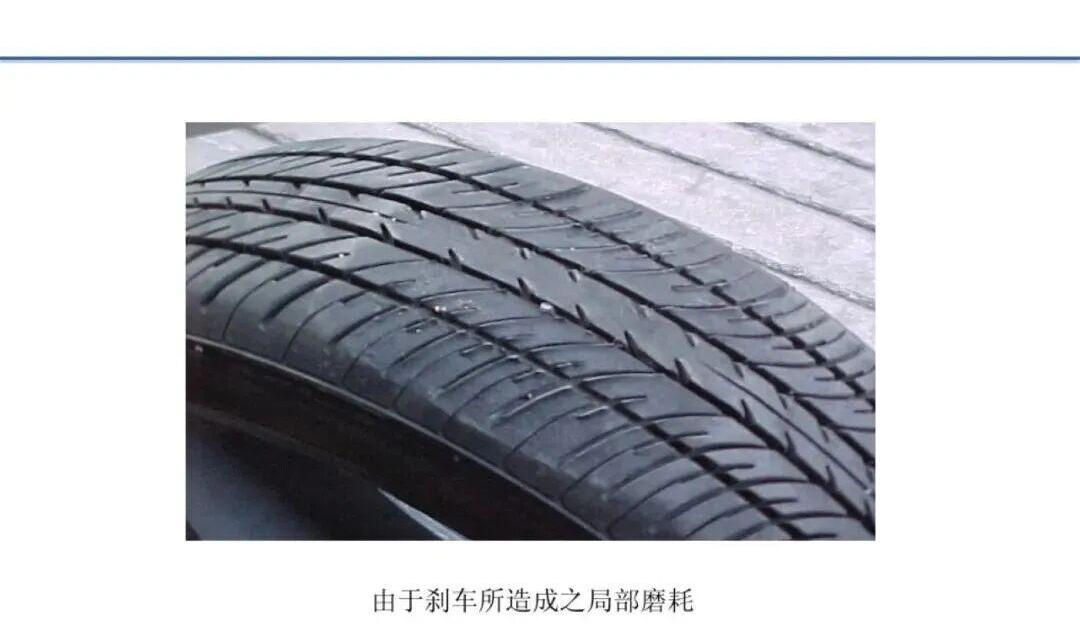
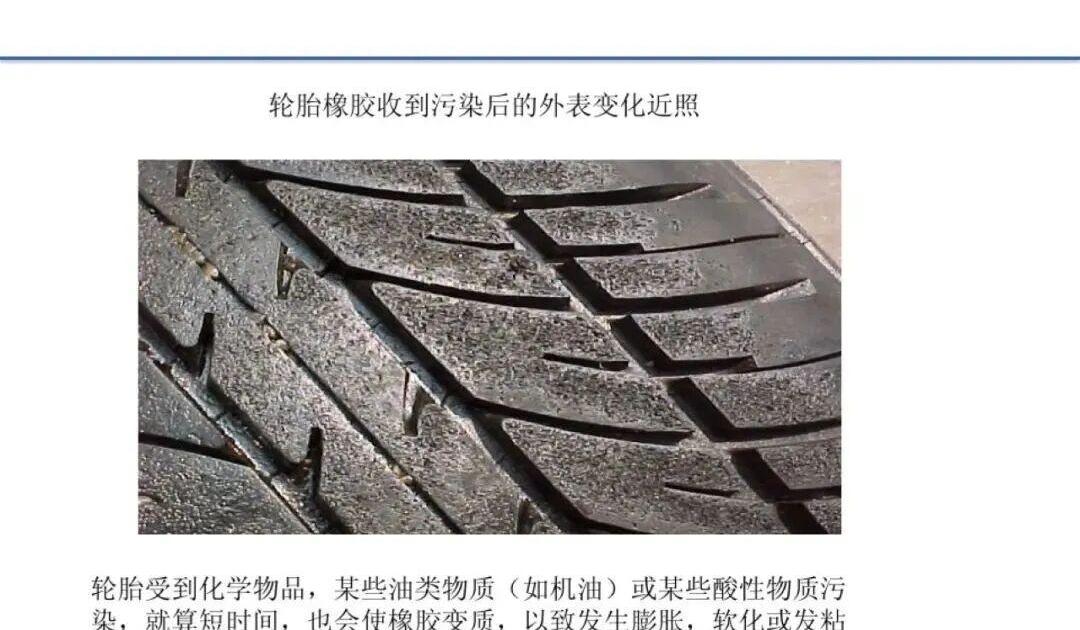
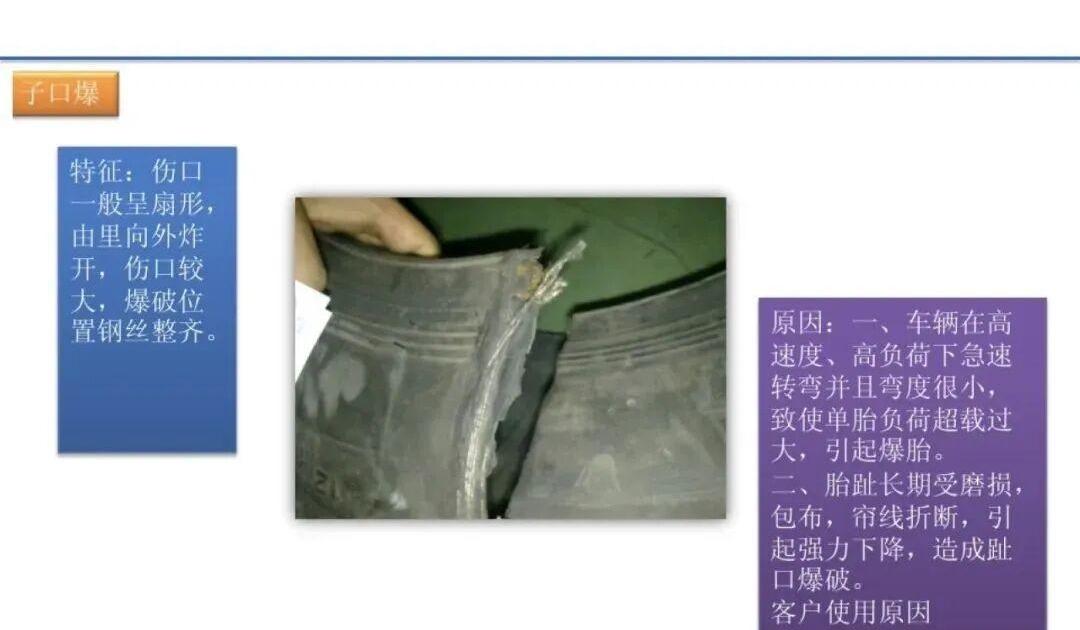
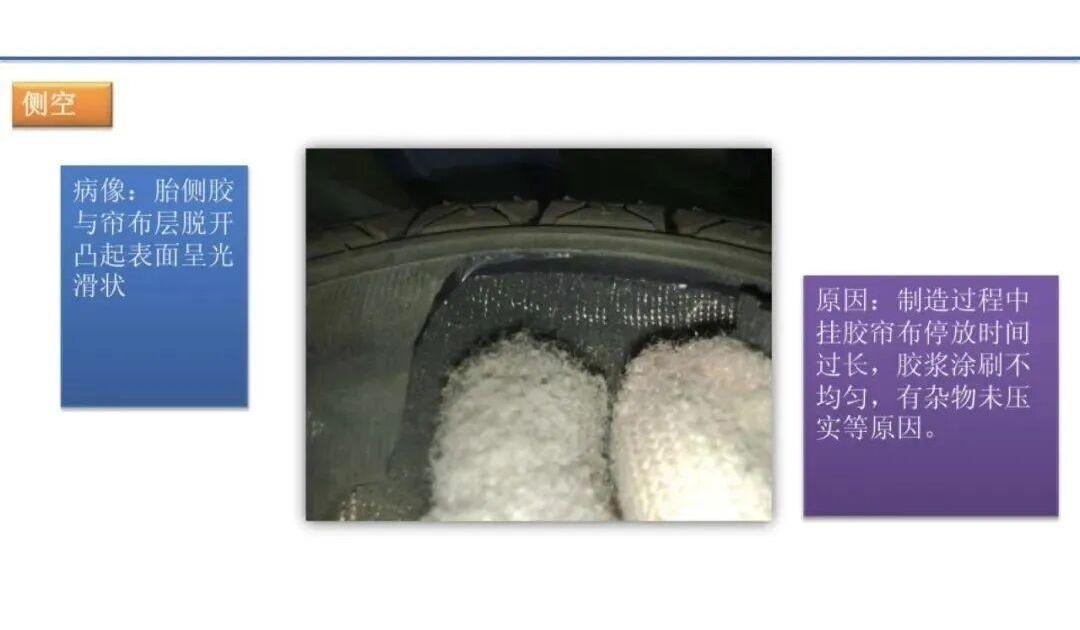
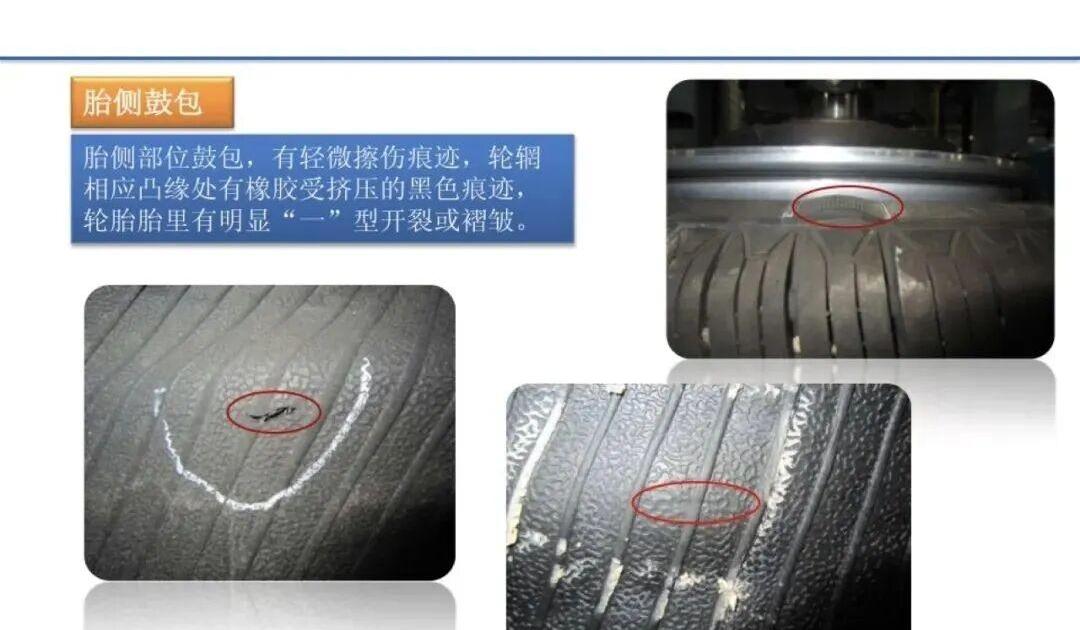
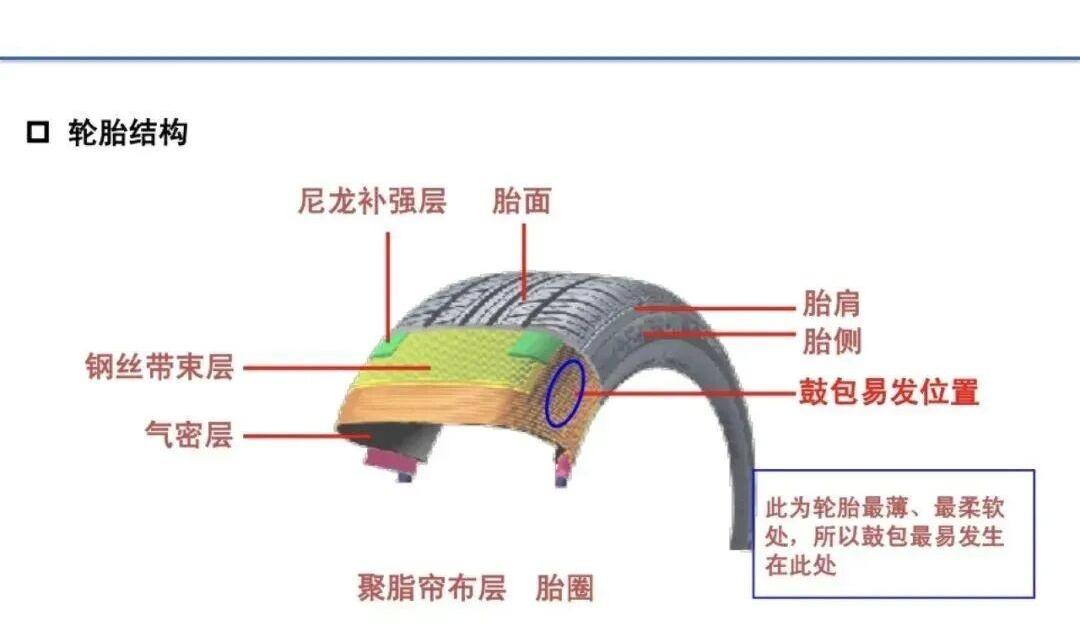
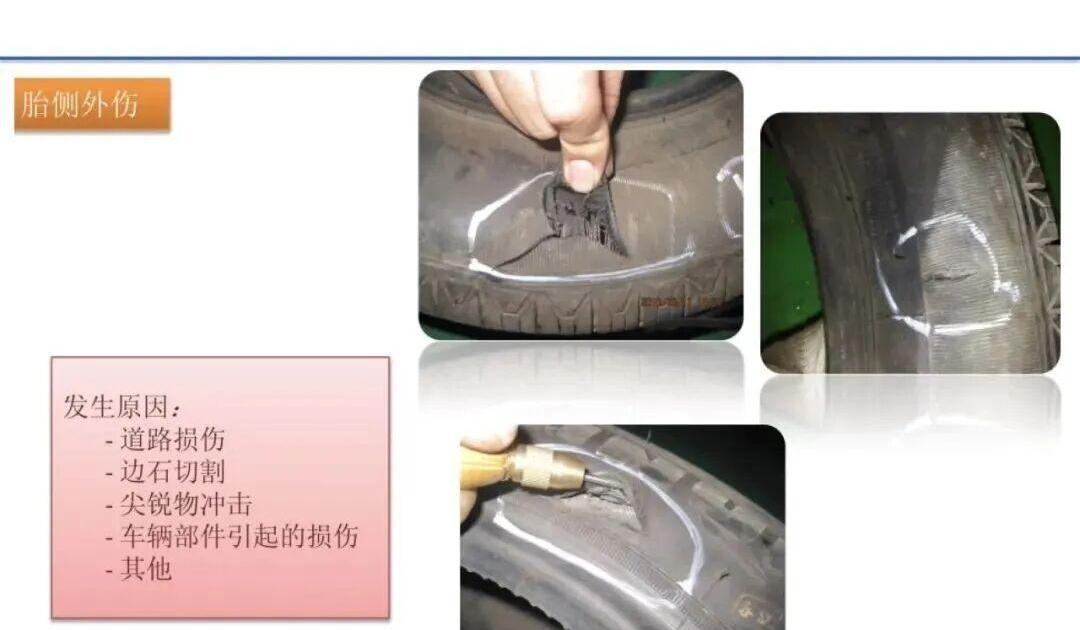
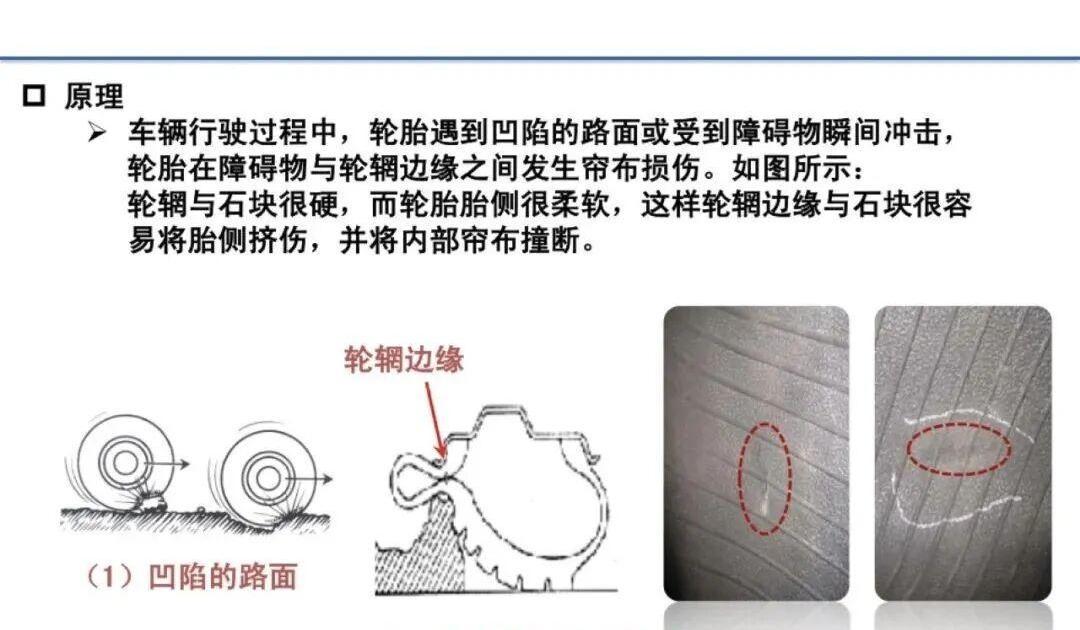
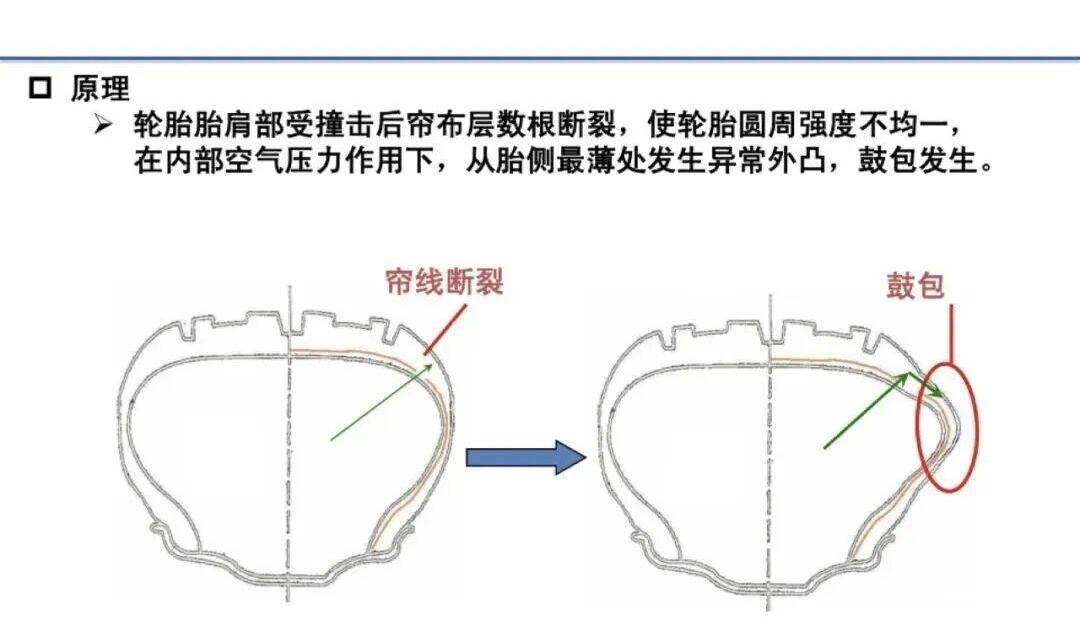
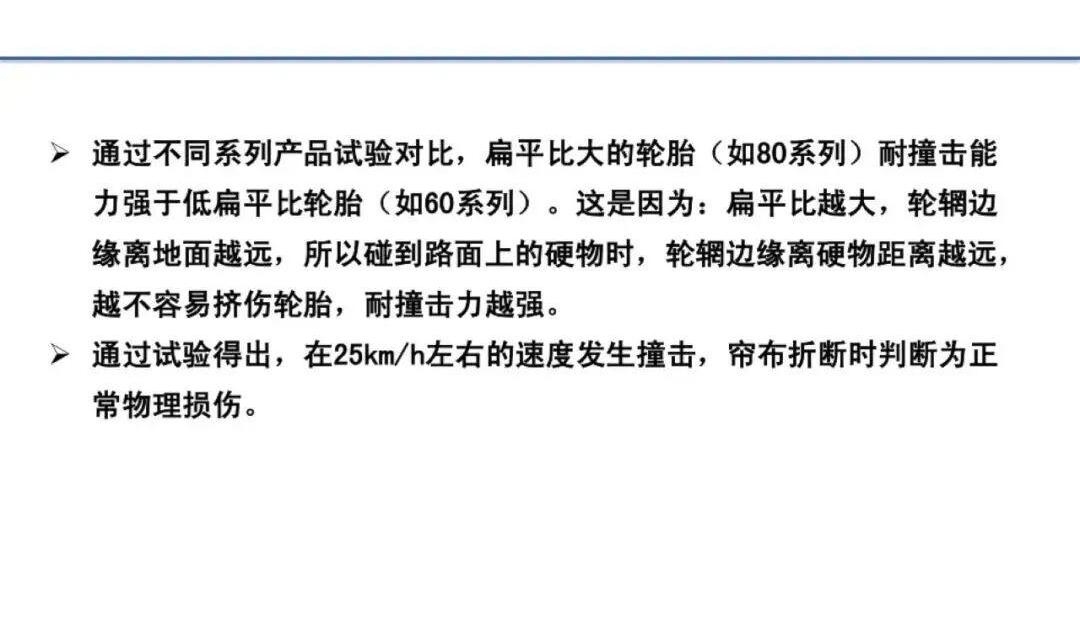
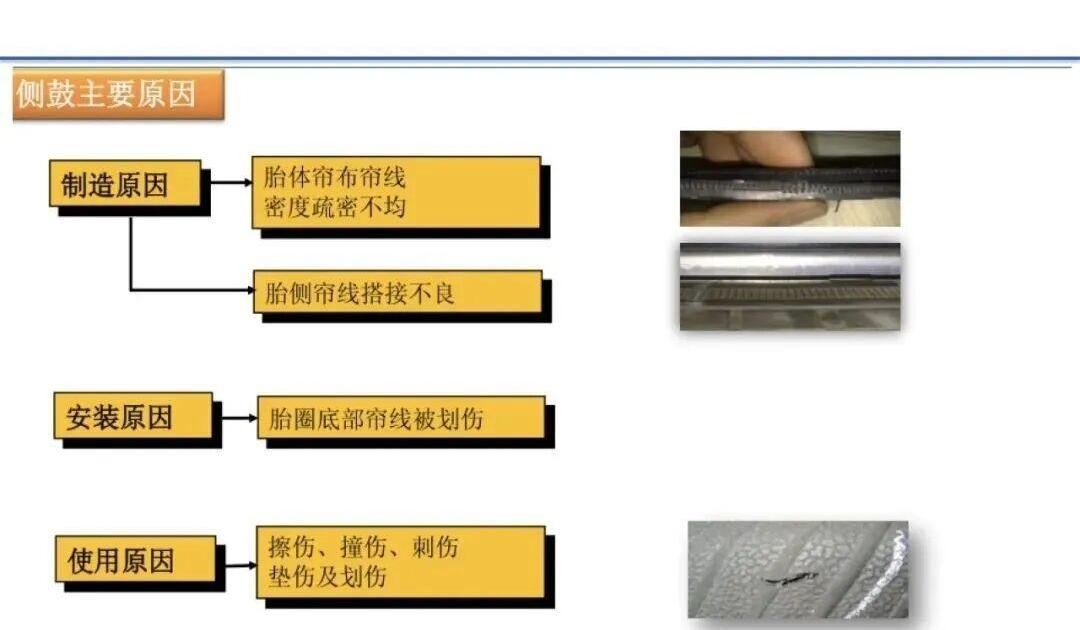
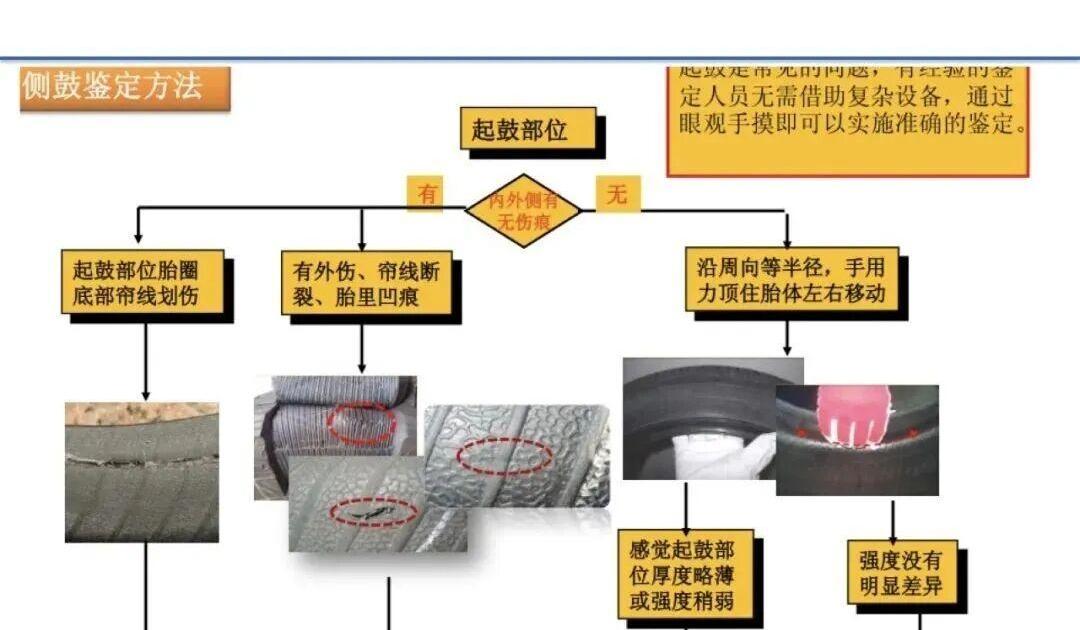
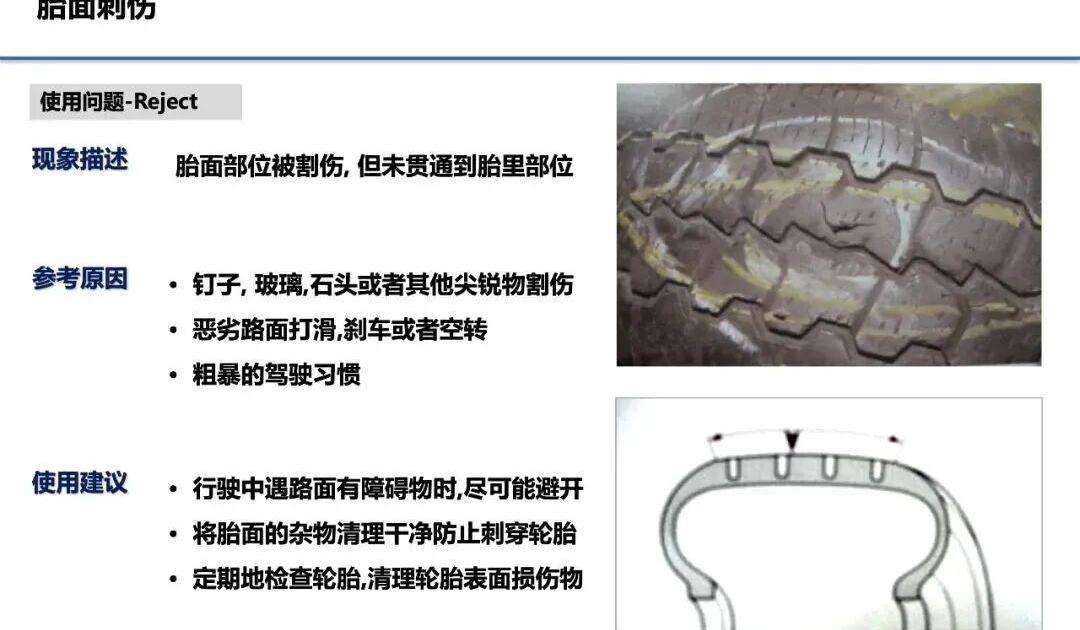
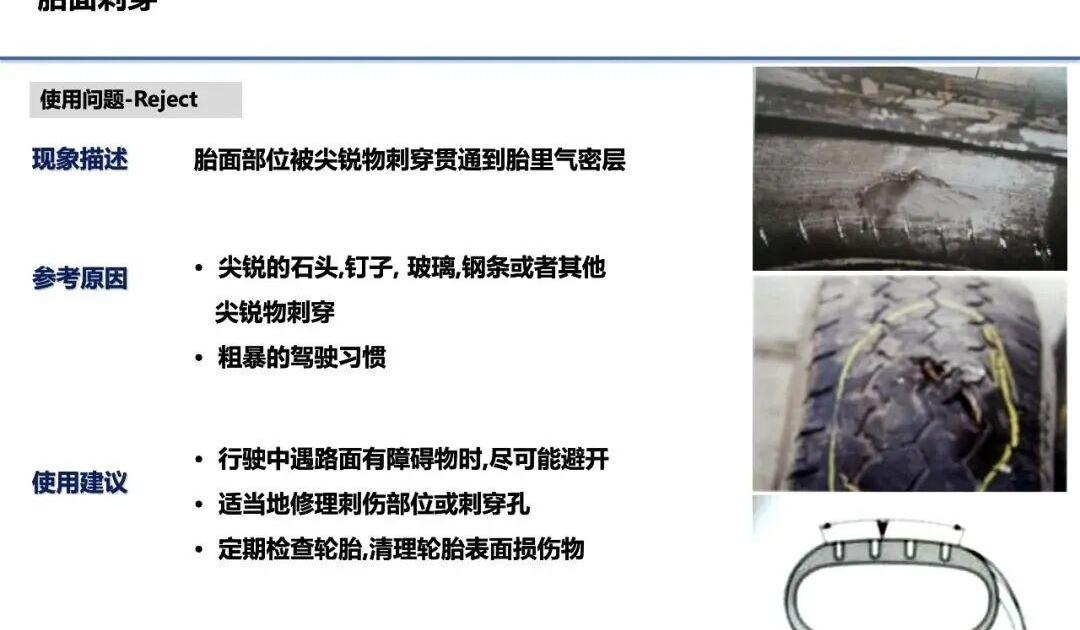
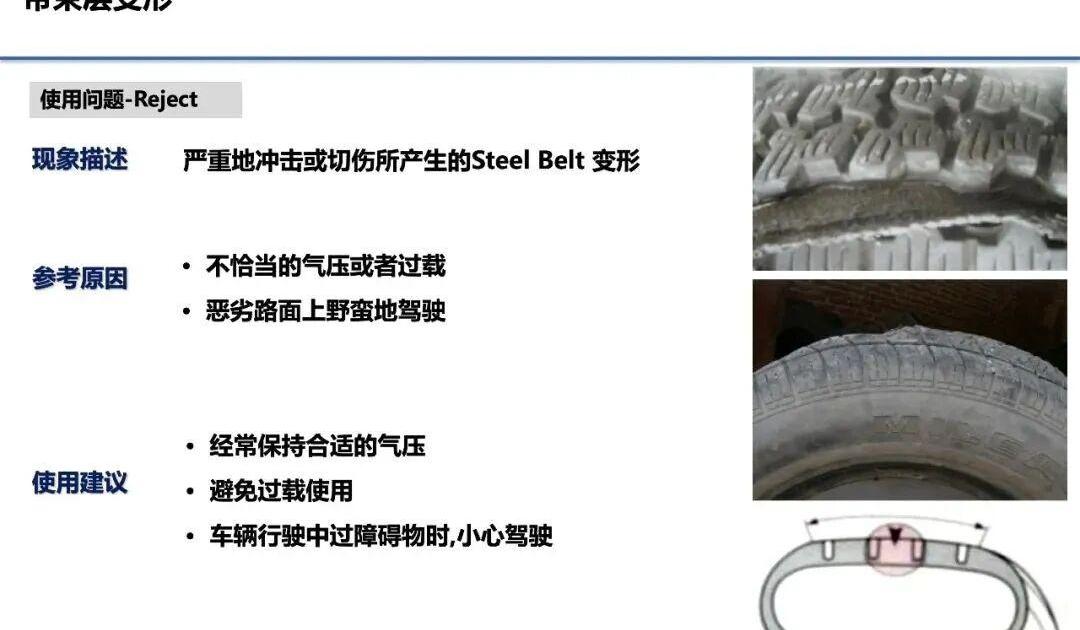
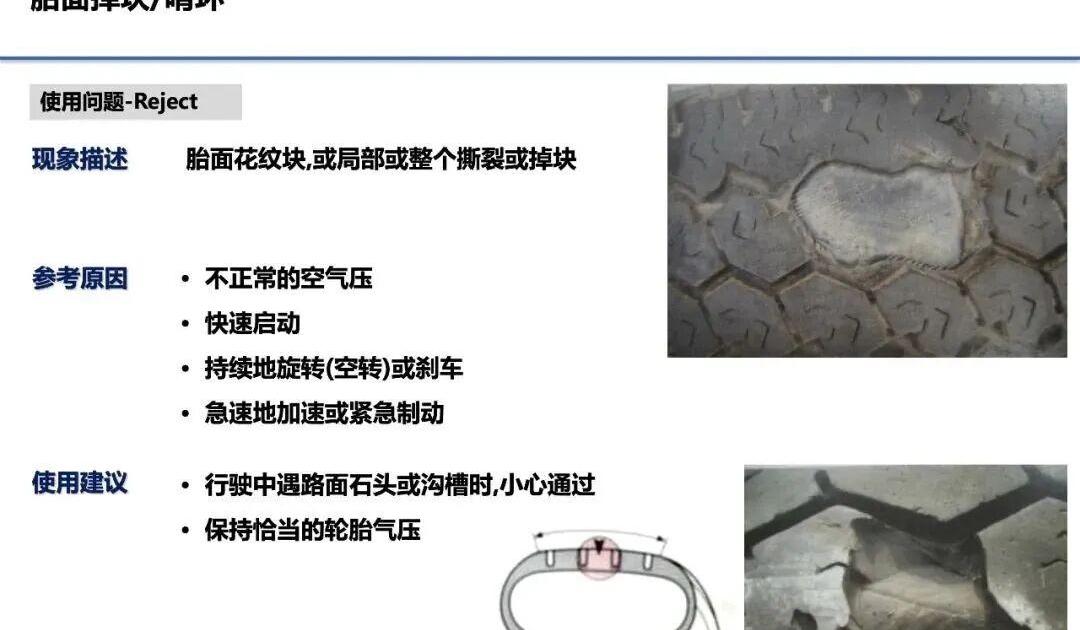
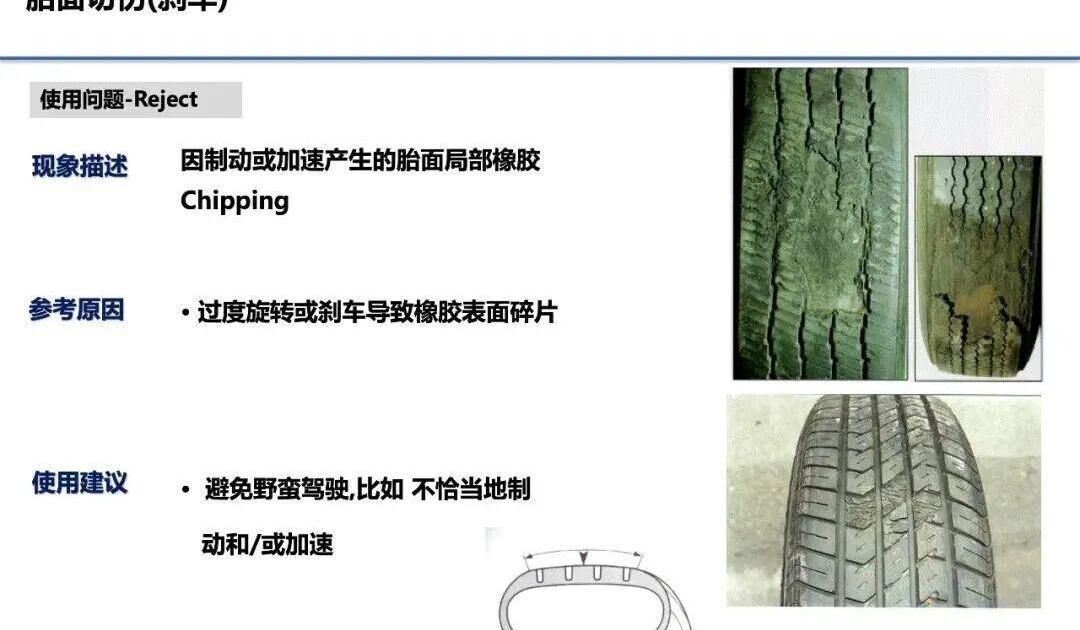
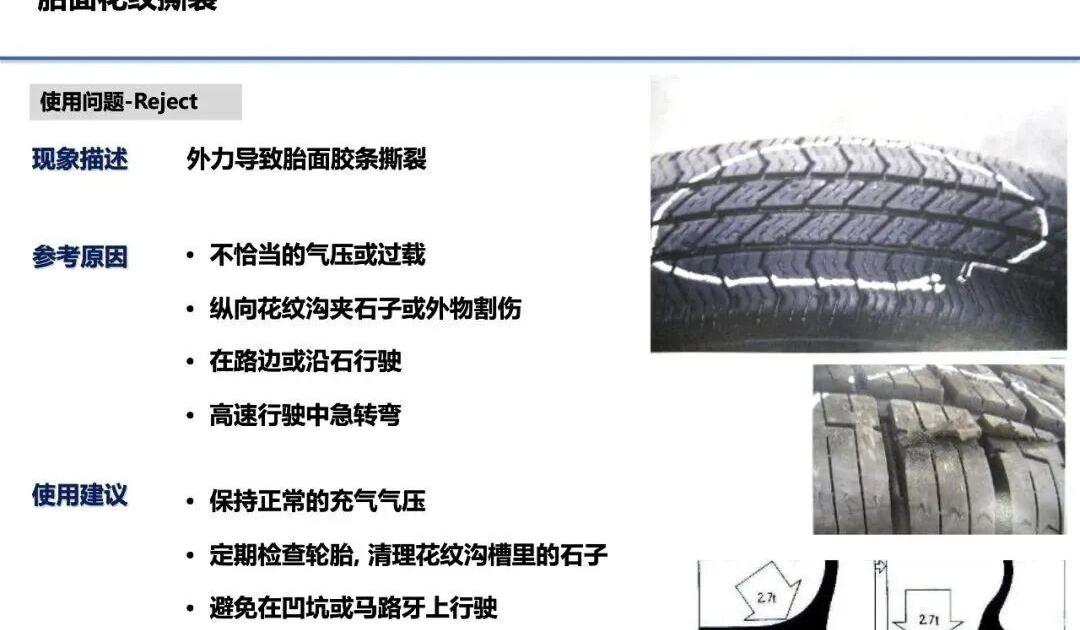
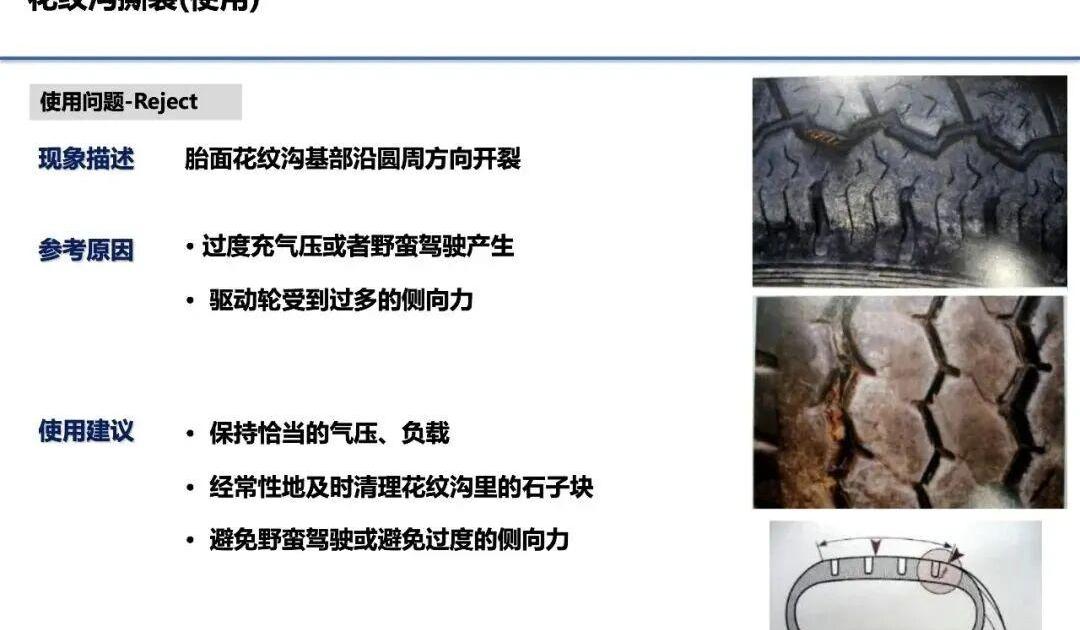
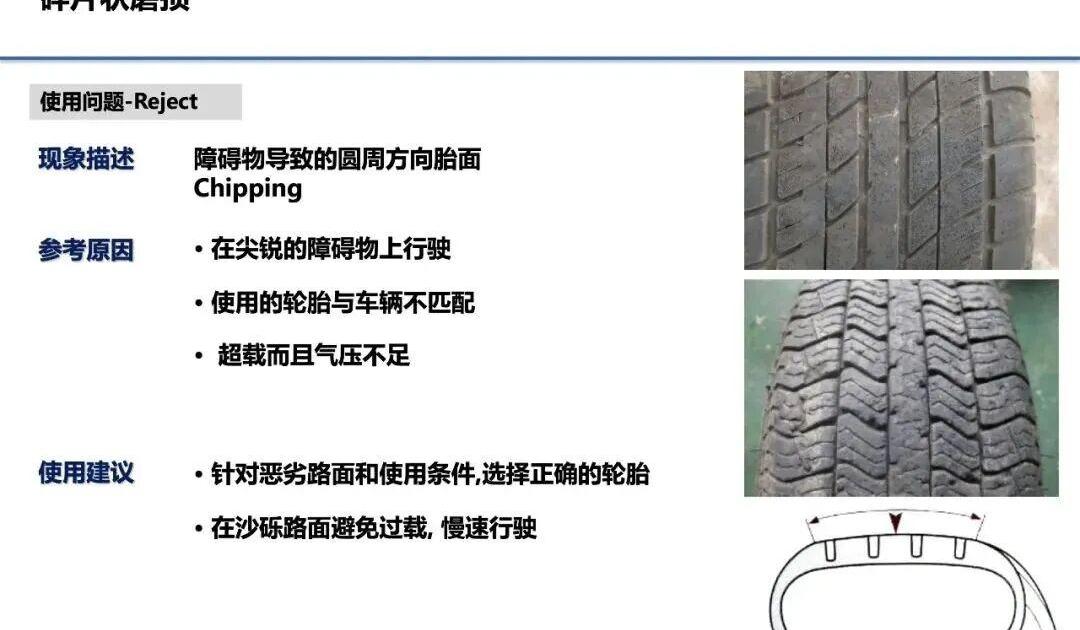
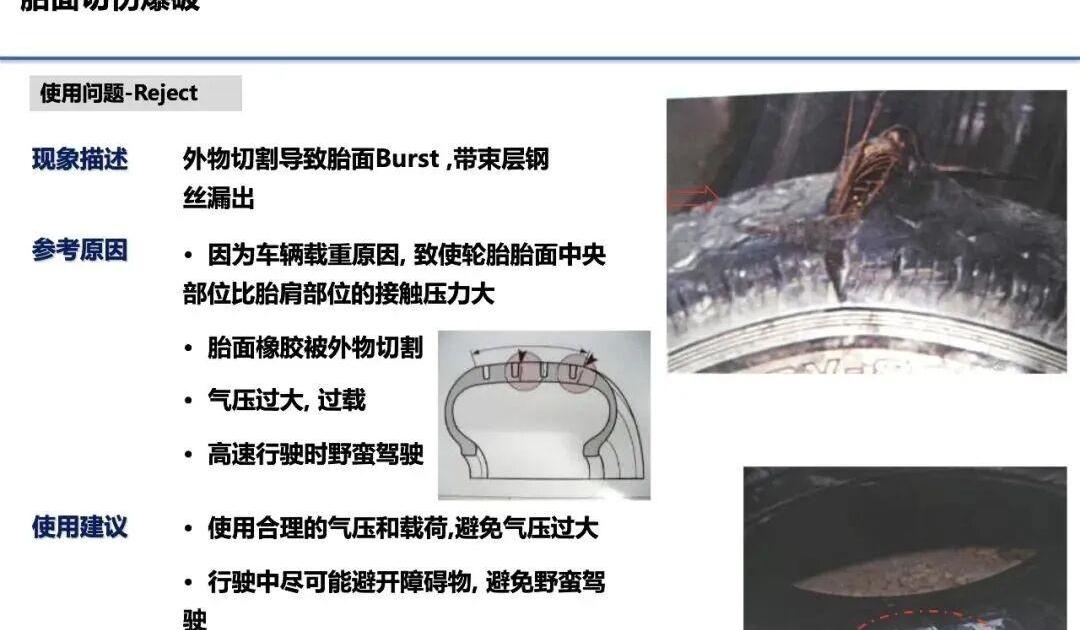
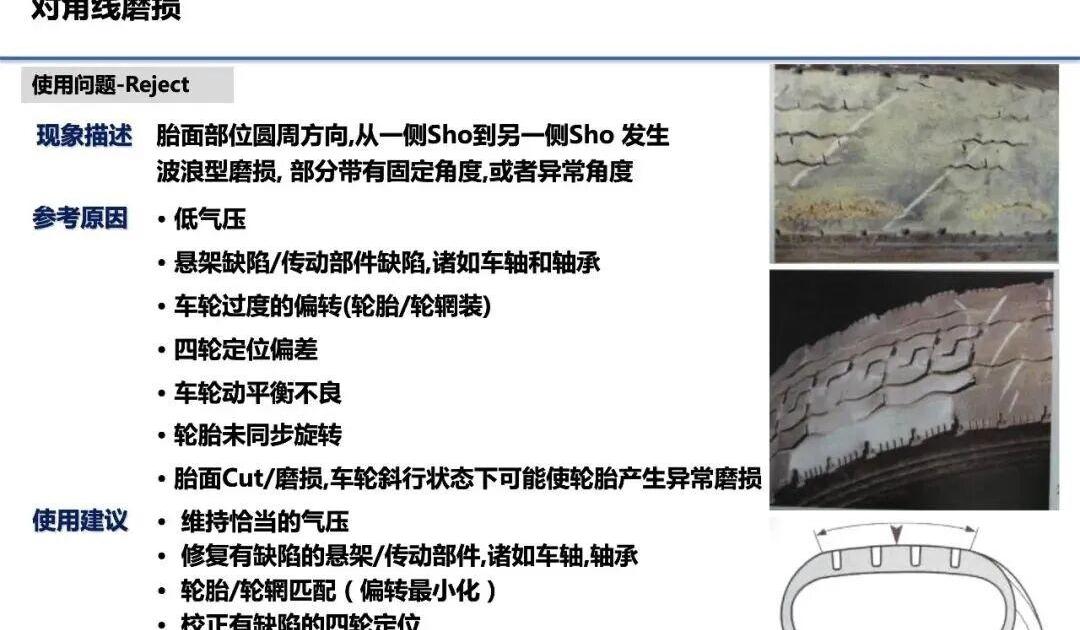
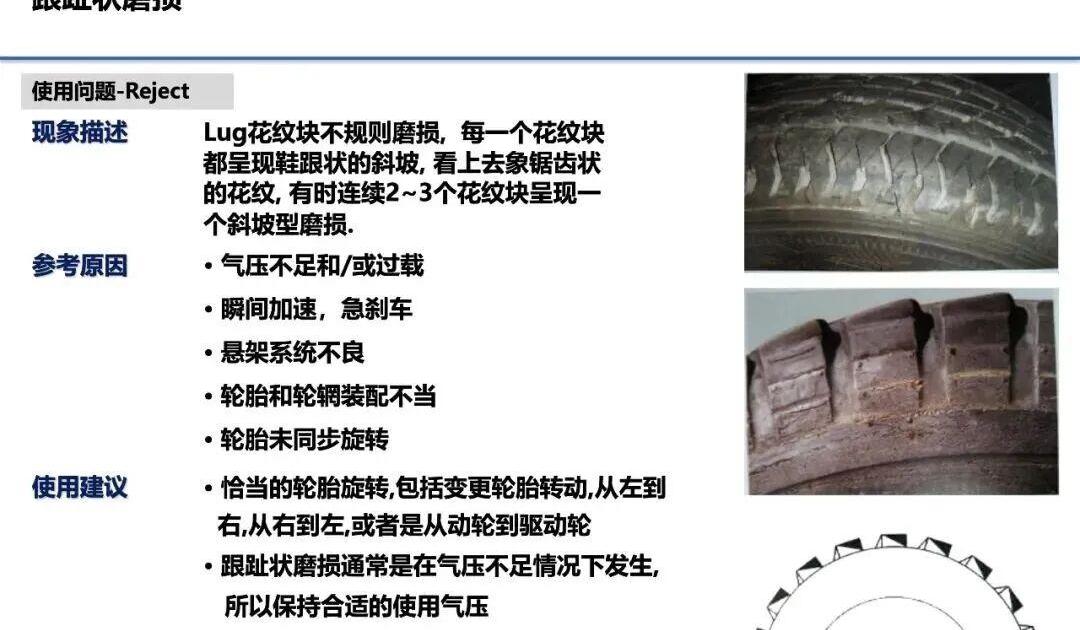
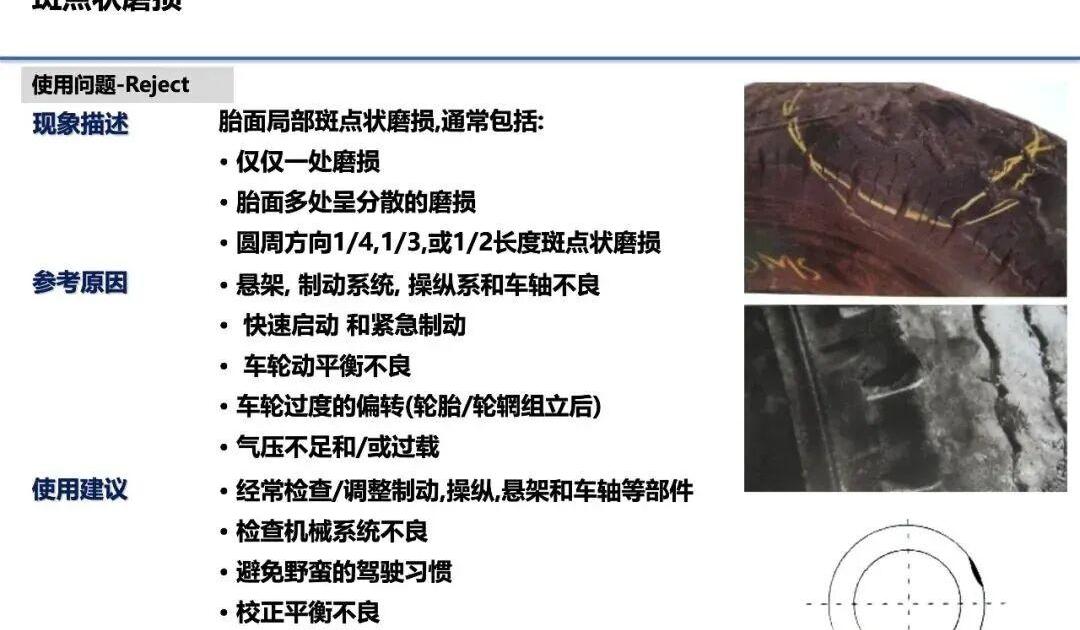
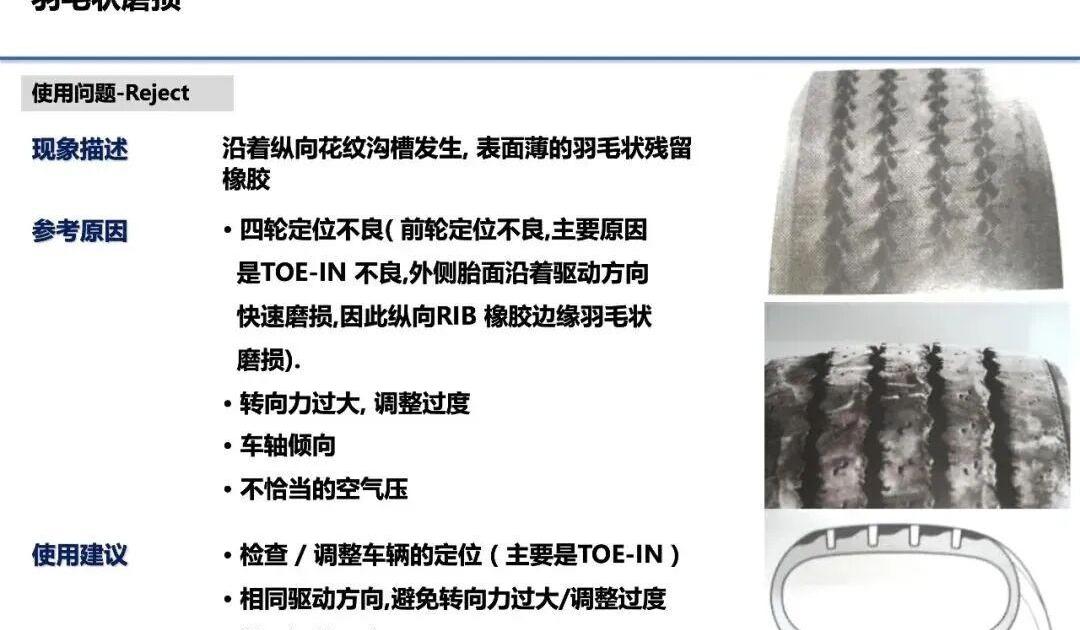
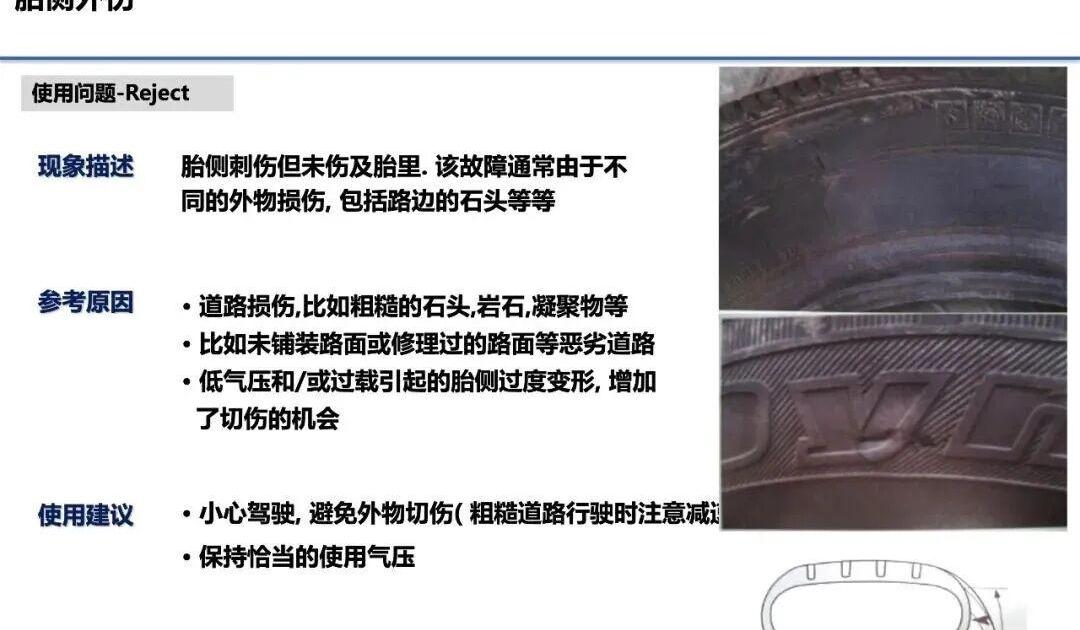
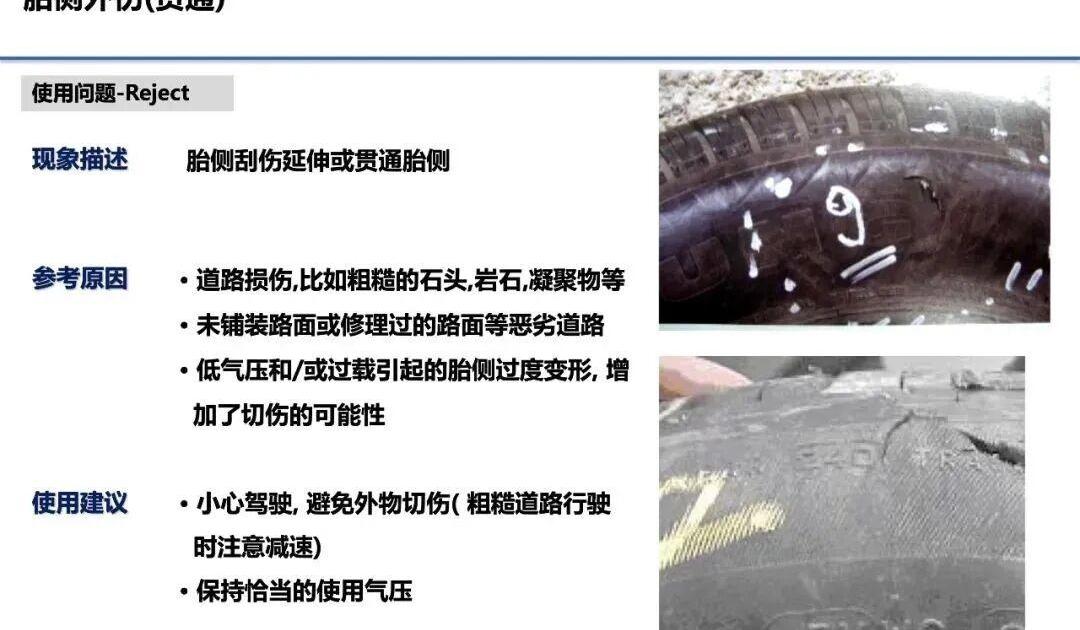
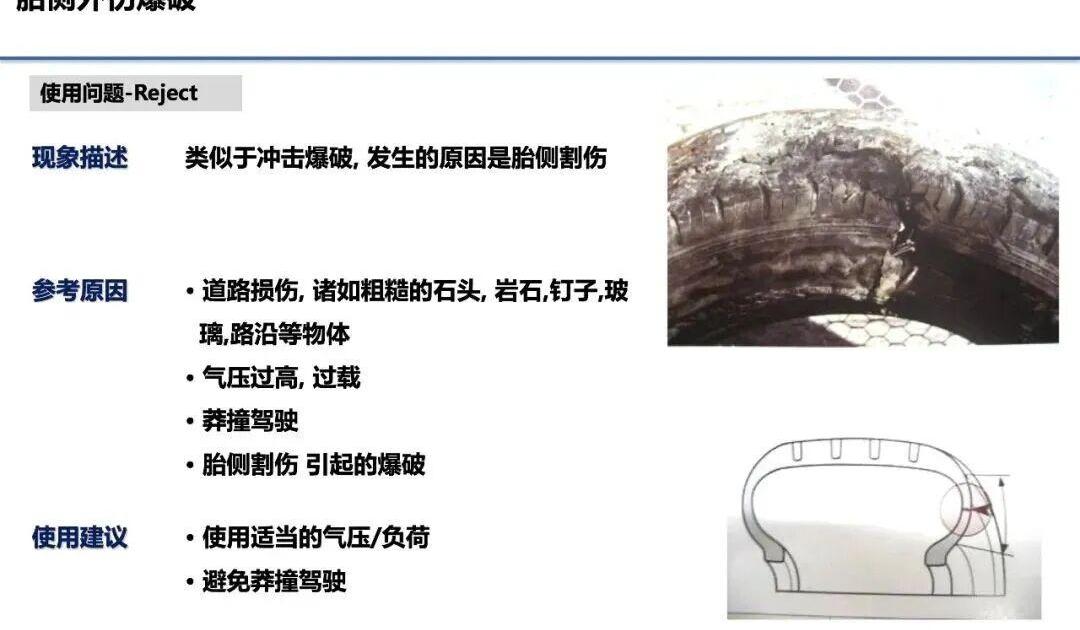
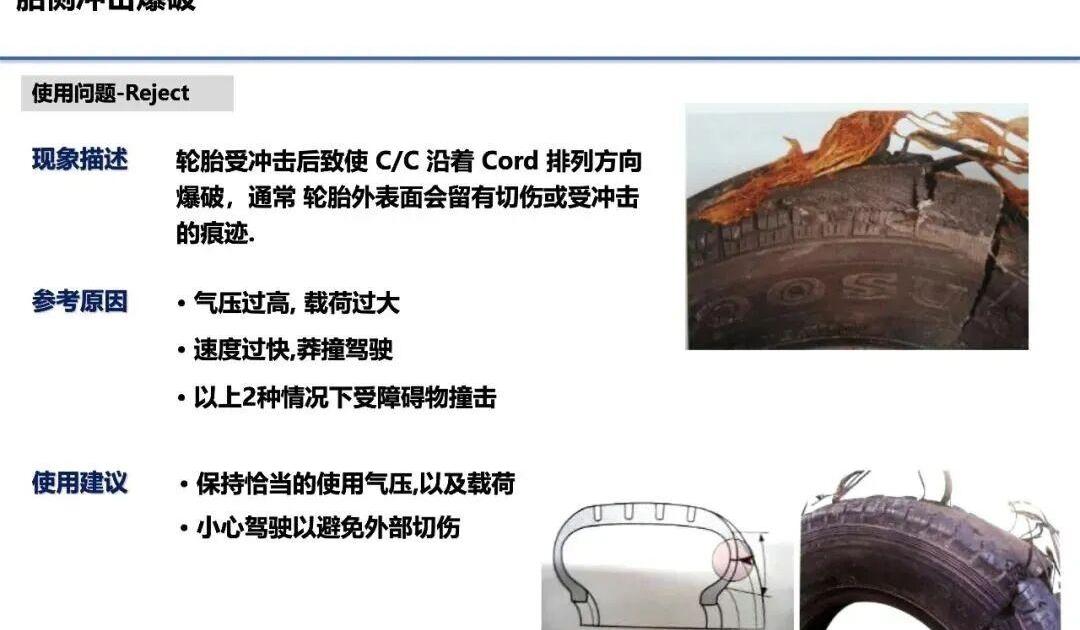
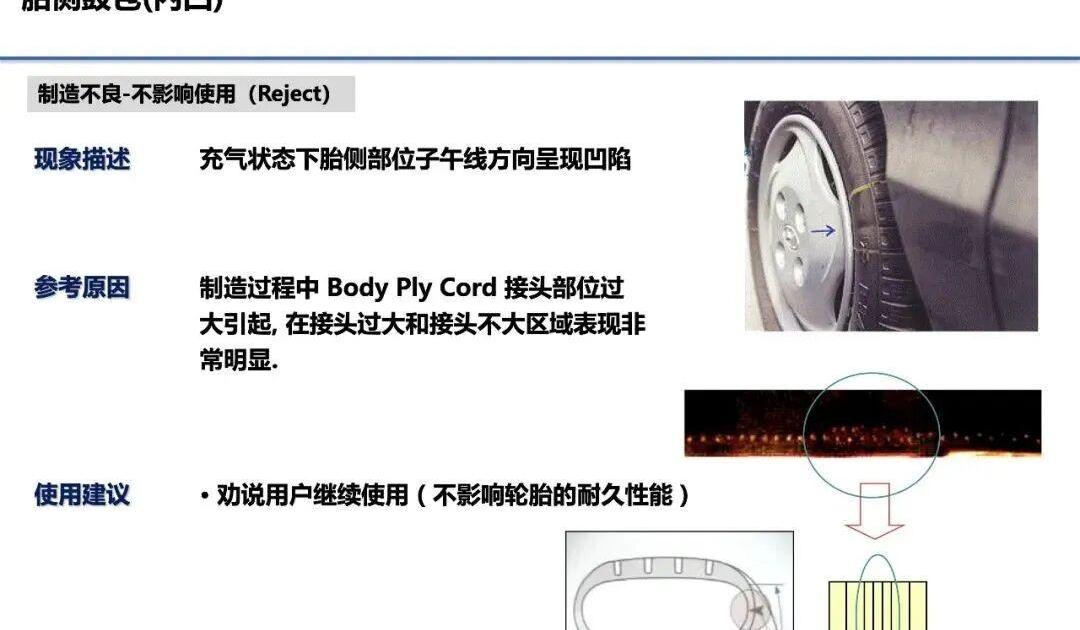
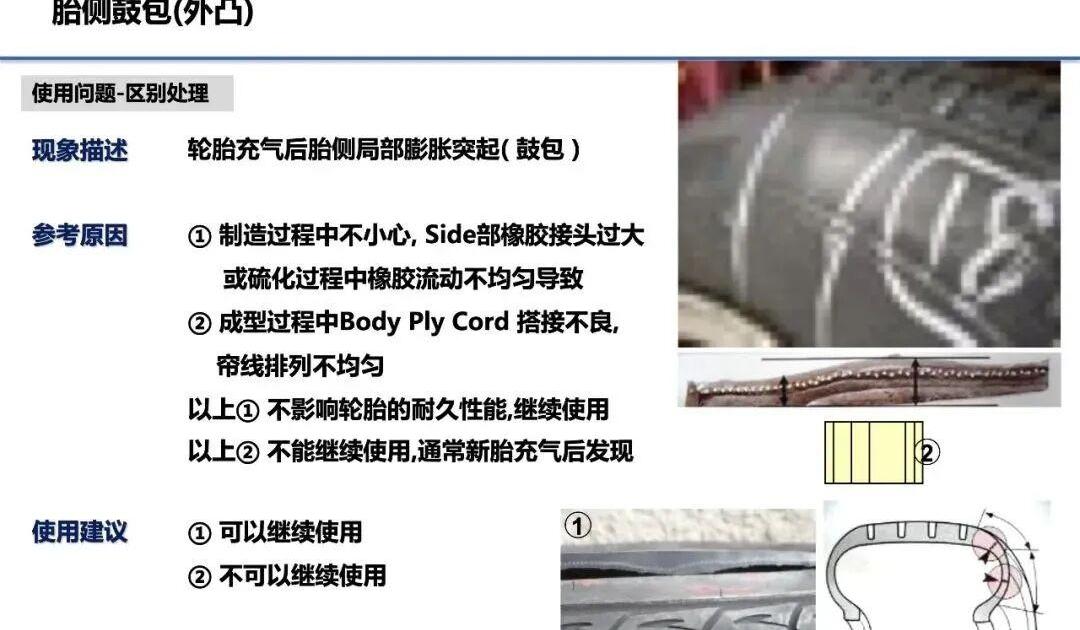
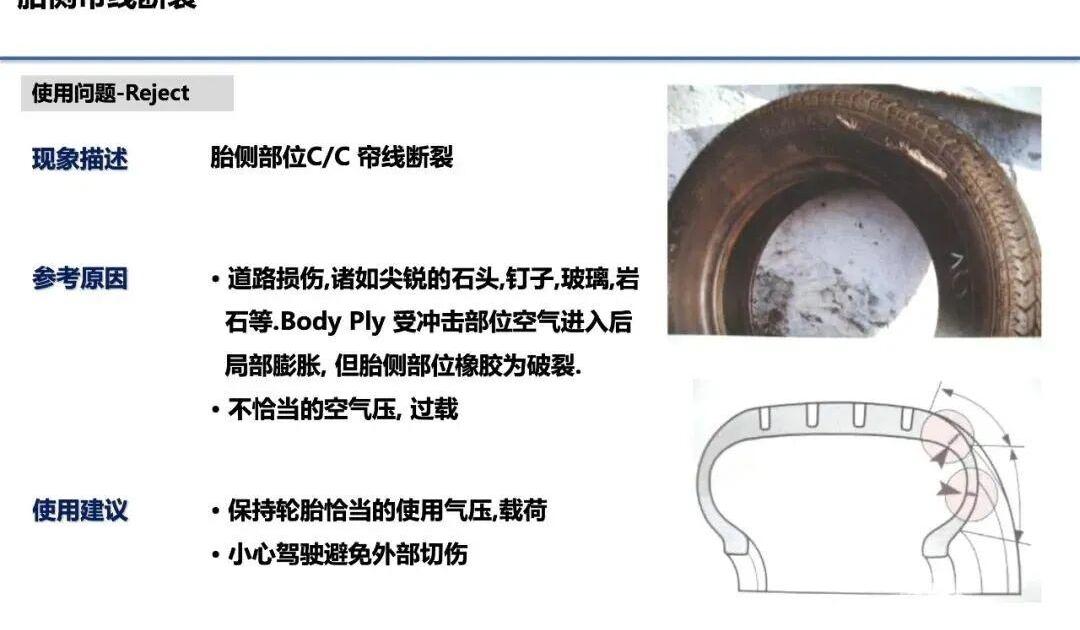
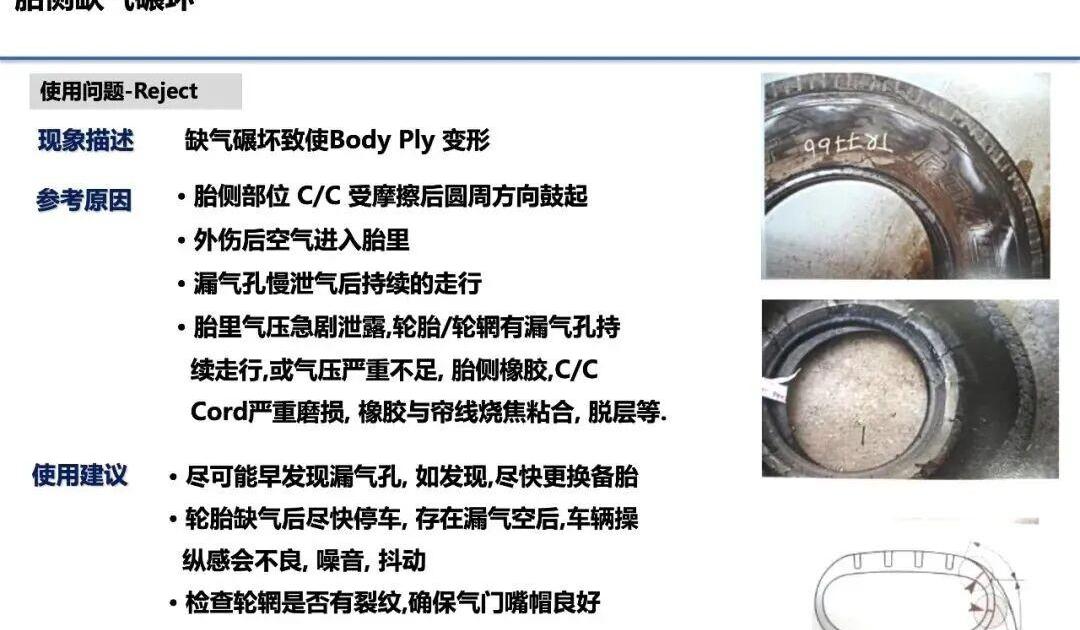
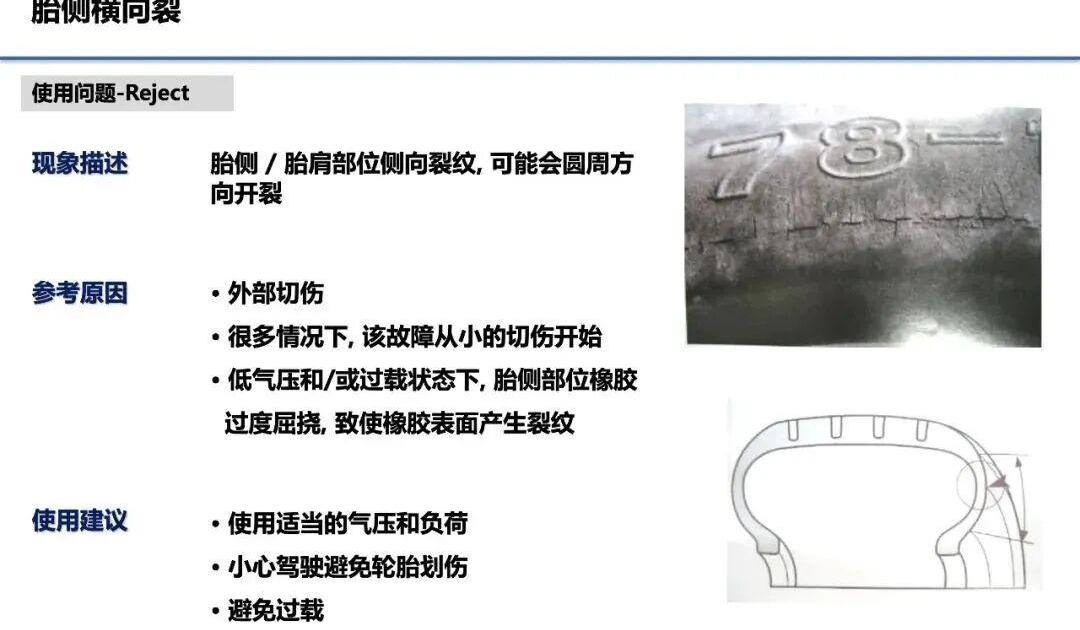
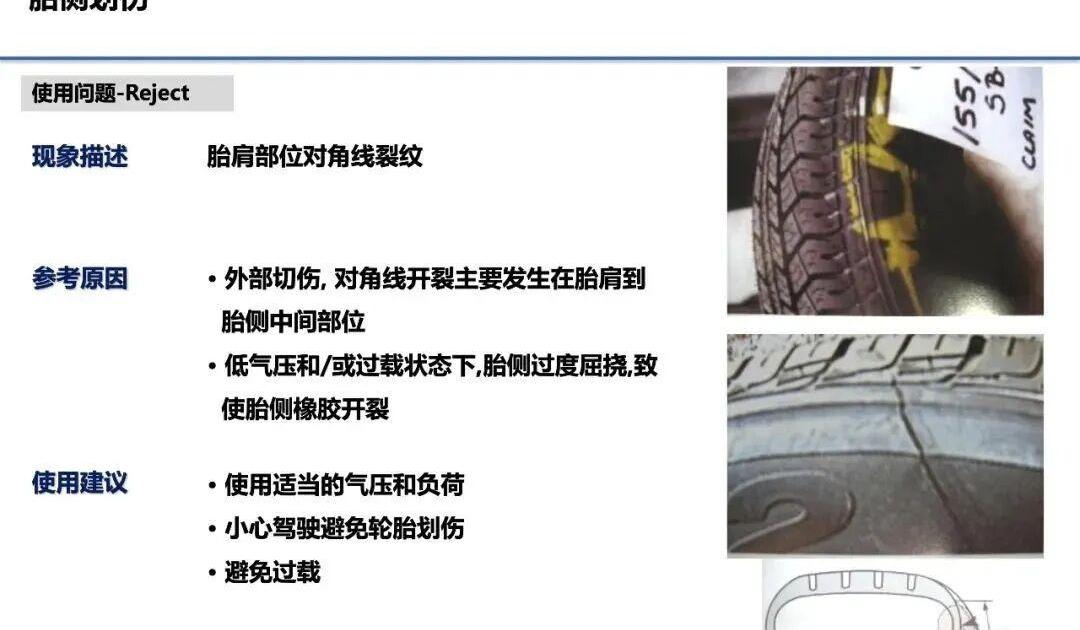
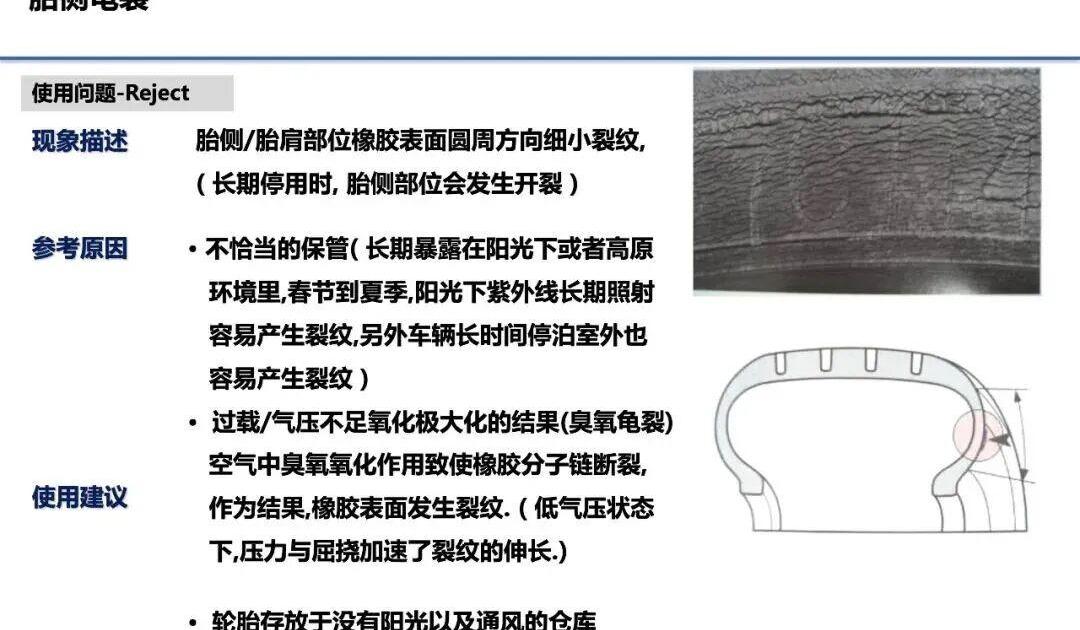
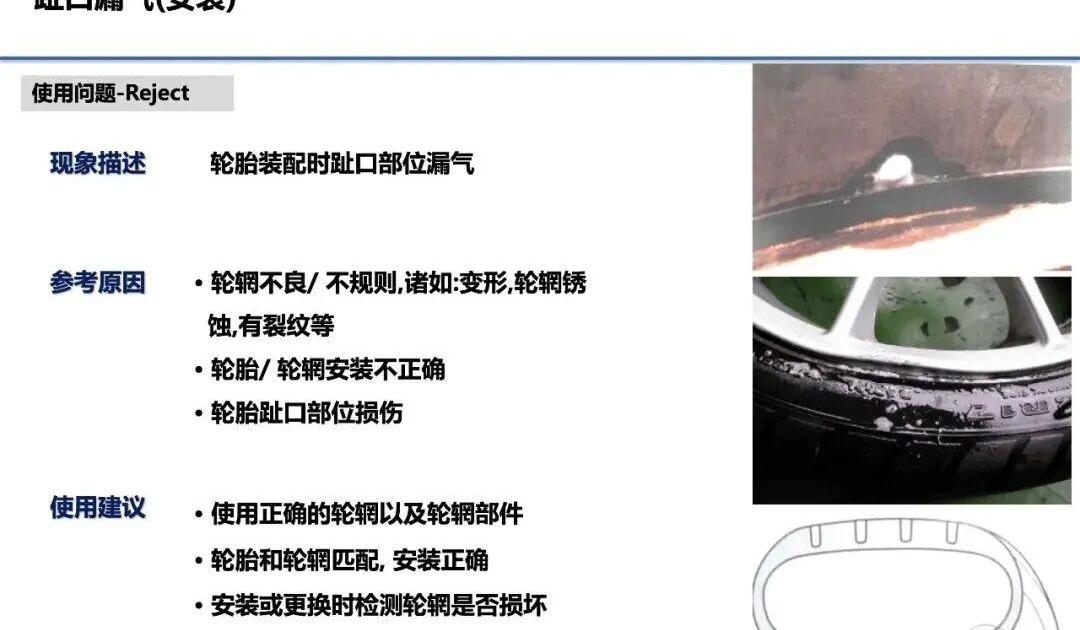
Below is the full training slide deck covering all common passenger tire failure types with real-world photos and explanations:








Leave a Reply
Want to join the discussion?Feel free to contribute!